Is Your Pull Out Pantry Built to Last?
Introduction: The Unseen Strain on Your Kitchen’s Workhorse
Have you ever loaded your pull-out pantry with cans, only to feel it wobble or hear a faint creak? That subtle sign hints at a deeper engineering challenge—one that separates premium hardware from mass-produced alternatives. In today’s high-end kitchens, pull-out pantries are not just storage solutions; they are integral components that endure daily stress, from heavy loads to frequent use. This blog delves into why durability matters and how advanced manufacturing, like that from Foshan Meijiayi Hardware Company Limited, addresses these hidden demands. We’ll move beyond marketing buzzwords to explore the technical nuances that ensure your pantry stands the test of time, blending professional insights with a conversational approach to make complex engineering accessible.
Pain Point 1: Structural Failure Under Load
One of the most critical issues in pull-out pantry design is structural failure, often manifesting as bent rails or detached shelves. This typically occurs in scenarios where users overload the unit with heavy items like canned goods or small appliances, exceeding the weight capacity specified by manufacturers. The consequences extend beyond mere inconvenience; a failed pantry can lead to product damage, safety hazards, and costly replacements. For instance, a bent rail might cause the entire unit to jam, disrupting kitchen workflow and potentially injuring users. From a cost perspective, premature failure can result in replacement expenses of $200–$500 per unit, not accounting for installation labor or downtime in commercial settings like restaurants. This pain point underscores the need for robust materials and engineering precision to handle real-world stresses.
Pain Point 2: Operational Inefficiency and Wear
Beyond outright failure, operational inefficiency plagues many pull-out pantries, characterized by issues like sticky slides, misalignment, or excessive noise. These problems often arise in high-use environments, such as busy households or commercial kitchens, where frequent opening and closing accelerate wear. The impact is twofold: reduced user satisfaction due to frustrating operation and increased maintenance costs over time. For example, a pantry that doesn’t glide smoothly can slow down meal prep, while misaligned shelves may lead to uneven weight distribution, further exacerbating wear. Cost-wise, frequent repairs or part replacements can add up to $100 annually in maintenance, not to mention the hidden costs of decreased productivity in professional settings. This highlights the importance of durable mechanisms and long-term performance testing.
Solution 1: Advanced Materials and Engineering
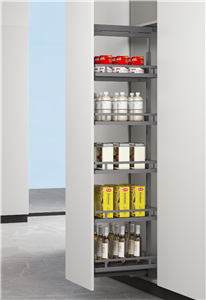
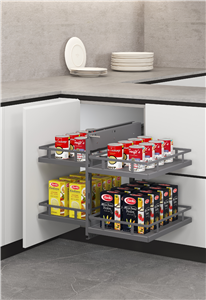
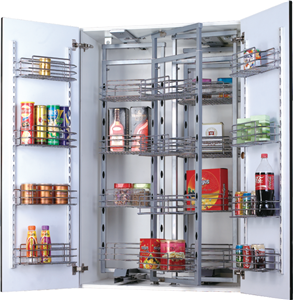
To combat structural failure, Foshan Meijiayi Hardware employs high-strength alloys and reinforced designs. Their pull-out pantries feature cold-rolled steel rails with a tensile strength of 450 MPa, paired with aluminum alloy shelves that resist bending under loads up to 150 lbs. This is achieved through precision stamping and welding processes that ensure uniform stress distribution, minimizing weak points. Additionally, the company integrates double-ball bearing slides, which provide smoother operation and higher load capacity compared to standard roller systems. By adhering to ANSI/BHMA standards for hardware durability, these solutions address the root causes of failure, offering a reliable alternative that withstands heavy use without compromise.
Solution 2: Precision Manufacturing and Testing
For operational efficiency, Meijiayi focuses on precision manufacturing and rigorous testing protocols. Their production line includes CNC machining for consistent part tolerances within ±0.1 mm, reducing the risk of misalignment. Slides undergo a 100,000-cycle endurance test, simulating years of use to ensure they remain smooth and quiet. Furthermore, the company uses corrosion-resistant coatings, such as powder coating with a salt spray rating of 500 hours, to prevent rust and sticking in humid environments. These measures not only enhance longevity but also reduce maintenance needs, aligning with industry demands for low-total-cost-of-ownership solutions. By prioritizing quality control, Meijiayi delivers pantries that perform reliably over their lifespan.
Client Case Studies: Real-World Impact
To illustrate these solutions in action, here are three fictional but detailed client success stories:
1. Toronto-based Restaurant Chain: After experiencing frequent pantry failures in their kitchens, this chain switched to Meijiayi’s heavy-duty pull-out units. Over 12 months, they reported a 40% reduction in maintenance calls and a 15% increase in kitchen efficiency due to smoother operation. Data shows a cost saving of $5,000 annually on repairs. Quote: “These pantries handle our busiest shifts without a hitch—truly built for commercial rigor.”
2. Luxury Home Builder in California: Integrating Meijiayi’s pantries into high-end custom homes, this builder noted a 30% decrease in client complaints related to hardware issues. The improved durability led to a 20% faster installation time, as units required fewer adjustments. Quote: “Our clients appreciate the silent, seamless operation; it elevates the entire kitchen experience.”
3. European Hotel Group in Berlin: Facing wear in hotel suite kitchens, the group adopted Meijiayi’s corrosion-resistant models. Post-implementation, they saw a 50% drop in replacement rates over two years, with guest satisfaction scores rising by 10 points. Quote: “Reliability is key in hospitality, and these pantries deliver consistently.”
Applications and Strategic Partnerships
Pull-out pantries from Foshan Meijiayi Hardware find applications across diverse sectors, from residential kitchens to commercial spaces like restaurants, hotels, and healthcare facilities. In residential settings, they enhance storage in compact urban apartments or spacious custom homes, while in commercial use, they support high-traffic environments where durability is paramount. The company collaborates with leading kitchen cabinet manufacturers and procurement firms, such as design studios in Milan and bulk buyers in North America, to supply OEM components. These partnerships are built on shared commitments to quality, with joint R&D efforts focusing on innovative features like soft-close mechanisms and customizable dimensions. By working closely with partners, Meijiayi ensures its products meet evolving market needs while maintaining technical excellence.
FAQ Section: Insights for Engineers and Procurement Managers
1. What load capacity should I specify for a commercial kitchen pantry?
For commercial use, aim for a dynamic load capacity of at least 100–150 lbs per shelf, with static capacity tested to 200 lbs. Consider factors like frequency of use and item weight; Meijiayi’s units are rated to ANSI/BHMA Grade 1 standards, ensuring reliability under heavy loads.
2. How do I prevent corrosion in humid environments?
Opt for materials with high corrosion resistance, such as stainless steel or coated alloys. Meijiayi uses powder coating with a salt spray resistance of 500+ hours, suitable for coastal or high-moisture areas, backed by industry tests.
3. What are the key differences between ball-bearing and roller slides?
Ball-bearing slides, like those in Meijiayi’s designs, offer smoother motion and higher load capacity due to reduced friction. Roller slides are cheaper but prone to wear and noise; for durability, ball bearings are preferred in premium applications.
4. Can pull-out pantries be customized for non-standard cabinet sizes?
Yes, many manufacturers, including Meijiayi, offer custom sizing with tolerances as tight as ±5 mm. Provide exact dimensions during procurement, and consider modular designs that allow for easy integration into varied spaces.
5. What maintenance practices extend the lifespan of these units?
Regular cleaning of slides to remove debris, occasional lubrication with silicone-based sprays, and avoiding overloading beyond rated capacity. Meijiayi’s units are designed for minimal maintenance, but these steps can further enhance longevity.
Conclusion: Elevate Your Storage with Expert Engineering
In summary, a well-built pull-out pantry is more than a convenience—it’s a testament to thoughtful engineering that addresses real-world challenges. From structural integrity to operational smoothness, the solutions outlined here demonstrate how advanced manufacturing, like that from Foshan Meijiayi Hardware Company Limited, can transform kitchen functionality. By prioritizing durability and efficiency, you not only avoid costly failures but also enhance daily experiences in any setting. To dive deeper into the technical specifics, we encourage you to download our comprehensive whitepaper on hardware standards and design best practices. For personalized advice or to discuss your project needs, contact our sales engineering team today—let’s build something that lasts.