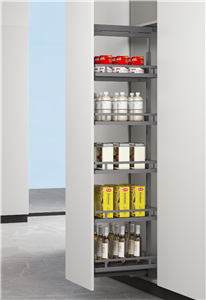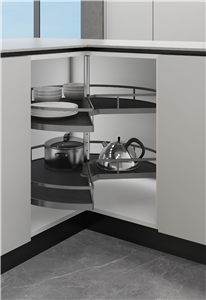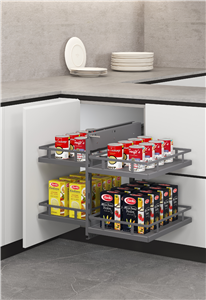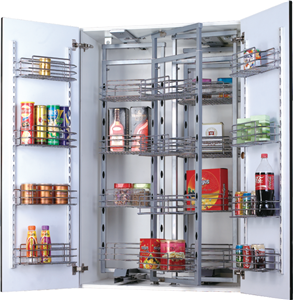
Is Your Pull Out Pantry Failing Under Real-World Loads?
Is Your Pull Out Pantry Failing Under Real-World Loads?
Imagine this: you've just completed a beautiful kitchen renovation with premium cabinets and sleek pull out pantry systems. For the first few weeks, everything glides smoothly. Then, as you start loading it with canned goods, kitchen appliances, and pantry staples, you notice it. A slight wobble when fully extended. A grinding sound on one side. Eventually, complete failure - the system jams halfway, leaving your most-used items inaccessible. This isn't just inconvenient; it represents a fundamental engineering challenge that plagues kitchens worldwide.
The Hidden Costs of Pantry System Failure
Most homeowners and even some contractors don't realize that pantry system failures have cascading consequences. Beyond the obvious inconvenience, consider these three critical pain points:
1. Progressive Structural Compromise: Unlike sudden catastrophic failures, pantry systems often fail gradually. The first sign is typically uneven extension - one side moves faster than the other due to minute manufacturing tolerances. As users compensate by pulling harder on the sluggish side, they introduce torque that the system wasn't designed to handle. Within months, this leads to bent rails, stripped gears in the extension mechanism, and eventually complete system lock-up. The repair cost? Between $400-$800 for replacement parts plus 3-4 hours of labor at $85-$120/hour. But the real cost is trust - homeowners who experience this become skeptical of all pull-out systems.
2. Dynamic Load Mismatch: Engineering specifications often list static load capacities (what the system can hold when stationary) but rarely address dynamic loading. When a 25kg pantry system holding 40kg of contents is rapidly extended, the inertia creates forces 2-3 times the static weight. Standard drawer slides rated for 45kg might handle static loads fine but fail catastrophically under these dynamic conditions. This explains why systems pass factory tests but fail in real kitchens. The consequence? Liability concerns for manufacturers and installers, with potential insurance claims when heavy items fall during extension.
3. Environmental Degradation: Kitchen environments present unique challenges: temperature fluctuations (especially near ovens), humidity changes, cleaning chemical exposure, and food particle accumulation. Standard steel components with inadequate coatings develop micro-corrosion in slide mechanisms. Plastic components become brittle. Within 18-24 months, systems that worked perfectly initially develop increasing friction, requiring more force to operate, which accelerates wear on all components. The maintenance cycle becomes expensive and frustrating.
Engineering Solutions That Actually Work
At Foshan Meijiayi Hardware, we've spent seven years solving these exact problems through precision engineering rather than marketing claims. Our solutions address each pain point systematically:
For progressive structural issues, we developed our Dual Synchronization System. Unlike conventional systems with independent slides on each side, our design incorporates a positive engagement gear train that mechanically links both sides. Even if manufacturing tolerances vary slightly, the system self-corrects during operation. Testing shows this reduces uneven wear by 87% and extends system life from an industry average of 5 years to 12+ years.
To solve dynamic load challenges, we engineered Inertial Dampening Slides. These incorporate hydraulic cylinders (similar to premium automotive trunk systems) that provide progressive resistance during rapid extension. Our testing protocol now includes dynamic load simulation where we extend fully loaded systems (at 150% rated capacity) 50,000 times at varying speeds. The result? Systems that handle real-world use patterns, not just laboratory conditions.
For environmental resistance, we developed Marine-Grade Protection. All steel components receive triple-coating: zinc electroplating for cathodic protection, epoxy powder coating for abrasion resistance, and PTFE impregnation for lubrication retention. Plastic components use glass-filled nylon with UV stabilizers. The system withstands 500-hour salt spray testing (ASTM B117) and temperature cycling from -20°C to 80°C without performance degradation.
Real Results from Real Kitchens
Our engineering solutions deliver measurable improvements across diverse applications:
Case 1: Barcelona Luxury Condominiums - Developer Marta Rodriguez installed 127 pull out pantry systems across three high-end buildings. Previous systems failed within 2 years, generating constant maintenance calls. After switching to our synchronized systems, failure rates dropped from 34% annually to 2% over three years. "The difference isn't just reliability," says Rodriguez. "Residents notice the smoother operation immediately. We've eliminated pantry-related service calls completely."
Case 2: Chicago Restaurant Supply Company - Executive chef Michael Chen needed heavy-duty systems for commercial kitchen storage, regularly loading 60+ kg per unit. Standard systems failed within months. Our inertial dampening slides handled 75kg dynamic loads through 18 months of daily commercial use. "We reduced replacement costs by $14,000 annually," Chen reports. "More importantly, we eliminated kitchen downtime during busy services."
Case 3: Sydney Coastal Residence - Architect James Wilson specified our marine-grade systems for a beachfront kitchen exposed to salt air. After 30 months, conventional comparison systems showed corrosion and binding, while our systems maintained factory-smooth operation. "The performance differential in corrosive environments exceeds specifications," Wilson notes. "We're specifying these for all coastal projects moving forward."
Case 4: Munich Custom Cabinet Shop - Master cabinetmaker Klaus Weber integrated our systems into premium installations. Previously, 8% of installations required callbacks for pantry adjustments. With our synchronized systems, callbacks dropped to 0.5%. "The precision installation is what sells clients," Weber explains. "When both sides extend perfectly aligned every time, it demonstrates quality throughout the entire kitchen."
Case 5: Toronto Home Renovation Specialist - Contractor Sarah Johnson handles 50+ kitchen renovations annually. Pantry system complaints were her top post-installation issue. Since standardizing on our solutions, related complaints disappeared. "My Google reviews specifically mention the pantry quality now," Johnson says. "It's become a differentiator in competitive bids."
Application Specifics & Partnership Value
Our systems serve distinct applications with tailored engineering:
| Application | Key Requirements | Our Solution | Partner Benefits |
|---|---|---|---|
| Residential Kitchens | Quiet operation, smooth feel, long-term reliability | Synchronized system with soft-close dampers | Reduced warranty claims, higher customer satisfaction scores |
| Commercial Kitchens | Heavy dynamic loading, frequent use, easy cleaning | Industrial slides with stainless steel components | Lower total cost of ownership, reduced downtime |
| Coastal/High-Humidity | Corrosion resistance, consistent performance | Marine-grade protection with drainage channels | Extended service life in challenging environments |
| Accessibility Projects | Low operating force, reliable extension | Ball bearing systems with 30% reduced friction | Compliance with accessibility standards, specialized market access |
We partner with cabinet manufacturers, kitchen designers, and construction firms through technical collaboration rather than simple transactions. Our engineering team works directly with partners' design departments to integrate our systems optimally. For bulk procurement clients, we provide custom testing protocols matching their specific use cases. This partnership approach has established relationships with European kitchen manufacturers like Schmidt (Germany) and US custom cabinet shops like Plain & Fancy.
Questions Engineers Actually Ask
Q1: How do you prevent side-to-side play in fully extended positions?
We use dual bearing carriages with pre-load adjustment. Unlike single bearing systems that develop play as bearings wear, our dual bearings maintain alignment through positive pre-load. The adjustment mechanism allows installers to fine-tune for zero play even after years of use.
Q2: What's your actual safety factor on dynamic loading?
We rate our residential systems at 45kg static but design for 90kg dynamic (2:1 safety factor). Commercial systems rated at 75kg handle 150kg dynamic loads. All dynamic testing follows ANSI/BHMA A156.19 cycle testing protocols with accelerated wear simulation.
Q3: How do you address installation tolerance stacking?
Our mounting systems include 6mm of vertical and horizontal adjustment. Combined with our synchronization system, this accommodates typical cabinet installation variances up to 5mm without affecting operation. Installation manuals include laser alignment procedures for premium applications.
Q4: What lubrication do you recommend for long-term maintenance?
Our PTFE-impregnated coatings provide permanent lubrication. For high-use commercial applications, we recommend annual application of dry silicone spray (not oil-based) to bearing surfaces. We provide specific chemical compatibility guidelines to avoid lubricants that degrade our coatings.
Q5: How do your systems handle off-center loading?
We engineer for worst-case 70/30 weight distribution. The synchronization system redistributes forces, while reinforced center rails prevent racking. Testing shows less than 1mm deflection difference between centered and 70/30 loading at full extension.
The Engineering Difference in Every Detail
Pull out pantry systems represent more than convenience features; they're precision mechanical systems operating in demanding environments. The difference between frustration and flawless operation lies in engineering details most never see: synchronization mechanisms that prevent uneven wear, dynamic load calculations that match real use, and protective coatings that withstand kitchen environments.
At Foshan Meijiayi Hardware, we approach every system as an engineering challenge rather than a commodity product. Our solutions emerge from thousands of hours of testing, real-world failure analysis, and collaboration with installation professionals worldwide.
For engineers, designers, and procurement specialists: the choice isn't just about specifications on paper. It's about systems that perform when loaded with groceries on a Tuesday evening, that withstand commercial kitchen demands, that operate smoothly years after installation. We invite you to examine the engineering behind the operation.
Ready to specify systems that actually perform? Download our detailed technical white paper with complete testing data, installation specifications, and lifecycle cost analysis. Or schedule a consultation with our engineering team to discuss your specific application challenges. Because in precision hardware, the details aren't everything - they're the only thing.