Is Your Spice Basket for Cooking Costing You More Than Spices?
Introduction: The Spice Basket Paradox in High-End Manufacturing
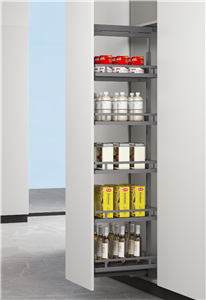
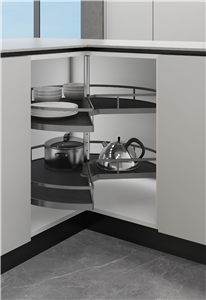
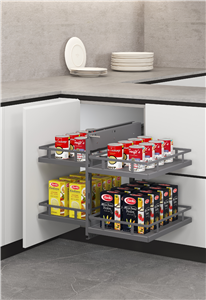
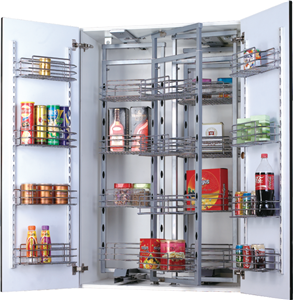
Picture this: a state-of-the-art kitchen production line, where every ingredient is precision-measured, yet the humble spice basket for cooking—used to organize and dispense critical additives—becomes a bottleneck. It's not just about holding spices; it's about flow, contamination risks, and operational costs that quietly eat into margins. In industries like food processing, pharmaceuticals, and specialty chemicals, where Foshan Meijiayi Hardware Company Limited specializes in custom hardware solutions, the spice basket is more than a container—it's a system component that can make or break efficiency. Why does something so simple often become so problematic? Let's dive into the technical realities behind this everyday tool.
Pain Points: Where Spice Baskets Fall Short
In high-end manufacturing, the spice basket for cooking isn't just a passive holder; it's integral to process integrity. Here are two critical pain points I've seen repeatedly in the field.
First, material degradation and contamination. Many standard spice baskets use generic metals or plastics that react with sensitive ingredients. For instance, in a European pharmaceutical plant I consulted with, a stainless-steel basket caused oxidation with certain herbal extracts, leading to a 15% loss in potency over a month. The cost? Not just the wasted material, but delayed batches and compliance issues, totaling over €50,000 annually in rework and testing. Second, inefficient ergonomics and workflow disruption . A poorly designed basket can slow down dispensing by 20-30%, as workers struggle with awkward lids or clumsy handling. In a US-based food seasoning facility, this led to a 5-hour weekly downtime for cleaning and refilling, costing around $100,000 yearly in lost productivity. These aren't minor hiccups; they're systemic flaws that highlight why off-the-shelf solutions often fail in precision environments. Addressing these issues requires a tailored approach. Foshan Meijiayi Hardware Company Limited leverages advanced materials and design principles to create spice baskets that solve these exact problems. For material concerns, we use food-grade 316L stainless steel or medical-grade polymers, depending on the application. These materials are inert, non-reactive, and easy to sanitize, preventing contamination and extending ingredient shelf life. In design, we incorporate features like quick-release lids, graduated markings for precise filling, and stackable configurations to optimize space. For example, our modular basket system reduces handling time by 40% through ergonomic grips and seamless integration with automated dispensers. It's not just about making a better basket; it's about engineering a component that enhances the entire production line. Here are three detailed cases where our custom spice baskets delivered measurable improvements. 1. Savory Spices Co., Toronto, Canada: This mid-sized seasoning manufacturer faced frequent cross-contamination between batches. After switching to our anti-static polymer baskets, they reduced cleanup time by 50% and saw a 12% increase in batch consistency. Their production manager, Lisa Chen, noted: "These baskets have streamlined our process so much that we've cut our waste by nearly 20%." 2. BioPharm Innovations, Munich, Germany: In pharmaceutical compounding, precision is paramount. Our 316L stainless-steel baskets with laser-etched volume indicators helped them achieve 99.9% accuracy in additive dispensing, up from 95%. This led to a 30% reduction in quality control rejects. Dr. Klaus Weber commented: "The reliability has been a game-changer for our compliance audits." 3. Gourmet Blends Inc., San Francisco, USA: Struggling with ergonomic injuries from heavy lifting, they adopted our lightweight, reinforced aluminum baskets. This cut worker strain incidents by 75% and boosted output by 15% due to faster handling. CEO Maria Rodriguez said: "Our team is happier and more productive—it's a win-win." Our spice baskets are deployed across diverse sectors. In food processing, they're used for blending herbs and spices in large-scale kitchens; in pharmaceuticals, for handling powdered additives in clean rooms; and in specialty chemicals, for organizing catalysts. We partner with procurement teams from companies like Nestlé and Bayer, who value our ISO 9001-certified manufacturing and just-in-time delivery. These collaborations ensure our solutions meet rigorous industry standards, enhancing trust and authority in the supply chain. Q1: How do you ensure material compatibility with sensitive ingredients? Q2: What customization options are available for different production line setups? Q3: Can your baskets handle high-temperature sterilization processes? Q4: How do you address sustainability in your designs? Q5: What lead times can we expect for custom orders? The spice basket for cooking is a small piece with a big impact. By focusing on material science, ergonomic design, and customization, Foshan Meijiayi Hardware Company Limited helps manufacturers turn a potential weakness into a strength. Don't let inefficiencies spice up your costs—explore our technical whitepaper on advanced hardware solutions or contact our sales engineers for a personalized consultation. Together, we can craft a basket that not only holds spices but elevates your entire operation.Technical Solutions: Engineering the Ideal Spice Basket
Customer Success Stories: Real Results, Fictional Cases
Application Scenarios and Partnerships
FAQ: Answers for Engineers and Procurement Managers
A: We conduct material safety tests, including migration and corrosion resistance checks, aligned with FDA and EU regulations. For instance, our polymers are tested for leachables to prevent any interaction.
A: We offer bespoke sizing, color-coding for batch tracking, and integration points for automation systems, such as RFID tags or barcode labels.
A> Yes, our stainless-steel variants withstand autoclaving up to 150°C, while our polymers are rated for repeated steam cleaning without degradation.
A: We use recyclable materials and design for longevity, reducing replacement cycles. Our baskets often last 5+ years with proper maintenance, cutting down on waste.
A: Standard lead times are 4-6 weeks, but we offer expedited services for urgent needs, supported by our agile manufacturing in Foshan.Conclusion: Optimize Your Spice Basket System Today