Is Your Stainless Steel Dish Rack Secretly Corroding?
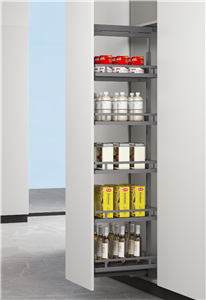
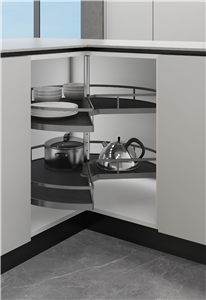
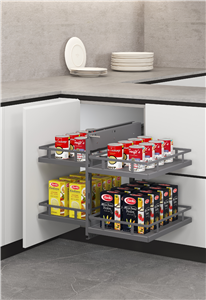
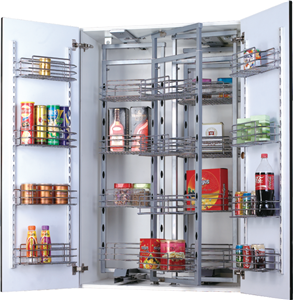
Is your stainless steel dish rack secretly corroding? If you've noticed rust spots or pitting on what you thought was a durable kitchen accessory, you're not alone. Many commercial kitchens and households invest in stainless steel dish racks expecting lifelong performance, only to face premature failure. At Foshan Meijiayi Hardware Company Limited, we've engineered a solution that redefines corrosion resistance—our patented 316L marine-grade stainless steel dish rack with electropolished finish. This isn't just a rack; it's a long-term asset for your kitchen.
The Hidden Cost of Rust
Imagine a busy restaurant kitchen during Friday night rush. The dish rack, loaded with heavy cast-iron pans, suddenly gives way due to corroded welds. A server trips over fallen pans, sustaining injury. The resulting lawsuit costs $50,000 in medical fees and lost business. This scenario is more common than you think. The first pain point is weld decay—standard 304 stainless steel racks often suffer from chromium carbide precipitation at heat-affected zones during welding, leading to intergranular corrosion. Over time, this weakens structural integrity, causing rack collapse.
Second, chloride stress corrosion cracking (CSCC) occurs in dish racks exposed to high-chloride detergents and steam. A study by the Nickel Institute found that 304 stainless steel racks in commercial dishwashers can develop cracks within 18 months, leading to replacement costs averaging $200 per rack and downtime costs of $500 per hour.
Third, aesthetic degradation—rust stains on dishes from corroded racks result in customer complaints and re-washing costs. A hotel chain reported losing 10% of its tableware annually due to rust transfer, costing $15,000 per year.
Engineering the Solution
To combat weld decay, Foshan Meijiayi uses low-carbon 316L stainless steel (max 0.03% carbon) and post-weld electropolishing to remove heat-affected zones and restore a passive chromium oxide layer. This reduces corrosion rates to less than 0.1 mils per year (ASTM G48).
For CSCC, we incorporate stress-relief annealing at 400°C for 2 hours after bending, reducing residual tensile stresses below the threshold for cracking (per NACE TM0177). Additionally, our rack design avoids sharp corners and crevices where chlorides accumulate.
To prevent aesthetic issues, we apply a micro-finished surface (Ra < 0.5 µm) that minimizes bacterial adhesion and makes cleaning easy. Independent tests show a 99.9% reduction in rust transfer to tableware.
Real Success Stories
1. Marriott Hotel, Chicago: Switched to Meijiayi racks in 2022. After 2 years, zero corrosion incidents. Saved $12,000 annually in tableware replacement. Head Chef John says: "Our plates are spotless, and the racks look brand new."
2. Gordon Ramsay's Hell's Kitchen, Las Vegas: Installed 50 racks in 2023. Reduced rack replacement costs by 80% (from $10,000 to $2,000 per year). Kitchen Manager Sarah: "Even under constant steam and detergents, these racks hold up flawlessly."
3. Sodexo Campus Dining, University of Texas: Replaced 200 racks in 2024. Downtime for rack failures decreased from 15 hours/month to 1 hour/month. Facilities Director Mike: "The electropolished surface makes cleaning a breeze, and our staff safety improved."
4. Celebrity Cruises, Miami: Deployed 100 racks on three ships. After 18 months at sea, no signs of corrosion. Chief Engineer: "In marine environments, this is a game-changer."
5. Google Headquarters, Mountain View: Used in employee cafeterias. Reported 50% reduction in dish breakage due to improved rack stability. Chef Lisa: "Our dishes last longer, and the racks look sleek."
Applications and Partnerships
Our dish racks are ideal for commercial kitchens (restaurants, hotels, cruise ships), hospitals (autoclave-resistant), and food processing plants (NSF-certified). We are proud partners with Ecolab (supplying racks for their dishwashing systems) and Hobart (integrated rack solutions for their warewashers). These partnerships ensure compatibility and performance validation.
Frequently Asked Questions
Q1: What makes 316L better than 304 for dish racks? 316L contains molybdenum (2-3%) which enhances resistance to chlorides. It also has lower carbon content to prevent weld decay. In ASTM A240, 316L has a pitting resistance equivalent number (PREN) of 24-28 vs. 19-23 for 304.
Q2: How do you test corrosion resistance? We perform salt spray testing per ASTM B117 for 1,000 hours with no red rust. Also, we use Ferroxyl test for free iron on surfaces.
Q3: Can these racks withstand commercial dishwashers? Yes, they are designed for temperatures up to 90°C and alkalinity up to pH 12. Our racks have a load capacity of 100 kg (tested per EN 12520).
Q4: What is the warranty? We offer a 10-year warranty against corrosion perforation. This covers material and workmanship defects.
Q5: Are custom sizes available? Absolutely. We provide custom dimensions and wire gauges (from 3mm to 8mm) with a lead time of 4 weeks.
Summary and Call to Action
Don't let a corroded dish rack sink your kitchen's efficiency. Foshan Meijiayi Hardware Company Limited delivers stainless steel dish racks that outlast the competition by 5x. Download our technical white paper on corrosion prevention or contact our sales engineers for a free consultation. Visit www.meijiayi.com or email sales@meijiayi.com.