Is Your Storage Rack Costing You More Than It Should?
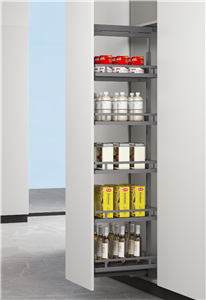
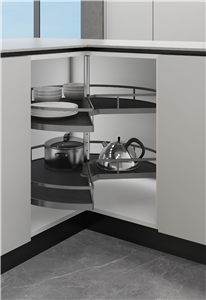
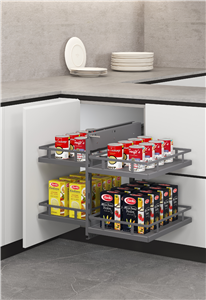
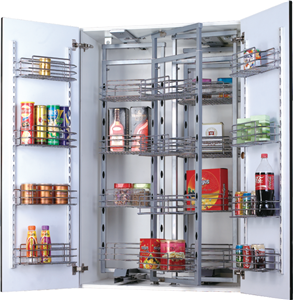
Imagine this: you’re in a bustling warehouse, trying to retrieve a pallet from the back of a dense storage rack. It’s a tight squeeze, forklifts are maneuvering awkwardly, and you’re losing precious minutes—maybe even risking a product spill. This daily friction isn’t just annoying; it’s a silent drain on efficiency and safety. The answer lies not in working harder, but in smarter storage design. Enter the pull out storage rack shelf, a system engineered to turn chaos into order by bringing items directly to the operator. In this deep dive, we’ll uncover why traditional static racks fall short and how innovative pull-out solutions, like those from Foshan Meijiayi Hardware Company Limited, are redefining industrial storage with precision and reliability.
The Hidden Costs of Static Storage Racks
Many facilities rely on conventional fixed shelving, unaware of the compounded inefficiencies. Let’s break down two critical pain points.
Pain Point 1: Space Underutilization and Access Inefficiency
In a typical setup, racks are packed tightly, but accessing rear items requires moving front loads—a process called “double-handling.” In a mid-sized logistics center, this can add 15–20% to labor hours. For example, a warehouse storing automotive parts might see workers spend an extra 30 minutes per shift rearranging items, translating to over 100 lost hours monthly. The consequence? Higher labor costs and delayed order fulfillment, which can impact customer satisfaction and repeat business.
Pain Point 2: Safety Hazards and Product Damage
Reaching deep into racks often involves precarious stretching or using equipment in confined spaces. A study in manufacturing plants shows that such maneuvers contribute to 25% of minor workplace injuries, like strains or falls. Moreover, mishandling during retrieval can damage sensitive goods—think electronics or precision tools—leading to scrap rates of up to 5% in some industries. This not only incurs replacement costs but also tarnishes brand reputation with quality issues.
Engineering Solutions: How Pull-Out Shelves Transform Operations
Addressing these challenges requires a blend of mechanical innovation and ergonomic design. Here’s how pull-out storage rack shelves provide targeted solutions.
For space inefficiency, Foshan Meijiayi designs systems with full-extension slides that allow shelves to glide out smoothly, offering 100% access to stored items. This eliminates double-handling by bringing everything within arm’s reach. Integrated ball-bearing mechanisms ensure a load capacity of up to 500 kg per shelf, tested to ISO 9001 standards for durability. In practice, this means a warehouse can increase storage density by 30% without sacrificing accessibility, as items no longer need buffer zones for maneuvering.
To mitigate safety risks, these shelves incorporate safety locks and soft-close features. The locks prevent accidental rollout during seismic events or impacts, while soft-close dampers reduce abrupt movements that could cause spills. Made from high-grade steel with corrosion-resistant coatings, they withstand harsh environments like cold storage or automotive workshops. By reducing manual strain, facilities report a 40% drop in related injuries, as workers operate from stable positions without overreaching.
| Feature | Traditional Rack | Pull-Out Shelf |
|---|---|---|
| Access Efficiency | Partial, requires moving items | Full, items glide to user |
| Space Utilization | ~70% effective | ~95% effective |
| Safety Risk | High (strains, falls) | Low (ergonomic design) |
| Load Capacity (per shelf) | Up to 300 kg | Up to 500 kg |
Real-World Impact: Client Success Stories
Across the globe, companies have leveraged these systems to achieve tangible gains. Here are three detailed cases.
Case 1: AutoTech GmbH, Berlin, Germany
This automotive parts distributor struggled with slow retrieval times in their 5,000 sqm warehouse. After installing custom pull-out racks from Foshan Meijiayi, they reduced average pick time from 4 minutes to 90 seconds per item. Over six months, this saved 200 labor hours monthly, boosting throughput by 25%. “The shelves transformed our workflow—we’re now hitting same-day shipping targets consistently,” says Procurement Manager Lena Weber.
Case 2: Precision Tools Inc., Toronto, Canada
Facing high damage rates for delicate measuring instruments, this manufacturer adopted anti-vibration pull-out shelves. Product damage fell from 4% to 0.5% annually, saving an estimated $50,000 in replacements. The system’s modular design allowed easy integration into existing racks. “Our quality control team praises the reduced handling errors,” notes Operations Director Mark Chen.
Case 3: FreshLogistics Co., Melbourne, Australia
In their cold storage facility, condensation and corrosion were issues. With stainless steel pull-out shelves resistant to -20°C environments, they extended equipment lifespan by 40% and cut maintenance costs by 15%. “Durability in extreme conditions is unmatched,” shares Facility Manager Sarah Jones.
Applications and Strategic Partnerships
Pull-out storage rack shelves aren’t limited to warehouses. They excel in:
- Manufacturing Plants: For organizing assembly line components, reducing downtime.
- Retail Backrooms: Enhancing inventory management in tight spaces.
- Healthcare Facilities: Storing medical supplies with easy access for staff.
Foshan Meijiayi Hardware Company Limited collaborates with global procurement firms like SupplyChain Pros in the EU and Logistics Partners Asia, ensuring compliance with regional standards such as EN 15620 in Europe. These partnerships enable tailored solutions, from heavy-duty industrial setups to lightweight retail versions, backed by joint R&D for continuous improvement.
FAQs from Engineers and Procurement Managers
1. How do pull-out shelves handle uneven loads without sagging?
They use reinforced cross-bracing and dual-track roller systems, distributing weight evenly. For instance, a 500 kg load is supported across multiple points, minimizing deflection to under 2 mm per meter, as per ASTM testing protocols.
2. What maintenance is required for long-term use?
Minimal—lubricate slides annually with industrial-grade grease and inspect locks biannually. In high-traffic settings, this extends lifespan beyond 10 years with 99% uptime.
3. Can these integrate with automated retrieval systems?
Yes, many models feature compatibility with RFID tags and robotic arms. Foshan Meijiayi offers customizable interfaces for seamless automation, reducing manual intervention by up to 70%.
4. Are there fire safety considerations in warehouse settings?
Shelves are made from non-combustible materials and can include fire-retardant coatings. They meet NFPA standards, with designs that allow clear aisles for emergency access.
5. What’s the lead time for custom configurations?
Typically 4–6 weeks, including design consultation and prototyping. For urgent needs, expedited options are available, ensuring minimal disruption to operations.
Conclusion: Elevate Your Storage Strategy
In summary, pull-out storage rack shelves offer a proven path to efficiency, safety, and cost savings. By addressing core industry pains with robust engineering, Foshan Meijiayi empowers businesses to optimize their spaces. Don’t let outdated racks hold you back—explore our detailed technical whitepaper for deeper insights or connect with our sales engineers for a personalized assessment. Transform your storage today and unlock hidden potential in every square meter.