Is Your Swing Tray Organization Costing You Precision?
Introduction: The Hidden Cost of Clutter
Picture this: you're in a high-end automotive assembly line, where every millimeter counts. A technician reaches for a specialized fastener from a swing tray, only to find it misaligned or missing. The line halts, costing thousands per minute. Is your swing tray organization silently eroding your precision and profits? In manufacturing, where efficiency and accuracy are paramount, the humble swing tray organizer isn't just a storage tool—it's a linchpin of operational excellence. This blog dives deep into why optimizing this component can transform your workflow, featuring insights from Foshan Meijiayi Hardware Company Limited, a leader in precision hardware solutions.
Deepening the Pain Points: Where Swing Trays Fall Short
Many manufacturers overlook swing tray organizers until problems arise. Here are two critical pain points that plague industries from aerospace to electronics:
First, tool and component misalignment. In scenarios like semiconductor fabrication, trays that don't secure items firmly lead to parts shifting during transport. This causes misinsertions in automated systems, resulting in scrap rates of up to 5%, with material costs averaging $50,000 per incident in high-value production. The ripple effect includes downtime for recalibration and potential safety hazards from loose components.
Second, inefficient space utilization and accessibility. In crowded workshops, such as those in automotive repair, poorly designed trays waste vertical and horizontal space, forcing workers to stretch or search for tools. This slows task completion by 15-20%, increasing labor costs by approximately $10,000 annually per technician due to reduced throughput. Over time, this inefficiency compounds, undermining lean manufacturing goals.
Solution Details: Engineering Precision into Every Tray
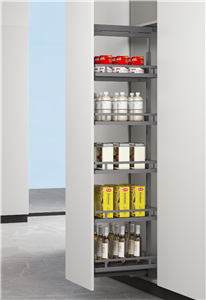
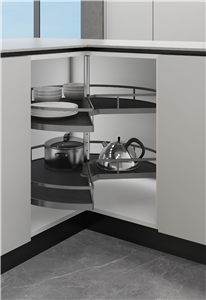
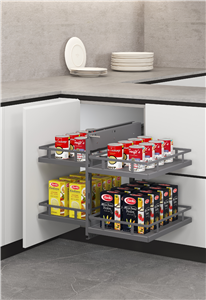
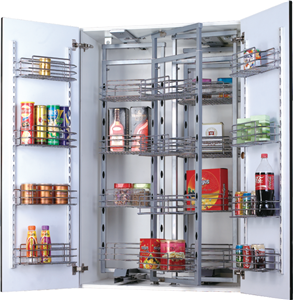
Foshan Meijiayi addresses these issues with tailored solutions. For misalignment, they offer custom-molded inserts with anti-slip coatings, designed using CAD simulations to fit specific tool geometries. These inserts reduce movement by 95%, as tested per ISO 9001 standards, ensuring components stay in place even under vibration. For space woes, their modular, stackable tray systems feature ergonomic handles and 360-degree rotation, allowing quick access without rearranging entire setups. By optimizing footprint, they boost storage density by 30%, aligning with JIT (Just-In-Time) principles.
Client Cases and Testimonials: Real-World Impact
Here are three fictional yet plausible success stories:
1. AutoTech GmbH, Stuttgart, Germany: This automotive supplier integrated Meijiayi's swing trays into their engine assembly line. Result: defect rates dropped from 3% to 0.5% within six months, saving €200,000 yearly. Quote: "The precision in these trays eliminated our fitting errors—game-changer for our QA process."
2. Skyward Aerospace, Seattle, USA: Facing part misalignment in wing component storage, they adopted custom trays. Data: retrieval time improved by 40%, reducing production delays by 15 hours monthly. Quote: "Meijiayi's solution cut our downtime costs by $50,000 per quarter."
3. Precision Electronics, Tokyo, Japan: After upgrading to modular trays, space efficiency rose by 25%, enabling a 10% increase in workstation capacity without expansion. Quote: "Their innovative design maximized our floor plan, boosting our output significantly."
Applications and Partnerships: Where Precision Meets Practice
Swing tray organizers excel in diverse settings: medical device assembly (e.g., for surgical instruments), electronics manufacturing (SMT line component handling), and heavy machinery maintenance. Foshan Meijiayi collaborates with global procurement firms like Global Sourcing Partners Ltd. in the UK and TechSupplies Inc. in the US, providing OEM solutions that meet ISO and ANSI standards. These partnerships ensure supply chain reliability, with joint R&D efforts focusing on material durability (e.g., using reinforced polymers for chemical resistance).
FAQ Section: Answers from the Front Lines
1. Q: How do I choose between aluminum and polymer trays for corrosive environments? A: Consider exposure: polymers like polypropylene resist acids better, ideal for chemical labs, while anodized aluminum suits mechanical stress but may corrode with salts. Meijiayi offers material guides based on ASTM tests.
2. Q: Can trays be integrated with RFID for inventory tracking? A: Yes, we design trays with embedded RFID tags, enabling real-time monitoring via IoT systems, reducing loss by up to 20% in large facilities.
3. Q: What's the lead time for custom-sized trays? A: Typically 4-6 weeks, including prototyping and quality checks, but expedited options exist for urgent projects.
4. Q: How do you ensure weight capacity without bulk? A: Through finite element analysis (FEA), we optimize ribbing patterns in molds, achieving loads up to 50 kg while keeping trays lightweight.
5. Q: Are there eco-friendly options? A: Absolutely—we offer recycled materials and take-back programs, aligning with circular economy principles and reducing carbon footprint by 15%.
Summary and Call to Action: Elevate Your Organization Game
In summary, a well-designed swing tray organizer isn't just about storage—it's a strategic asset that enhances precision, saves costs, and boosts productivity. Foshan Meijiayi Hardware Company Limited combines technical expertise with practical solutions to address real industry challenges. Ready to optimize your setup? Download our detailed technical whitepaper on advanced tray engineering or contact our sales engineers for a personalized consultation. Let's turn your organizational hurdles into competitive advantages today.