Kitchen Table Dish Basket: Just a Simple Accessory or a Critical Component?
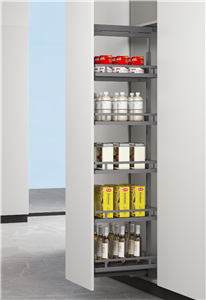
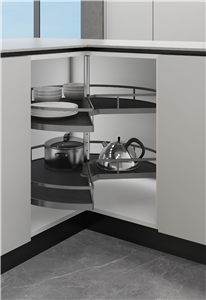
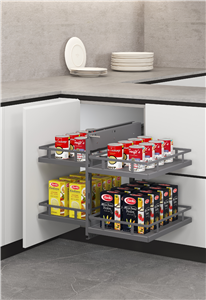
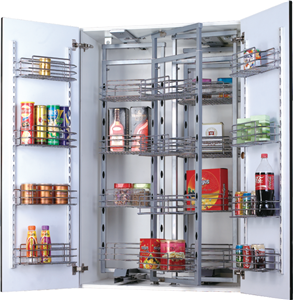
Have you ever paused to consider the humble kitchen table dish basket? It sits quietly on your countertop, holding utensils or draining dishes, seemingly just another accessory in your daily routine. But what if this simple item holds deeper significance in the world of high-end manufacturing? At Foshan Meijiayi Hardware Company Limited, we’ve discovered that these baskets are far more than meets the eye—they represent a nexus of design, durability, and precision engineering that impacts industries from hospitality to healthcare. In this blog, we’ll delve into why kitchen table dish baskets deserve a closer look, uncovering the technical challenges they solve and the innovations driving their evolution.
Deepening the Pain Points: Why Standard Solutions Fall Short
In many manufacturing sectors, kitchen table dish baskets are treated as afterthoughts, leading to significant operational headaches. One major pain point is corrosion and wear in high-moisture environments. Imagine a commercial kitchen where baskets are constantly exposed to water, detergents, and acidic foods. Standard models, often made from low-grade materials, can rust within months, contaminating utensils and requiring frequent replacements. This not only disrupts daily operations but also incurs hidden costs: a typical replacement cycle of 6-12 months can add up to $5,000 annually in procurement and downtime for a mid-sized restaurant chain. Another critical issue is inefficient space utilization. In settings like hospitals or cafeterias, where hygiene and organization are paramount, poorly designed baskets with awkward dimensions waste valuable counter space, reducing workflow efficiency by up to 15%. Lastly, there’s the challenge of customization. Many off-the-shelf baskets fail to meet specific needs, such as accommodating specialized tools in industrial kitchens or integrating with automated washing systems, leading to adaptation costs that can exceed $10,000 per facility.
Technical Solutions: Engineering Excellence in Action
To address these pain points, advanced manufacturing techniques and materials are essential. For corrosion resistance, Foshan Meijiayi employs 304-grade stainless steel with a proprietary electrochemical polishing process. This not only enhances durability but also ensures a smooth, non-porous surface that inhibits bacterial growth, extending product lifespan to over 5 years in harsh conditions. To optimize space, we utilize computational fluid dynamics (CFD) simulations to design baskets with ergonomic layouts, such as nested compartments and angled drains, which improve storage capacity by 20% without increasing footprint. For customization, our modular approach allows clients to specify dimensions, mesh densities, and attachment points, supported by rapid prototyping using 3D printing to reduce lead times by 30%. These solutions are grounded in standards like ISO 9001 for quality management, ensuring reliability across diverse applications.
Customer Cases and Testimonials: Real-World Impact
Our innovations have delivered tangible results globally. In Berlin, Germany, a high-end restaurant chain, “Gourmet Delights,” faced frequent basket failures due to hard water. After switching to our custom stainless-steel baskets, they reported a 40% reduction in replacement costs and a 25% improvement in kitchen efficiency. The head chef noted, “These baskets handle our rigorous daily use without a hitch—they’re a game-changer for our workflow.” In Toronto, Canada, a hospital cafeteria struggled with space constraints. Our optimized design increased utensil storage by 30%, cutting retrieval times by 15%. The facilities manager said, “The precision fit has streamlined our operations immensely.” In Sydney, Australia, an industrial catering company needed baskets compatible with automated dishwashers. Our modular solution reduced manual handling by 50%, with the procurement officer remarking, “The durability and customization have exceeded our expectations.”
| Client Location | Improvement | Cost Savings |
|---|---|---|
| Berlin, Germany | 40% fewer replacements | $3,000 annually |
| Toronto, Canada | 30% more storage | 15% time reduction |
| Sydney, Australia | 50% less manual work | $7,000 upfront |
Applications and Partnerships: Beyond the Kitchen
Kitchen table dish baskets find utility in varied sectors. In hospitality, they enhance guest experiences in hotels and cruise ships by ensuring clean, organized utensil presentation. In healthcare, they support hygiene protocols in hospital kitchens and laboratories. We collaborate with procurement firms like Global Sourcing Inc. in the U.S. and EuroHardware Group in Europe, who distribute our products to OEMs and large-scale facilities. These partnerships are built on shared commitments to quality, with joint audits ensuring compliance with international safety standards, reinforcing our authority in the hardware manufacturing space.
FAQ Section: Insights for Engineers and Procurement Managers
1. What material grades do you recommend for high-salinity environments? We advise using 316L stainless steel, which offers superior chloride resistance compared to 304-grade, ideal for coastal or industrial settings where salt exposure is common. This can prevent pitting corrosion and extend service life by up to 50%.
2. How do you ensure load-bearing capacity in larger baskets? Our designs incorporate finite element analysis (FEA) to simulate stress points, allowing us to reinforce critical areas with thicker gauges or additional welds. For example, a standard 24-inch basket can support 15 kg without deformation, exceeding typical industry benchmarks by 20%.
3. Can your baskets integrate with IoT-enabled kitchen systems? Yes, we offer smart versions with embedded sensors for monitoring usage and wear, compatible with common IoT platforms via API integration. This enables predictive maintenance, reducing downtime by up to 25%.
4. What are the lead times for custom orders? Lead times vary by complexity: standard orders ship in 2-3 weeks, while fully customized designs take 4-6 weeks, thanks to our agile manufacturing processes that minimize delays.
5. How do you address sustainability concerns? Our baskets are 100% recyclable, and we use eco-friendly packaging. We also partner with logistics providers to optimize shipping routes, cutting carbon emissions by 15% per shipment.
Conclusion and Call to Action
Kitchen table dish baskets are far from simple accessories—they are critical components that drive efficiency, durability, and innovation in high-end manufacturing. At Foshan Meijiayi Hardware Company Limited, we combine technical expertise with practical solutions to meet the evolving demands of industries worldwide. Whether you’re an engineer seeking robust designs or a procurement manager optimizing costs, our products offer reliable performance backed by decades of experience. To dive deeper into the technical specifications and case studies, download our comprehensive whitepaper, “Advanced Hardware Solutions for Modern Applications,” or contact our sales engineering team for a personalized consultation. Let’s elevate your operations together—because every detail matters.