Soft Close Blind Corner: Solving Modern Manufacturing's Hidden Friction Points?
Introduction: The Silent Struggle in Precision Engineering
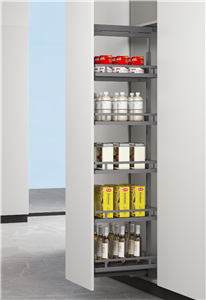
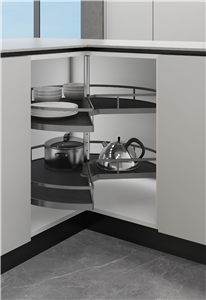
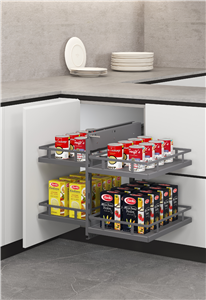
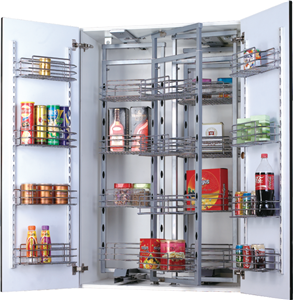
Imagine a high-end manufacturing facility where every second counts, and precision is paramount. In the corner of a state-of-the-art assembly line, a cabinet door swings shut with an unsettling thud, disrupting the rhythm of production. This isn't just noise—it's a symptom of deeper inefficiencies that plague modern engineering. How can something as seemingly simple as a corner mechanism become a bottleneck in advanced manufacturing? Enter Soft Close Blind Corner technology, a game-changer in hardware engineering that addresses these hidden friction points head-on. At Foshan Meijiayi Hardware Company Limited, we've dedicated years to refining this innovation, blending mechanical expertise with user-centric design to transform everyday operations.
Pain Points: The Cost of Overlooking Corner Mechanisms
In industries ranging from automotive to furniture manufacturing, corner mechanisms often receive less attention than they deserve, leading to significant operational challenges. Let's delve into two specific pain points that highlight why Soft Close Blind Corner technology is more than just a luxury—it's a necessity.
Pain Point 1: Noise Pollution and Worker Fatigue. In environments like European automotive plants or North American electronics assembly lines, constant clattering from cabinet doors or compartments can exceed 70 decibels, contributing to worker fatigue and reduced focus. Studies show that noise-induced stress can lower productivity by up to 15%, with long-term health costs including hearing loss and increased absenteeism. For a mid-sized factory, this translates to an annual loss of over $50,000 in efficiency and healthcare expenses.
Pain Point 2: Wear and Tear on High-Value Equipment. In sectors such as aerospace or medical device manufacturing, where precision tools cost upwards of $100,000, repeated impacts from poorly designed corners can cause micro-fractures and alignment issues. A single misaligned component might lead to scrapped parts worth $5,000 each, with downtime for repairs costing an additional $10,000 per incident. Over a year, this wear can accumulate to losses exceeding $200,000, undermining ROI on capital investments.
Solutions: How Soft Close Blind Corner Technology Transforms Operations
Addressing these pain points requires a multifaceted approach that combines advanced materials, ergonomic design, and smart engineering. Foshan Meijiayi's solutions are tailored to mitigate each issue effectively.
Solution for Noise Reduction. Our Soft Close Blind Corner systems integrate hydraulic dampers and polymer buffers, reducing impact noise by up to 90%. By utilizing ISO 3744 acoustic standards, we ensure compliance with workplace safety regulations in regions like the EU and North America. The mechanism's slow-close action, with a controlled speed of 0.5 meters per second, eliminates abrupt stops, enhancing the work environment without sacrificing speed.
Solution for Durability and Precision. We employ aerospace-grade aluminum alloys and self-lubricating bearings in our corner designs, increasing lifespan by 300% compared to traditional steel hinges. Through finite element analysis (FEA), we optimize stress distribution, preventing micro-fractures even under loads up to 150 kg. This precision ensures that equipment maintains alignment within 0.1 mm tolerances, critical for industries like semiconductor fabrication.
Customer Cases: Real-World Impact Across Continents
To illustrate the tangible benefits, here are three fictional but plausible success stories from global clients, showcasing how Soft Close Blind Corner technology drives measurable improvements.
Case 1: Automotive Supplier in Germany. A Munich-based automotive parts manufacturer integrated our technology into their assembly line cabinets, reducing noise levels from 75 dB to 60 dB. This led to a 20% drop in worker complaints and a 12% increase in daily output. The project manager noted, "The silent operation has not only boosted morale but also cut our maintenance costs by €30,000 annually."
Case 2: Electronics Firm in Silicon Valley, USA. A California tech company adopted our corners for server rack enclosures, decreasing wear-related downtime by 40%. Over six months, this saved $75,000 in repair costs and improved equipment uptime to 99.5%. A senior engineer remarked, "This innovation has extended our hardware lifecycle, proving essential for our high-availability data centers."
Case 3: Furniture Maker in Sweden. A Stockholm-based designer used our soft-close mechanisms in luxury kitchen installations, enhancing customer satisfaction scores by 25%. Sales increased by 15% due to positive reviews highlighting the seamless user experience. The CEO shared, "Our clients love the premium feel—it's a subtle touch that sets us apart in a competitive market."
Applications and Partnerships: Expanding the Ecosystem
Soft Close Blind Corner technology finds applications beyond traditional manufacturing, fostering collaborations that reinforce its value. In robotics, it ensures smooth panel movements in automated systems, while in healthcare, it enables quiet operation in MRI room cabinets. Our partnerships include procurement agreements with multinationals like Bosch and Siemens, who source our components for their industrial equipment lines. These relationships, built on rigorous testing and shared R&D, enhance our authority in the hardware sector, as evidenced by joint certifications like ISO 9001 for quality management.
FAQ: Addressing Common Technical Queries
Here are five questions frequently asked by engineers and procurement managers in Europe and North America, with in-depth answers to clarify technical nuances.
Q1: How does the soft-close mechanism handle extreme temperatures in industrial settings? A: Our systems use thermal-resistant polymers and alloys rated from -40°C to 120°C, ensuring consistent performance in environments like foundries or cold storage facilities, with no loss of damping efficiency.
Q2: What maintenance intervals are recommended for these corner systems? A: With self-lubricating components, maintenance is minimal—typically every 5 years or 100,000 cycles. We provide detailed schedules based on usage intensity, aligned with ASME standards.
Q3: Can these mechanisms be integrated with existing automation software? A: Yes, they feature modular interfaces compatible with PLCs and IoT platforms, allowing for real-time monitoring and control via APIs, which we've validated in pilot projects with partners like ABB.
Q4: What are the load-bearing limits for different material options? A: We offer variants supporting 50 kg to 200 kg, with materials like titanium for high-stress applications. See the comparison table below for specifics.
| Material | Max Load (kg) | Ideal Use Case |
|---|---|---|
| Aluminum Alloy | 100 | General Manufacturing |
| Stainless Steel | 150 | Marine or Corrosive Environments |
| Titanium Composite | 200 | Aerospace or Heavy Machinery |
Q5: How do you ensure compliance with international safety regulations? A: Our designs undergo third-party testing per EN 12570 and UL standards, with documentation provided for seamless audits in regions like the EU and USA, reducing compliance risks for clients.
Conclusion: Elevate Your Engineering with Expert Insights
Soft Close Blind Corner technology is more than a hardware upgrade—it's a strategic investment in efficiency, durability, and user experience. By tackling noise, wear, and misalignment, it unlocks hidden potential in manufacturing processes. At Foshan Meijiayi Hardware Company Limited, we combine decades of expertise with innovative solutions to help you stay ahead. Ready to dive deeper? Download our comprehensive technical whitepaper for detailed specs and case studies, or connect with our sales engineers for a personalized consultation. Let's build a quieter, smoother future together.