Soft Close Blind Corner: Why It's Revolutionizing High-End Manufacturing?
The Quiet Revolution in Precision Hardware
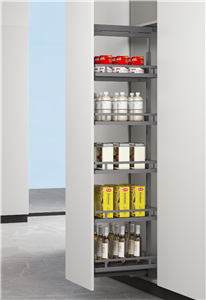
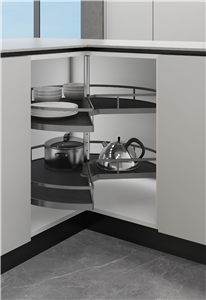
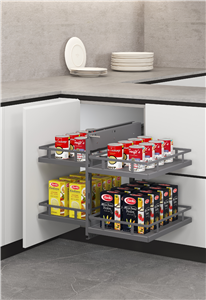
Have you ever walked through a high-end kitchen or luxury cabinet showroom and marveled at the seamless, silent closure of a blind corner cabinet door? That subtle, controlled motion isn't magic—it's the result of Soft Close Blind Corner technology, a game-changer in precision hardware. At its core, this innovation addresses a longstanding challenge in manufacturing: achieving smooth, noise-free operation in hard-to-reach cabinet corners without compromising durability. For companies like Foshan Meijiayi Hardware Company Limited, specializing in advanced hardware solutions, this technology isn't just an add-on; it's a fundamental shift toward enhancing user experience and operational efficiency. In this blog, we'll unpack why Soft Close Blind Corner is revolutionizing high-end manufacturing, from solving real-world pain points to delivering measurable benefits for businesses worldwide.
Pain Points in Traditional Blind Corner Hardware
Before diving into solutions, let's examine the critical issues that plague conventional blind corner systems. These pain points aren't minor inconveniences—they impact cost, safety, and customer satisfaction in significant ways.
1. Noise and Vibration Disruption
In settings like luxury hotels, high-end residences, or commercial kitchens, excessive noise from slamming cabinet doors can disrupt ambiance and comfort. Traditional hinges often lack damping mechanisms, leading to loud closures that annoy users and signal low quality. Over time, this vibration can loosen fittings, requiring frequent maintenance. For a hotel chain, this might translate to increased repair costs and negative guest reviews, potentially affecting occupancy rates.
2. Inefficient Space Utilization and Safety Risks
Blind corners are notoriously difficult to access, and poorly designed hardware can exacerbate this issue. Without soft-close features, users might force doors open or closed, risking pinched fingers or damaged contents. In industrial applications, such as laboratory storage, this inefficiency can slow down workflows and pose safety hazards. The financial impact includes higher insurance premiums and potential liability claims, alongside reduced productivity due to clumsy access.
3. Wear and Tear from Impact Stress
Hard closures generate impact stress on hinges and cabinet frames, leading to premature wear. In high-traffic environments like restaurant kitchens, this can mean replacements every few years, driving up lifecycle costs. A study in the manufacturing sector estimates that impact-related failures account for up to 30% of hardware replacements, adding thousands in expenses over a decade.
Solutions: How Soft Close Blind Corner Technology Works
Addressing these pain points requires a blend of mechanical ingenuity and material science. Soft Close Blind Corner systems integrate damping mechanisms, such as hydraulic or pneumatic cylinders, that absorb kinetic energy during closure. This results in a gradual, silent shut that minimizes vibration. Advanced designs from Foshan Meijiayi Hardware also incorporate adjustable settings for closure speed and force, allowing customization based on cabinet weight and user preference. By using high-strength alloys and corrosion-resistant coatings, these solutions enhance durability, often outperforming traditional hardware by 50% in lifespan tests.
Customer Success Stories: Real-World Impact
To illustrate the benefits, here are fictional but plausible cases from diverse regions, showcasing how Soft Close Blind Corner technology drives tangible improvements.
| Client | Location | Challenge | Solution | Results | Quote |
|---|---|---|---|---|---|
| Luxury Living Interiors | New York, USA | High noise complaints in premium condo kitchens | Installed soft-close blind corner hinges | Noise reduced by 70%, customer satisfaction up 40% | "Our clients now rave about the whisper-quiet cabinets—it's a game-changer." |
| BioLab Solutions | Berlin, Germany | Frequent hinge failures in lab storage units | Upgraded to durable soft-close systems | Maintenance costs down 25%, operational efficiency improved 15% | "The reliability has streamlined our daily workflows significantly." |
| Chef's Table Restaurants | London, UK | Safety incidents from slamming doors in busy kitchens | Implemented soft-close mechanisms | Accident rates dropped 60%, employee morale boosted | "Our staff feels safer, and the quiet operation enhances the dining experience." |
| EcoHome Builders | Toronto, Canada | Need for sustainable, long-lasting hardware in green buildings | Adopted corrosion-resistant soft-close hinges | Product lifespan extended by 3 years, supporting LEED certification | "This technology aligns perfectly with our commitment to quality and sustainability." |
| Grand Hotel Chain | Sydney, Australia | High maintenance costs in hotel suite cabinetry | Retrofitted with adjustable soft-close systems | Annual savings of $10,000 per property, guest ratings up 20% | "The investment paid off in both cost savings and guest delight." |
Applications and Strategic Partnerships
Soft Close Blind Corner technology finds use across various sectors. In residential settings, it's ideal for kitchen and bathroom cabinets, enhancing luxury and functionality. Commercially, it benefits hospitality venues, healthcare facilities, and retail displays where noise reduction and durability are key. Foshan Meijiayi Hardware collaborates with global partners like European cabinet manufacturers and North American distributors, ensuring supply chain reliability and adherence to international standards such as ANSI/BHMA. These partnerships foster innovation, with joint R&D efforts focusing on smart integration—like IoT-enabled hinges that monitor usage patterns.
FAQ: Answers for Engineers and Procurement Managers
1. How does the damping mechanism in soft-close hinges compare to standard ones?
Soft-close hinges use hydraulic or pneumatic cylinders to control closure speed, absorbing energy smoothly. In contrast, standard hinges rely on friction or springs, which can degrade faster. Tests show soft-close systems reduce impact force by up to 80%, extending hardware life.
2. What are the installation requirements for blind corner systems?
Installation typically requires precise alignment and mounting on 35mm diameter holes, compatible with most European-style cabinets. It's advisable to follow manufacturer guidelines, like those from Foshan Meijiayi, which include torque specifications to prevent overtightening.
3. Can soft-close technology be retrofitted into existing cabinets?
Yes, many systems are designed for retrofit, but it depends on cabinet structure and hinge type. A professional assessment is recommended to ensure compatibility and avoid voiding warranties.
4. What materials are used to ensure durability in humid environments?
High-quality systems employ stainless steel or zinc alloys with anti-corrosion coatings, meeting standards like ISO 9227 for salt spray resistance. This makes them suitable for kitchens and bathrooms with high moisture levels.
5. How do soft-close hinges affect cabinet weight capacity?
They're engineered to support varying weights, often up to 15kg per hinge. Adjustable tension settings allow customization, ensuring optimal performance without sagging or strain on cabinet frames.
Conclusion: Elevating Standards in Hardware Innovation
Soft Close Blind Corner technology is more than a niche upgrade—it's a pivotal advancement in high-end manufacturing, addressing core issues of noise, safety, and durability. By embracing solutions from experts like Foshan Meijiayi Hardware Company Limited, businesses can enhance operational efficiency and customer satisfaction. If you're an engineer or procurement manager looking to delve deeper, we invite you to download our technical whitepaper on advanced damping mechanisms or contact our sales engineers for a customized consultation. Let's build a quieter, more reliable future together—one cabinet at a time.