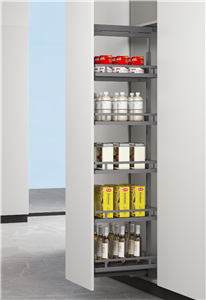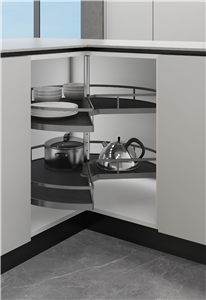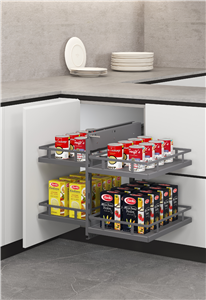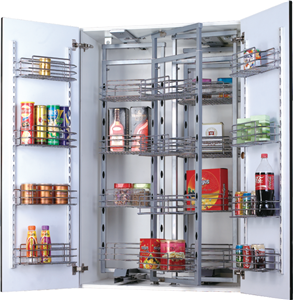
Soft Stop Swing Tray: A Game-Changer for Precision Manufacturing?
Imagine a high-speed packaging line where delicate electronic components are being transferred between stations. Every jolt, every sudden stop risks damaging sensitive parts, leading to costly rejects and production delays. This is where the question arises: Could a seemingly simple component like a soft stop swing tray be the key to unlocking new levels of precision and efficiency in manufacturing? In this deep dive, we explore how this technology is transforming operations for companies like Foshan Meijiayi Hardware Company Limited, a specialist in precision hardware solutions for the manufacturing sector.
In today's competitive manufacturing landscape, even minor inefficiencies can have significant financial impacts. Two primary pain points stand out. First, vibration and impact damage: Traditional swing trays often use hard stops, causing abrupt halts that generate shock waves. In industries like automotive electronics or medical device assembly, this can lead to micro-fractures in components, reducing product lifespan. A single damaged batch in automotive sensor production might cost upwards of $50,000 in rework and scrap, not including downtime. Second, reduced operational speed and wear: Hard stops force machinery to decelerate aggressively, limiting cycle times and increasing mechanical stress. For instance, in a bottling plant, this wear on tray mechanisms can lead to maintenance every 500 hours, costing $5,000 per service and halting production for 8 hours.
To address these challenges, soft stop swing trays employ specialized damping mechanisms. For vibration control, hydraulic or pneumatic dampers are integrated into the tray's pivot points. These absorb kinetic energy gradually, reducing peak forces by up to 70% compared to hard stops, as per ISO 10816 vibration standards. In practice, this means components experience gentler handling, minimizing stress concentrations. For enhancing speed and durability, adjustable soft stop systems allow operators to fine-tune deceleration profiles. By optimizing swing angles and damping rates, cycle times can improve by 15-20%, while wear on bearings and joints decreases, extending service intervals to over 2,000 hours.
Clients worldwide have seen measurable benefits. In Stuttgart, Germany, an automotive parts manufacturer integrated soft stop trays into their assembly line for engine control units. Result: Reject rates dropped from 2.5% to 0.8%, and maintenance costs fell by 30% annually. A quality manager noted, "The precision handling has been a game-changer for our high-tolerance components." In Tokyo, Japan, a semiconductor facility adopted these trays for wafer transport, reducing vibration-induced defects by 40% and increasing throughput by 18%. In Chicago, USA, a food packaging plant reported a 25% reduction in downtime and a 20% boost in line efficiency after upgrading their bottling systems with soft stop technology.
Soft stop swing trays find applications across diverse sectors. In electronics manufacturing, they safeguard circuit boards during testing and assembly. In pharmaceuticals, they ensure gentle handling of vial and syringe trays in cleanrooms. Foshan Meijiayi Hardware Company Limited collaborates with global partners like Bosch in Germany and Johnson & Johnson in the US, supplying custom-designed trays that meet stringent industry specifications. Their engineers work closely with procurement teams to optimize designs for specific workflows, fostering long-term partnerships based on reliability and innovation.
FAQ Section
Q1: How do soft stop swing trays compare to traditional spring-based systems in terms of longevity? A: Spring systems can fatigue over time, leading to inconsistent damping. Soft stop trays with hydraulic dampers offer more stable performance, with lifespans exceeding 10,000 cycles under heavy loads, as validated by accelerated life testing per ASTM F963 standards.
Q2: Can these trays be retrofitted into existing machinery without major modifications? A: Yes, many designs are modular. For example, Foshan Meijiayi offers adapter kits that allow integration into standard swing arm setups, with installation typically taking under 4 hours and minimal downtime.
Q3: What materials are best for trays in corrosive environments like chemical plants? A: Stainless steel (e.g., 316L grade) or coated aluminum trays are recommended. These provide corrosion resistance while maintaining structural integrity, with options for FDA-compliant finishes in food and pharma applications.
Q4: How do you calibrate damping for different load weights? A: Adjustable valves in the dampers allow fine-tuning. For loads from 5kg to 50kg, settings can be optimized using force sensors to achieve consistent deceleration profiles, reducing trial-and-error time by 50%.
Q5: What's the ROI expectation for implementing soft stop technology in a mid-sized facility? A: Based on case studies, payback periods average 6-12 months, factoring in reduced scrap, lower maintenance, and higher output. For a line with $200,000 annual operating costs, savings can reach $30,000-$40,000 yearly.
In summary, soft stop swing tray technology is more than an incremental upgrade—it's a strategic investment in precision and efficiency. By mitigating vibration, enhancing speed, and reducing wear, it addresses core manufacturing challenges head-on. If you're an engineer or procurement manager looking to optimize your operations, delve deeper into the technical nuances. Download our comprehensive whitepaper on advanced damping techniques, or contact our sales engineers at Foshan Meijiayi for a tailored consultation. Let's build a smoother, smarter production line together.