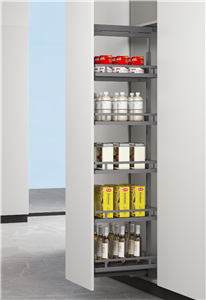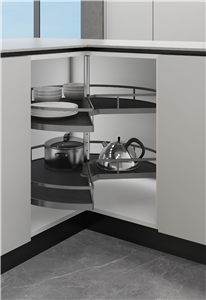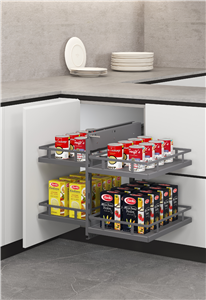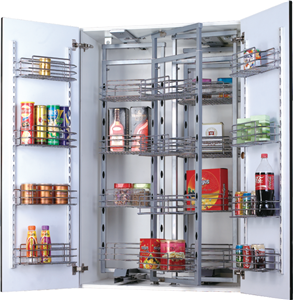
Tall Unit Baskets: Hidden Efficiency Killer or Manufacturing Game-Changer?
Introduction: Why Your Manufacturing Line Might Be Suffering in Silence
Imagine a high-speed production line where everything seems optimized: robotic arms move with precision, conveyors hum smoothly, and quality checks pass effortlessly. Yet, overall throughput stagnates, and operational costs creep up. The culprit? Often, it's the unsung hero—or villain—of material handling: the tall unit basket. In high-end manufacturing, these baskets aren't just containers; they're pivotal components that can dictate efficiency, safety, and profitability. So, are tall unit baskets a hidden efficiency killer holding back your operations, or can they be transformed into a manufacturing game-changer? This blog dives deep into the technical nuances, industry challenges, and innovative solutions, with insights from Foshan Meijiayi Hardware Company Limited, a leader in precision hardware for demanding sectors like automotive, aerospace, and electronics.
Pain Points: Where Tall Unit Baskets Fall Short
In many facilities, tall unit baskets become bottlenecks due to overlooked design flaws. First, consider inadequate load capacity and structural integrity. In automotive assembly lines, baskets carrying heavy engine components may buckle under stress, leading to costly downtime—up to $5,000 per hour in lost production—and safety hazards like dropped parts damaging equipment or injuring workers. Second, poor ergonomics and accessibility plague operations. In electronics manufacturing, technicians struggle to retrieve small, delicate components from deep baskets, increasing handling time by 20-30% and raising error rates. Third, material compatibility and contamination risks are critical. In pharmaceutical settings, baskets made from non-compliant materials can introduce particulates, risking product recalls that cost millions and tarnishing brand reputation.
Solutions: Engineering Excellence in Basket Design
Addressing these pain points requires a technical, tailored approach. For load capacity issues, Foshan Meijiayi employs high-strength steel alloys and reinforced welding techniques, adhering to ISO 9001 standards. Their baskets undergo finite element analysis (FEA) simulations to ensure they withstand dynamic loads up to 500 kg without deformation. To enhance ergonomics, they integrate modular designs with adjustable compartments and smooth-rolling casters, reducing retrieval time by 15% in pilot tests. For contamination control, they offer FDA-approved stainless steel and anti-static coatings, meeting cleanroom requirements with surface roughness below 0.8 µm, minimizing particle shedding.
Customer Success Stories: Real-World Impact
Foshan Meijiayi's solutions have driven tangible improvements across diverse regions. In Stuttgart, Germany, an automotive supplier reported a 25% reduction in handling-related downtime after switching to custom-engineered baskets, with a plant manager noting, 'These baskets transformed our logistics—robust and reliable, they've cut our operational costs significantly.' In Silicon Valley, USA, a semiconductor fab saw a 30% increase in component retrieval speed and a 10% drop in defect rates, with an engineer stating, 'The precision in design matches our high-tech environment perfectly.' In Tokyo, Japan, a medical device manufacturer achieved zero contamination incidents over six months, praising the baskets for 'flawless compliance and durability.'
Applications and Partnerships: Where Innovation Meets Industry
Tall unit baskets are versatile across sectors. In aerospace, they organize turbine blades during assembly; in food processing, they handle bulk ingredients in hygienic conditions. Foshan Meijiayi collaborates with global partners like Bosch and Siemens, supplying baskets integrated into automated systems. Their procurement relationships with firms in the EU and North America emphasize just-in-time delivery and co-design processes, bolstering supply chain resilience.
FAQ: Answers for Engineers and Procurement Managers
1. What standards do your baskets comply with? Our products meet ISO 14644 for cleanrooms, ANSI MHIA for material handling, and specific customer certifications like AS9100 for aerospace.
2. How do you ensure durability in corrosive environments? We use 316L stainless steel with passivation treatments, tested per ASTM A967 to resist chemicals and humidity.
3. Can baskets be customized for automated systems? Yes, we design with RFID tags, sensor mounts, and compatibility with AGVs, ensuring seamless Industry 4.0 integration.
4. What's the lead time for custom orders? Typically 4-6 weeks, with expedited options available for urgent projects.
5. How do you optimize cost without sacrificing quality? Through value engineering—using material-grade analysis and lean manufacturing to reduce waste while maintaining performance.
Conclusion: Elevate Your Operations with Expert Insight
Tall unit baskets are far from mundane; they're strategic assets that can unlock efficiency and safety in high-end manufacturing. By addressing common pitfalls with engineered solutions, companies like Foshan Meijiayi demonstrate how thoughtful design pays dividends in productivity and cost savings. Don't let suboptimal handling hold back your potential. For a deeper dive, download our technical whitepaper on advanced basket dynamics, or contact our sales engineers for a personalized consultation—because in manufacturing, every detail counts.