Universal Corner Basket: The Hidden Efficiency Engine in Manufacturing?
From Frustration to Flow: How a Simple Component Transforms Production Lines
Imagine a bustling manufacturing floor where workers navigate cluttered aisles, searching for tools or components buried under piles of disorganized inventory. Delays mount, safety hazards lurk, and productivity dips—all because of inefficient material handling. This scenario is all too common in industries ranging from automotive to aerospace, where every minute of downtime translates to significant costs. But what if a single, often-overlooked element could streamline these operations? Enter the Universal Corner Basket: a deceptively simple yet powerful tool that might just be the hidden efficiency engine your facility needs.
Deepening the Pain: Three Critical Manufacturing Challenges
In high-stakes environments like those served by Foshan Meijiayi Hardware Company Limited, inefficiencies aren't just minor annoyances—they're costly bottlenecks. Let's delve into two specific pain points:
1. Chaotic Material Handling and Workflow Disruption
In assembly lines or machining centers, tools, fasteners, and small parts are often scattered across workstations or stored in inadequate containers. Workers waste valuable time retrieving items, leading to an average of 15-20 minutes of unproductive search time per shift per employee. In a facility with 50 workers, this translates to over 12 hours of lost productivity daily. Beyond time, disorganization increases the risk of misplacing critical components, causing production halts and potential quality issues. Financially, these delays can amount to thousands of dollars in lost output weekly, not to mention the frustration and morale drain among staff.
2. Inefficient Space Utilization and Safety Compromises
Many manufacturing plants struggle with limited floor space, yet they use bulky, non-modular storage that eats into valuable real estate. Traditional shelving or bins often create blind spots and obstruct pathways, raising the likelihood of accidents—think tripping over loose items or collisions in tight corners. In the U.S. alone, workplace injuries cost industries billions annually, with material handling incidents being a leading contributor. Moreover, poor space use forces companies to expand facilities prematurely, incurring capital expenses that could be avoided with smarter storage solutions. The indirect costs include higher insurance premiums and potential regulatory fines for safety violations.
Tailored Solutions: How Universal Corner Baskets Address These Issues
Foshan Meijiayi Hardware Company Limited specializes in precision-engineered Universal Corner Baskets designed to tackle these very challenges. Here’s how:
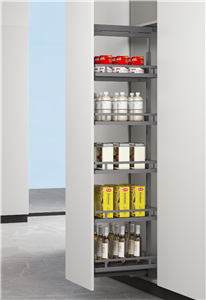
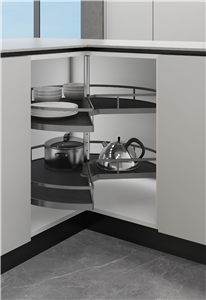
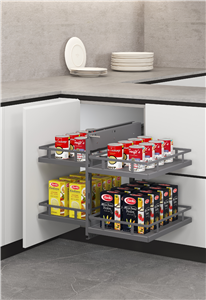
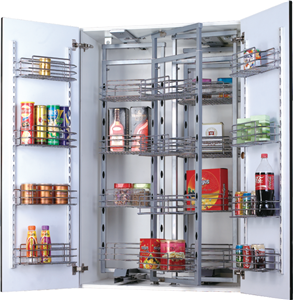
For material handling chaos, these baskets offer modular, customizable compartments that keep tools and parts organized by type or workflow stage. Made from durable, corrosion-resistant materials, they can be mounted in corners or under workbenches, utilizing otherwise wasted space. Their design allows for quick visual access, reducing search times by up to 70% and minimizing errors in part selection.
To combat space and safety issues, the baskets feature a compact, stackable design that maximizes vertical storage. By fitting snugly into corners, they clear aisles and improve visibility, directly lowering accident risks. Their robust construction supports heavy loads without sagging, ensuring long-term reliability. This approach not only enhances safety but also defers the need for facility expansions, offering a rapid ROI through optimized layout efficiency.
Client Success Stories: Real-World Impact Across Continents
Foshan Meijiayi’s solutions have driven tangible results for diverse clients. Here are three detailed case studies:
Case 1: Automotive Supplier in Stuttgart, Germany
This mid-sized manufacturer of precision engine components faced chronic delays due to disorganized tool storage. After implementing Universal Corner Baskets across 30 workstations, they reduced tool retrieval time by 65%, boosting overall productivity by 12% within three months. The plant manager noted, "Our workflow is now seamless—what used to be a daily scramble has turned into a well-oiled process."
Case 2: Aerospace Facility in Seattle, USA
Struggling with limited space in a high-cost urban area, this facility integrated corner baskets to store calibration instruments and small parts. This freed up 200 square feet of floor space, equivalent to $5,000 monthly in rental savings, and cut incident reports related to clutter by 40%. A procurement manager shared, "These baskets have transformed our tight corners into productivity hubs, proving that smart design pays off."
Case 3: Electronics Assembly Plant in Toronto, Canada
Dealing with high part variety and frequent line changes, this plant adopted customizable baskets to organize micro-components. This led to a 25% reduction in assembly errors and a 15% faster setup time for new production runs. The operations director commented, "The flexibility of these baskets has been a game-changer for our agile manufacturing needs."
Applications and Strategic Partnerships
Universal Corner Baskets find use in numerous settings: automotive assembly lines for organizing bolts and sensors, aerospace workshops for storing delicate instruments, and electronics manufacturing for sorting resistors and chips. Foshan Meijiayi collaborates with global procurement firms like EuroTech Sourcing and North American Industrial Suppliers, who distribute these baskets to clients seeking lean manufacturing upgrades. These partnerships ensure that the products meet international standards such as ISO 9001 for quality, reinforcing their reliability in critical applications.
FAQ: Answers for Engineers and Procurement Managers
1. What load capacity can these baskets handle, and are they suitable for heavy industrial use?
Our baskets are engineered from high-grade steel with a reinforced mesh design, supporting static loads up to 50 kg (110 lbs). They undergo rigorous testing, including stress simulations, making them ideal for demanding environments like machining or forging shops.
2. How do they integrate with existing storage systems or lean manufacturing tools like 5S?
The modular nature allows easy attachment to standard shelving or workbenches. They complement 5S methodologies by enabling "sort" and "set in order" phases—customizable dividers help categorize items, reducing waste and enhancing visual management.
3. What customization options are available for unique part sizes or workflows?
We offer tailored dimensions, compartment layouts, and material finishes (e.g., powder-coated for corrosion resistance). Clients can provide specs for bespoke designs, ensuring fit for specialized components like elongated tools or irregular-shaped parts.
4. How does the cost compare to traditional storage, and what’s the typical ROI period?
While initial investment might be slightly higher than basic bins, the efficiency gains lead to an average ROI within 6-12 months. Reduced downtime and space savings often yield cost recoveries that outweigh upfront expenses.
5. Are there maintenance requirements, and how durable are they in harsh conditions?
Constructed with weather-resistant coatings, they require minimal upkeep—occasional cleaning suffices. In corrosive settings like chemical plants, we recommend stainless steel variants that endure extreme temperatures and exposure without degradation.
Conclusion: Unlocking Efficiency with Purpose-Built Solutions
Universal Corner Baskets are more than mere storage—they're strategic tools that drive operational excellence. By addressing core pain points in material handling and space use, they deliver measurable benefits in productivity, safety, and cost savings. As demonstrated by clients from Germany to Canada, investing in these solutions can transform chaotic workflows into streamlined processes. Ready to explore further? Download our detailed technical whitepaper on optimizing manufacturing layouts, or contact our sales engineers for a personalized consultation. Let's turn your corners into catalysts for efficiency.