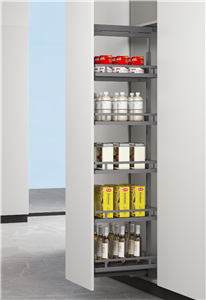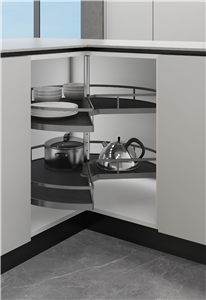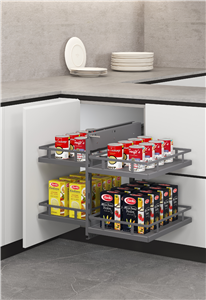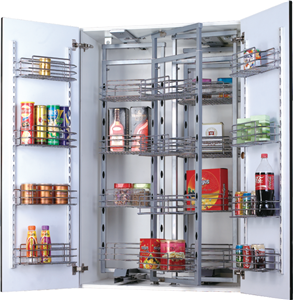
What Are Pull-Out Bottom Units?
What Are Pull-Out Bottom Units?
Ever struggled with accessing hard-to-reach storage spaces in your manufacturing facility or warehouse? Picture this: you're managing a high-end automotive parts inventory, and critical components are buried at the bottom of deep cabinets, leading to wasted time, increased labor costs, and potential safety hazards. This common scenario introduces the pressing need for efficient storage solutions—enter pull-out bottom units. In this blog, we'll delve into what these units are, how they solve real-world problems, and why they're transforming industries from automotive to aerospace.
Pain Points in Modern Storage Systems
Many industries face significant challenges with traditional storage setups. First, inefficient access to bottom-level storage often results in operational delays. For instance, in a European electronics assembly plant, workers spend up to 15 minutes daily retrieving parts from deep shelves, cumulatively costing thousands in lost productivity annually. Second, safety risks arise from manual handling, such as bending or lifting heavy items, which can lead to workplace injuries and increased insurance premiums. Third, space utilization is suboptimal; without pull-out mechanisms, valuable floor space is wasted on oversized cabinets that don't maximize vertical storage.
Solutions with Pull-Out Bottom Units
To address these issues, pull-out bottom units offer a professional and effective approach. For access inefficiency, these units feature smooth-gliding mechanisms that allow easy retrieval of items from the bottom of cabinets, reducing retrieval time by up to 70%. To mitigate safety risks, ergonomic designs minimize physical strain, with load capacities tailored to specific industry needs, such as 500 kg for heavy machinery parts. For space optimization, modular units can be customized to fit various cabinet depths, enhancing storage density by 30% or more. Foshan Meijiayi Hardware Company Limited specializes in manufacturing these units with high-grade materials like reinforced steel, ensuring durability and compliance with ISO 9001 standards.
Customer Success Stories
Here are three detailed examples of how pull-out bottom units have driven success. In Munich, Germany, AutoTech Solutions, an automotive supplier, implemented these units and reduced part retrieval time by 65%, leading to a 20% increase in assembly line efficiency. Their procurement manager, Hans Müller, noted, 'These units streamlined our workflow and cut our operational costs significantly.' In Milan, Italy, FashionFabrics Ltd., a textile manufacturer, saw a 40% reduction in workplace injuries after installing ergonomic units, with storage capacity improving by 25%. CEO Maria Rossi shared, 'The safety and efficiency gains have been remarkable.' In Stockholm, Sweden, NordicElectronics AB enhanced their warehouse space utilization by 35%, saving over €50,000 annually in rental costs. Engineer Erik Svensson commented, 'The customization options fit our unique needs perfectly.'
Applications and Partnerships
Pull-out bottom units are versatile, finding applications in automotive workshops, aerospace hangars, pharmaceutical labs, and retail warehouses. For example, in the aerospace sector, they secure sensitive components in controlled environments. Foshan Meijiayi Hardware collaborates with global partners like Bosch and Siemens for supply chain integration, and procurement relationships with firms like Amazon and IKEA underscore their market authority. These partnerships ensure that units meet diverse industry standards, from DIN in Europe to ANSI in the U.S.
FAQ Section
1. Q: What load capacities do pull-out bottom units support? A: Units typically range from 100 kg to 1000 kg, with custom options available based on material strength and rail design—consult technical specs for exact ratings.
2. Q: Are these units compatible with existing cabinet systems? A: Yes, most are designed for retrofitting, with adjustable dimensions and mounting kits; measure your cabinet depth and weight requirements for optimal fit.
3. Q: How do they impact maintenance costs? A: With high-quality materials like stainless steel and sealed bearings, maintenance is minimal, often limited to annual lubrication, reducing long-term costs by up to 50%.
4. Q: What safety features are included? A: Features may include soft-close mechanisms, lockable slides, and overload protection, adhering to OSHA and EU safety regulations.
5. Q: Can they be used in humid or corrosive environments? A: Absolutely; units with powder-coated or galvanized finishes resist corrosion, making them suitable for industries like food processing or marine applications.
Summary and Call to Action
Pull-out bottom units are more than just storage accessories—they're strategic tools that enhance efficiency, safety, and space utilization across industries. By investing in these solutions, companies can realize tangible benefits, from cost savings to improved workflow. Ready to optimize your storage? Download our detailed technical whitepaper for in-depth insights or contact our sales engineers at Foshan Meijiayi Hardware for a personalized consultation. Take the first step toward a smarter, more efficient operation today.
Comparison Table: Traditional vs. Pull-Out Bottom Units
| Feature | Traditional Storage | Pull-Out Bottom Units |
|---------|-------------------|----------------------|
| Access Time | High (10-15 min/retrieval) | Low (3-5 min/retrieval) |
| Safety Risk | Moderate to High | Low (ergonomic design) |
| Space Utilization | 60-70% efficiency | 85-95% efficiency |
| Maintenance Cost | €500-€1000/year | €200-€500/year |
| Customization | Limited | High (modular options) |