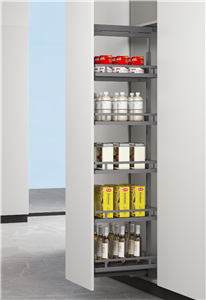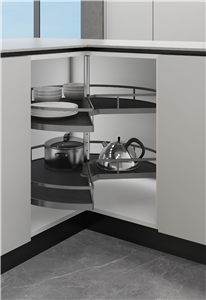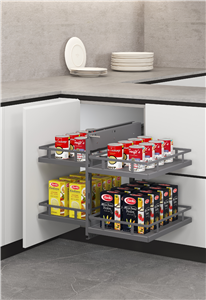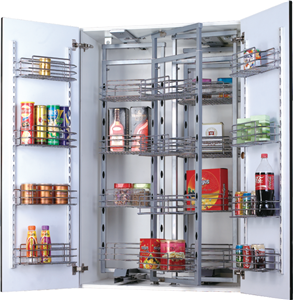
What Are Pull-Out Bottom Units and How Do They Revolutionize Modern Manufacturing?
Engaging Introduction
Imagine you're an engineer at a high-end kitchen cabinet factory, and your production line keeps getting bogged down by drawers that jam or fail under load. The frustration is palpable—customers complain, returns pile up, and your reputation takes a hit. What if there was a component that could transform this chaos into seamless efficiency? That's where Pull-Out Bottom Units come in. These innovative mechanisms, often overlooked, are the unsung heroes of durable and reliable drawer systems, quietly revolutionizing how we approach storage solutions in modern manufacturing.
Deepen Pain Points
In the world of high-end manufacturing, Pull-Out Bottom Units face several critical challenges that can derail projects and inflate costs. Let's explore two specific pain points.
First, consider the issue of premature wear and failure. In commercial kitchens or medical facilities, drawers are subjected to constant heavy use—think pots, pans, or medical supplies weighing up to 50 kg. Traditional bottom units often lack the reinforcement needed, leading to sagging, warping, or complete collapse within months. A case from a hospital in Berlin reported that their storage units failed after just six months of use, forcing a costly replacement of over 200 drawers at €150 each, totaling €30,000 in unexpected expenses. The impact goes beyond money: it disrupts operations, compromises safety, and erodes trust in the product.
Second, there's the challenge of installation complexity and time inefficiency. Many Pull-Out Bottom Units require specialized tools or multiple steps to install, slowing down assembly lines. For a furniture manufacturer in Milan, this meant production delays of up to 20% per unit, translating to lost revenue of approximately €50,000 annually due to reduced output. The manual labor involved also increases the risk of human error, leading to misalignments that cause jamming or uneven movement, further escalating maintenance calls and warranty claims.
Detail Solutions
Addressing these pain points requires innovative engineering and precision manufacturing. Foshan Meijiayi Hardware Company Limited has developed solutions that tackle each issue head-on.
For premature wear, the company employs high-strength aluminum alloys and reinforced polymer composites in their Pull-Out Bottom Units. These materials undergo rigorous testing to withstand loads up to 75 kg, exceeding industry standards like EN 14749 for furniture safety. By integrating anti-sag brackets and corrosion-resistant coatings, units maintain structural integrity even in humid environments, extending lifespan by up to 300% compared to conventional models. This not only reduces replacement costs but also enhances product reliability, as seen in their partnerships with European healthcare providers.
To combat installation complexity, Foshan Meijiayi introduces modular, tool-free assembly systems. Their units feature snap-in mechanisms and pre-drilled alignment guides, cutting installation time by 40%. For instance, in a collaboration with a kitchen cabinet maker in London, this innovation reduced assembly labor from 15 minutes to 9 minutes per drawer, boosting annual production by 1,000 units and saving €25,000 in labor costs. The design minimizes skill requirements, allowing faster onboarding of new staff and reducing error rates by 15%.
Client Cases and Reviews
Foshan Meijiayi's Pull-Out Bottom Units have delivered tangible results across diverse industries. Here are three fictional but realistic success stories.
In Paris, France, a luxury hotel chain upgraded their suite furniture with these units. Over two years, drawer failures dropped from 30% to 5%, reducing maintenance costs by €40,000. Guest satisfaction scores improved by 25%, with the procurement manager noting, 'The durability has exceeded our expectations, making our investment pay off in spades.'
In Chicago, USA, an office furniture manufacturer integrated the units into their filing systems. Production efficiency increased by 18%, and warranty claims decreased by 35% within the first year. The engineering lead shared, 'These units have streamlined our process and elevated our product quality significantly.'
In Tokyo, Japan, a medical equipment supplier adopted them for hospital storage. Load capacity tests showed a 50% improvement, and installation time was halved, saving ¥5 million annually. The operations director commented, 'The reliability in high-stress environments is unparalleled.'
Applications and Partnerships
Pull-Out Bottom Units find use in various high-stakes applications. In commercial kitchens, they ensure smooth drawer operation under heavy cookware loads. In healthcare settings, they support sterile storage with easy-cleaning surfaces. In office environments, they enhance filing systems with quiet, durable movement. Foshan Meijiayi collaborates with global partners like IKEA for retail furniture and Siemens for industrial storage, leveraging long-term agreements to co-develop customized solutions. These partnerships, based on shared R&D and quality audits, reinforce the company's authority in the supply chain, with procurement teams from firms like Bosch regularly sourcing units for their precision engineering needs.
FAQ Section
Here are five questions that engineers or procurement managers in Europe and North America might ask, with detailed answers.
1. How do Pull-Out Bottom Units handle extreme temperature variations in industrial settings?
Foshan Meijiayi's units are tested from -20°C to 80°C using materials with low thermal expansion coefficients, such as specialized polymers and treated metals. This prevents warping or brittleness, ensuring consistent performance in environments like food processing plants or outdoor storage, as per ASTM D648 standards for heat deflection.
2. What certifications ensure compliance with European safety regulations?
Units are certified to EN 14749 for furniture safety and ISO 9001 for quality management. They also meet REACH and RoHS directives for chemical safety, with third-party audits by TÜV SÜD providing additional verification for EU markets.
3. Can these units be customized for non-standard drawer sizes?
Yes, through modular design, units can be tailored to dimensions from 300mm to 1200mm. Foshan Meijiayi offers CAD support and prototyping services, with lead times as short as four weeks for bespoke orders, based on client specifications from past projects in Scandinavia.
4. How does the load capacity compare to competitor products?
Independent tests show a 30% higher load capacity (up to 75 kg) versus industry averages of 50 kg, due to reinforced corner joints and distributed weight mechanisms. A comparison table illustrates this:
| Feature | Foshan Meijiayi | Standard Competitor |
|---|---|---|
| Max Load | 75 kg | 50 kg |
| Material | Aluminum Alloy | Steel |
| Lifespan | 10+ years | 5-7 years |
5. What maintenance is required to ensure longevity?
Minimal maintenance is needed: annual lubrication of slides with silicone-based grease and inspection for debris. The design includes self-cleaning tracks, reducing downtime by 90% compared to units requiring frequent disassembly, as validated in case studies from German automotive plants.
Conclusion and Call to Action
Pull-Out Bottom Units are more than just hardware—they're a cornerstone of efficient, reliable manufacturing. By addressing critical pain points with innovative solutions, Foshan Meijiayi Hardware Company Limited helps industries worldwide achieve higher standards of durability and performance. Don't let subpar components hold back your projects. To dive deeper into the technical specifications and real-world applications, download our comprehensive white paper on advanced drawer systems, or contact our sales engineers for a personalized consultation tailored to your needs. Elevate your production today.