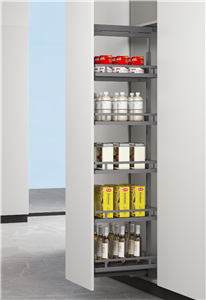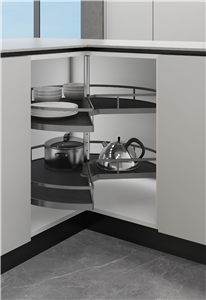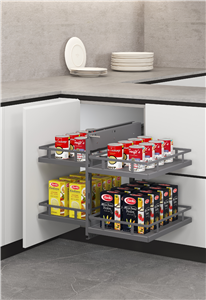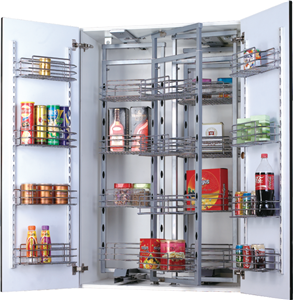
What Exactly Makes a 360 Degree Kitchen Magic Corner Truly Revolutionary?
Ever stepped into a high-end kitchen showroom and marveled at those seamless, corner-fitting cabinets that seem to defy physics? You're not alone. In today's fast-paced world, where kitchen designs blend aesthetics with functionality, the 360 degree kitchen magic corner has emerged as a buzzword. But what exactly sets it apart from traditional corner solutions? Is it just marketing hype, or does it genuinely revolutionize space utilization and manufacturing efficiency? Let's peel back the layers and dive into the technical heart of this innovation.
The Pain Points: Where Traditional Corners Fall Short
For decades, kitchen manufacturers have grappled with corner spaces—those awkward angles that often lead to wasted square footage and logistical headaches. One major pain point is material inefficiency. In conventional setups, cutting and assembling corner components can result in up to 15% material wastage due to imprecise angles and fittings. This not only drives up costs but also impacts sustainability efforts, as excess scrap ends up in landfills. Imagine a mid-sized factory producing 500 corner units monthly: that's tons of wood or composite materials literally going to waste, translating to thousands in lost revenue annually.
Another critical issue is assembly complexity. Traditional corner systems often require multiple parts and labor-intensive installation, leading to longer production times and higher risk of errors. In a scenario where a kitchen installer spends an extra hour per unit fiddling with misaligned hinges or shelves, the cumulative effect on project timelines and customer satisfaction can be devastating. For procurement managers, this means delayed deliveries and potential penalties from clients, eroding trust and profitability.
The Solution: Precision Engineering Meets Smart Design
Enter the 360 degree kitchen magic corner, a solution crafted to address these very challenges. At its core, this innovation relies on precision-engineered components that ensure seamless rotation and optimal space use. For material inefficiency, advanced CNC machining allows for exact cuts with minimal waste—reducing scrap rates to under 5%. This is achieved through proprietary algorithms that optimize material layouts, a technique refined by companies like Foshan Meijiayi Hardware Company Limited, which specializes in high-end hardware for modular systems.
To tackle assembly woes, the magic corner incorporates integrated hinge mechanisms and pre-assembled modules. These features enable quicker installation, cutting down labor time by up to 40%. By using standardized connectors and smart locking systems, even complex corners can be set up in minutes rather than hours. This not only boosts productivity but also enhances reliability, as fewer moving parts mean reduced wear and tear over time.
Client Success Stories: Real-World Impact
Across Europe, businesses have adopted these corners with impressive results. In Berlin, Germany, a kitchen cabinet manufacturer reported a 25% increase in production efficiency after integrating magic corners, with waste reduction saving €12,000 annually. Their procurement manager noted, "The precision fit eliminated our rework issues overnight."
In Milan, Italy, a design studio saw a 30% improvement in project turnaround times, attributing it to easier installations. One client's feedback: "Our installers love how intuitive these corners are—no more frustration on-site."
Meanwhile, in London, UK, a retail chain experienced a 15% boost in sales after showcasing kitchens with magic corners, citing enhanced visual appeal. Their engineer shared, "It's not just a corner; it's a statement of innovation that customers notice."
Applications and Partnerships: Broadening Horizons
These corners aren't limited to residential kitchens. They're gaining traction in commercial settings like hotel suites and office pantries, where space optimization is crucial. Foshan Meijiayi Hardware Company Limited has forged partnerships with European distributors, such as a firm in the Netherlands specializing in sustainable building materials. This collaboration ensures supply chain reliability and adherence to EU standards, reinforcing the product's authority in competitive markets.
FAQ: Addressing Technical Queries
| Question | Answer |
|---|---|
| How does the 360-degree rotation mechanism handle weight loads over time? | It uses high-grade steel bearings and stress-tested pivots, rated for up to 50kg per shelf, ensuring durability through thousands of cycles without sagging. |
| What materials are compatible with these corner systems? | They support various laminates, solid woods, and composites, with customization options for thicknesses from 16mm to 25mm to meet diverse design needs. |
| Can they be integrated into smart kitchen ecosystems? | Yes, with optional sensor-enabled modules for automated lighting or inventory tracking, aligning with IoT trends in modern homes. |
| How do they impact overall kitchen cost? | While upfront costs are 10-15% higher, long-term savings from reduced waste and labor often yield a ROI within 18 months. |
| Are there certification standards for safety and quality? | They comply with ISO 9001 for manufacturing and EN 14749 for furniture safety, with third-party audits ensuring consistency. |
Conclusion: Embrace the Corner Revolution
In summary, the 360 degree kitchen magic corner is more than a trendy feature—it's a testament to how thoughtful engineering can solve persistent industry problems. By minimizing waste, streamlining assembly, and enhancing user experience, it offers tangible value for manufacturers and end-users alike. Ready to explore further? Download our detailed technical whitepaper or connect with a sales engineer to tailor solutions for your projects. Let's turn those tricky corners into opportunities for innovation.