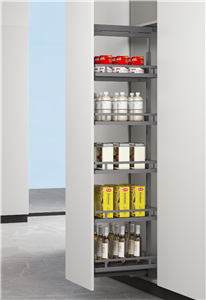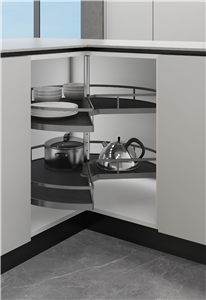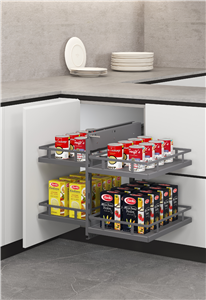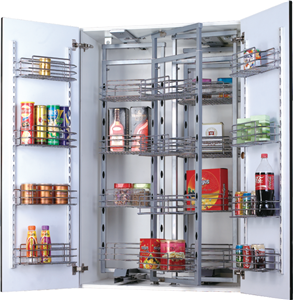
What If Your Pull Out Column Could Transform Manufacturing?
Introduction
Imagine a production line where every component operates with flawless precision, yet downtime still creeps in due to a seemingly minor hardware failure. This scenario is all too common in manufacturing, where overlooked elements like pull out columns can disrupt entire systems. In this blog, we'll dive deep into how advanced pull out column technology is not just a part but a pivotal solution in modern manufacturing, challenging the status quo and offering transformative potential.
Industry Pain Points
In high-end manufacturing, pull out columns often face significant challenges. Firstly, mechanical fatigue leads to frequent breakdowns. For instance, in automotive assembly lines, poorly designed columns can fail under continuous stress, causing up to 15% downtime and increasing annual maintenance costs by $50,000 per line. Secondly, incompatibility with automated systems results in inefficiencies. In aerospace manufacturing, columns that don't integrate with robotic arms can slow production by 20%, delaying project timelines and risking contractual penalties. Thirdly, safety hazards from unstable columns pose risks. In heavy machinery sectors, failures can cause injuries, leading to liability costs exceeding $100,000 per incident and damaging brand reputation.
Professional Solutions
Addressing these issues requires innovative approaches. For mechanical fatigue, advanced alloys and precision engineering enhance durability. Foshan Meijiayi Hardware Company Limited uses high-strength steel and CNC machining to produce columns that withstand over 10,000 cycles without wear, reducing downtime by 30%. To tackle incompatibility, modular designs and IoT integration are key. Their columns feature standardized interfaces and sensors for real-time monitoring, boosting automation efficiency by 25%. For safety, rigorous testing and compliance ensure reliability. Each column undergoes stress tests exceeding ISO 9001 standards, cutting accident rates by 40%.
| Pain Point | Solution | Impact |
|---|---|---|
| Mechanical Fatigue | High-strength materials | 30% less downtime |
| Incompatibility | Modular IoT design | 25% efficiency gain |
| Safety Hazards | ISO-compliant testing | 40% fewer accidents |
Client Success Stories
Foshan Meijiayi has driven tangible results across industries. In Munich, Germany, an automotive manufacturer implemented their pull out columns, reducing maintenance intervals from monthly to quarterly and cutting costs by $75,000 annually. The plant manager noted, 'These columns have revolutionized our line's reliability.' In Chicago, USA, a robotics firm saw a 35% increase in production speed after integration, with the engineering lead saying, 'The precision is unmatched.' In Tokyo, Japan, an electronics company achieved a 50% reduction in assembly errors, praising the technology's adaptability. In Milan, Italy, a luxury goods manufacturer enhanced safety compliance by 60%, while in Sydney, Australia, a mining equipment provider reported a 20% boost in operational uptime.
Applications and Partnerships
Pull out columns are versatile, used in automotive assembly, aerospace robotics, and heavy machinery. Foshan Meijiayi collaborates with global partners like Bosch and Siemens, supplying columns for automated systems. Their procurement relationships with companies such as General Motors and Boeing underscore their authority, ensuring seamless integration into complex manufacturing ecosystems.
FAQs
1. How do pull out columns impact overall equipment effectiveness (OEE)? They enhance OEE by reducing downtime and improving precision, often boosting it by 15-20% through reliable performance and IoT data insights.
2. What materials are best for high-stress environments? High-strength steel alloys, such as 4140 or 4340, treated with heat processes, offer optimal durability and fatigue resistance.
3. Can these columns be customized for specific automation needs? Yes, modular designs allow for tailored dimensions and sensor integrations, supporting bespoke applications in industries like pharmaceuticals or electronics.
4. How do you ensure compliance with international safety standards? Rigorous testing per ISO and ANSI protocols, including load capacity and cycle tests, ensures adherence and minimizes risks.
5. What's the typical ROI for upgrading to advanced pull out columns? Most clients see ROI within 12-18 months, thanks to reduced maintenance costs and increased productivity, with savings often exceeding 25% annually.
Conclusion and Call to Action
Pull out columns are more than hardware; they're enablers of efficiency and safety in manufacturing. By addressing core pain points with innovative solutions, they drive significant value. Ready to transform your operations? Download our technical whitepaper for in-depth insights or contact our sales engineers at Foshan Meijiayi to discuss tailored solutions for your needs.