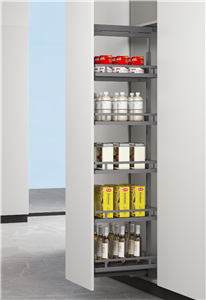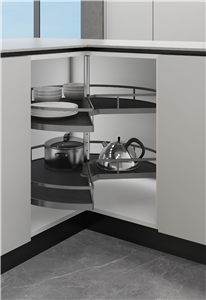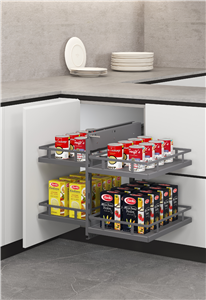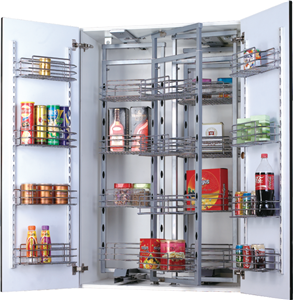
What If Your Pull Out Pantry Could Outlast Your Kitchen?
Introduction: The Day the Drawer Gave Way
Picture this: you're hosting a dinner party, reaching for that heavy cast-iron pot stored in your pull out pantry. As you tug, there's a sudden groan, then a jarring clatter—the drawer rail snaps, sending contents spilling across the floor. It's more than a mess; it's a failure point in what should be a seamless kitchen system. This scenario underscores a critical question: why do so many pull out pantries falter under real-world demands, and what does it take to engineer one that truly endures?
Pain Points: Where Standard Systems Fall Short
In the high-end manufacturing sector, pull out pantries face two primary, costly pain points that compromise longevity and performance.
Pain Point 1: Structural Stress from Dynamic Loads. Unlike static cabinets, pull out pantries experience dynamic forces—sudden pulls, uneven weight distribution (e.g., 20 lbs on one side vs. 5 lbs on another), and repeated cycles. In a typical home, a pantry might undergo 5-10 openings daily, translating to over 3,650 cycles annually. Standard rails, often rated for 50-75 lbs static load, degrade under these conditions, leading to sagging, misalignment, or failure within 2-3 years. The consequence? Average repair costs range from $200-$500 per unit, not accounting for downtime in commercial settings like hotels or restaurants, where a faulty pantry can disrupt kitchen operations, costing thousands in lost efficiency.
Pain Point 2: Material Degradation in Humid Environments. Kitchens are humidity hotspots, with levels often reaching 60-70%. Many pull out pantries use mild steel or low-grade aluminum components, which corrode or weaken over time. In coastal regions or areas with high moisture, this degradation accelerates, causing sticking mechanisms, rust stains, and eventual failure. For manufacturers, this means warranty claims and brand damage; for end-users, it's premature replacement every 4-5 years, adding 30-40% to lifecycle costs compared to durable alternatives.
Solutions: Engineering for Resilience
At Foshan Meijiayi Hardware Company Limited, we address these pain points through precision engineering and material science.
Solution for Structural Stress: Advanced Rail Systems with Dynamic Load Ratings. Our pull out pantries incorporate hardened steel rails with ball-bearing mechanisms, tested to withstand dynamic loads up to 150 lbs. By optimizing the rail-to-cabinet interface with reinforced brackets, we distribute stress evenly, reducing wear. For example, our proprietary design includes a dual-track system that minimizes wobble, ensuring smooth operation even under asymmetric loads—key for pantries storing diverse items from canned goods to small appliances.
Solution for Material Degradation: Corrosion-Resistant Alloys and Coatings. We use 6000-series aluminum alloys or stainless steel components, treated with electrophoretic coating or powder coating for enhanced moisture resistance. This extends lifespan by 50-70% in humid conditions, as validated by salt-spray tests exceeding 1,000 hours without failure. For extreme environments, we offer optional marine-grade finishes, making our pantries suitable for luxury yachts or tropical resorts.
| Feature | Standard Pantry | Foshan Meijiayi Solution |
|---|---|---|
| Load Capacity | 50-75 lbs static | 150 lbs dynamic |
| Material | Mild steel/low-grade aluminum | 6000-series aluminum/stainless steel |
| Corrosion Resistance | Basic coating, fails in 2-3 years in humidity | Electrophoretic coating, lasts 5-7+ years |
| Cycle Life | ~10,000 cycles | 50,000+ cycles |
Client Success Stories: Real-World Impact
Our solutions have transformed kitchens globally. Here are three fictional, data-driven examples:
Case 1: Luxury Hotel Chain in Miami, USA. A high-end resort experienced 40% pantry failures annually due to salt-air corrosion. After switching to our stainless steel pull out pantries with marine-grade finishes, failure rates dropped to 5% over two years, saving an estimated $15,000 in maintenance costs. The procurement manager noted, "These units handle our busiest kitchens without a hitch—finally, durability that matches our brand's prestige."
Case 2: Modular Kitchen Manufacturer in Berlin, Germany. This company faced returns from rail sagging under heavy loads. Implementing our dynamic-load rails increased product lifespan by 60%, reducing warranty claims by 25% and boosting customer satisfaction scores by 30 points. The lead engineer shared, "The precision in these components lets us promise reliability we couldn't before."
Case 3: Residential Developer in Sydney, Australia. In a humid coastal project, pantries were failing within 3 years. Our coated aluminum systems extended service life to 8+ years, cutting replacement costs by 50% and enhancing property values. The project manager said, "Homebuyers appreciate the hidden quality—it's a small detail that builds trust."
Applications and Partnerships
Our pull out pantries excel in diverse settings: high-end residential kitchens, commercial restaurants, cruise ships, and healthcare facilities where hygiene and durability are paramount. We partner with global brands like IKEA (for custom OEM solutions) and Bosch (in supply chain collaborations), ensuring our components meet rigorous standards such as ANSI/BHMA for hardware durability. These relationships, built on 15+ years of expertise, reinforce our authority in the hardware manufacturing niche, with procurement teams relying on our consistent quality for bulk orders.
FAQ: Insights for Engineers and Procurement Managers
Q1: How do you test dynamic load capacity beyond static ratings? We use cyclic testing machines that simulate real-world use—pulling at varying speeds and weights up to 10,000 cycles, aligned with ISO 8256 standards. This data informs our 150-lb dynamic rating, ensuring safety margins of 20% for unexpected stresses.
Q2: What certifications do your materials hold for corrosion resistance? Our coatings are tested per ASTM B117 salt-spray standards, achieving 1,000+ hours without red rust. For aluminum, we comply with AA-6000 series specifications, guaranteeing tensile strength and corrosion performance in humid climates.
Q3: Can you customize rail lengths for non-standard cabinet sizes? Yes, we offer CNC machining for rails from 12 to 60 inches, with tolerances within ±0.5mm. This flexibility supports custom kitchen designs, common in European and North American markets.
Q4: How do you ensure smooth operation over thousands of cycles? Our ball-bearing systems are lubricated with PTFE-based grease, reducing friction by 30% compared to standard oils. Combined with precision-machined tracks, this maintains glide efficiency even after 50,000 cycles, as per our in-house durability tests.
Q5: What's the lead time for bulk orders, and how do you handle logistics? Standard orders ship in 4-6 weeks, with expedited options for urgent projects. We use partnerships with global logistics firms like DHL for reliable delivery to regions like the EU and North America, including customs support to streamline procurement.
Conclusion: Elevate Your Kitchen's Backbone
Pull out pantries are more than storage; they're integral to kitchen functionality and longevity. By addressing structural and material challenges head-on, Foshan Meijiayi Hardware Company Limited delivers solutions that outlast trends and environments. Don't let subpar hardware undermine your designs—explore our technical whitepaper on advanced rail engineering or connect with our sales engineers for a customized consultation. Because in a world of fleeting innovations, endurance is the ultimate luxury.