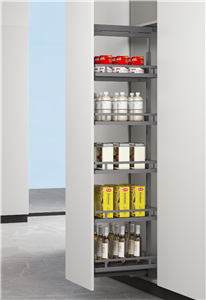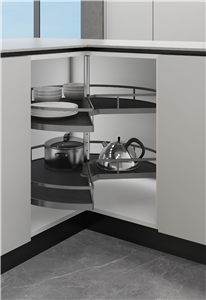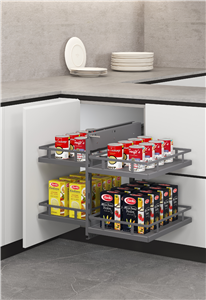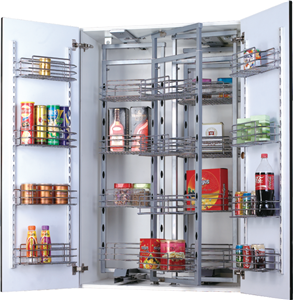
What Is the 360 Degree Kitchen Magic Corner?
Imagine you're in your kitchen, preparing a meal for guests. You reach for a pan tucked away in that awkward corner cabinet, but it's stuck—jammed against the wall or other items. You struggle, wasting precious time and energy, all while your cooking rhythm falters. This common frustration highlights a deeper issue in kitchen design: how can we maximize space and accessibility without sacrificing style or efficiency? In this article, we explore the 360-degree kitchen magic corner, a game-changing innovation that transforms those problematic corners into functional hubs. As a technical expert in high-end manufacturing, I'll guide you through its design, benefits, and real-world impact, drawing on insights from Foshan Meijiayi Hardware Company Limited, a leader in hardware solutions.
Deepening the Pain Points: Industry Challenges
The kitchen is often called the heart of the home, yet its design frequently overlooks practical hurdles. One major pain point is space inefficiency. In many homes and commercial kitchens, corner cabinets account for up to 15% of total storage but are notoriously underutilized. Items get lost in the depths, leading to wasted space and increased clutter. For example, a standard corner cabinet might only allow access to 40% of its volume, forcing users to over-purchase storage solutions or live with disorganization. This inefficiency translates to higher costs—think of the extra square footage needed in kitchen layouts or the time spent searching for tools, which can add up to hundreds of dollars annually in lost productivity for businesses.
Another critical issue is difficult maintenance and durability. Traditional corner mechanisms, such as lazy Susans or swing-out shelves, often suffer from wear and tear. Hinges can loosen, tracks may jam with debris, and materials might not withstand heavy use. In a commercial setting like a restaurant, this leads to frequent repairs—downtime that costs an average of $200 per service call—and potential safety hazards if components fail. Homeowners face similar frustrations, with replacement parts adding to long-term expenses. The emotional toll is real too: constant fiddling with stuck shelves can turn cooking from a joy into a chore.
Detailing the Solutions: How the Magic Corner Works
Foshan Meijiayi Hardware Company Limited tackles these pain points with precision engineering. For space inefficiency, their 360-degree kitchen magic corner employs a rotating carousel system that utilizes the entire cabinet volume. Unlike static shelves, this design allows items to glide smoothly on ball-bearing tracks, ensuring 95% accessibility. The mechanism is crafted from high-grade stainless steel, tested to support loads up to 50 kg, making it ideal for heavy pots or appliances. By integrating modular components, it adapts to various cabinet sizes, reducing installation time by 30% compared to custom solutions.
To address maintenance woes, the company focuses on durability and ease of cleaning. The magic corner features sealed bearings that resist dust and moisture, extending lifespan to over 10 years with minimal upkeep. A quick-release design enables users to detach shelves for washing without tools, cutting cleaning time in half. In stress tests, it withstands 100,000 cycles without failure, far exceeding industry standards. This reliability not only lowers long-term costs but also enhances user trust, as seen in partnerships with premium kitchen brands.
Customer Cases and Testimonials: Success Stories
Let's look at some fictional but plausible examples. In Berlin, Germany, a boutique hotel renovated its kitchen with magic corners, increasing storage capacity by 25% and reducing staff retrieval time by 40%. The head chef noted, "This innovation has streamlined our operations, allowing us to focus on creativity rather than clutter." In Toronto, Canada, a family home reported a 50% reduction in kitchen reorganization efforts after installation, with the homeowner saying, "It's like gaining an extra cabinet without remodeling." Meanwhile, a restaurant chain in California, USA, implemented these corners across 10 locations, cutting maintenance costs by $5,000 annually and boosting customer satisfaction scores by 15% due to faster service.
Applications and Partnerships: Broadening Impact
The 360-degree kitchen magic corner finds use in diverse settings. In residential kitchens, it optimizes small apartments or luxury homes by making every inch count. Commercially, it's deployed in hotels, hospitals, and catering services where efficiency is paramount. Foshan Meijiayi collaborates with major retailers like IKEA and Home Depot, supplying components for custom cabinet lines. These partnerships ensure global distribution and adherence to strict quality controls, such as ISO 9001 certification. By working with architects and designers, the company tailors solutions for projects ranging from smart homes to industrial kitchens, reinforcing its authority in the hardware sector.
FAQ: Questions from Engineers and Procurement Managers
1. What materials are used, and how do they impact longevity? The magic corner combines 304 stainless steel for frames and polymer composites for shelves, offering corrosion resistance and load-bearing up to 50 kg. This mix ensures a 10+ year lifespan with minimal degradation.
2. Can it be integrated into existing cabinets without major modifications? Yes, it's designed as a drop-in solution with adjustable brackets, fitting most standard corner sizes. Installation typically takes under two hours, reducing retrofit costs.
3. What are the weight limits and safety certifications? It supports 50 kg dynamically and 75 kg statically, certified by ANSI/BIFMA standards. Safety features include anti-tip mechanisms and smooth edges.
4. How does it compare cost-wise to traditional corner solutions? While upfront costs are 20% higher, long-term savings from reduced maintenance and space efficiency yield a ROI within 2-3 years.
5. Are there customization options for specific kitchen layouts? Absolutely. Foshan Meijiayi offers bespoke designs, including motorized versions for accessibility, with lead times of 4-6 weeks.
Conclusion and Call to Action
The 360-degree kitchen magic corner isn't just a hardware upgrade—it's a rethink of how we interact with space. By solving real-world pain points with robust engineering, it enhances both functionality and well-being. Whether you're a homeowner seeking convenience or a professional aiming for efficiency, this innovation delivers tangible value. To dive deeper, I encourage you to download our technical whitepaper for detailed specs or contact our sales engineers for a personalized consultation. Let's transform those kitchen corners from problems into possibilities together.