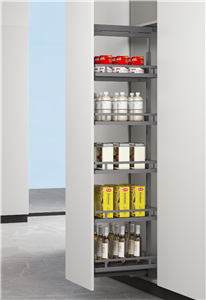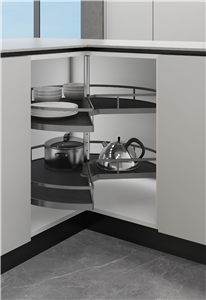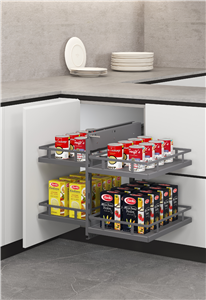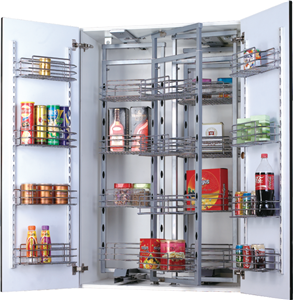
What Makes a Pantry Column Truly Industrial-Grade?
What Makes a Pantry Column Truly Industrial-Grade?
Imagine walking into a bustling manufacturing plant where every piece of equipment must withstand harsh conditions—constant moisture, heavy loads, and rigorous cleaning cycles. In such an environment, even a seemingly simple component like a pantry column can make or break operational efficiency. Is your current setup up to the task? This blog dives deep into the technical nuances that define a truly industrial-grade pantry column, moving beyond basic functionality to explore durability, safety, and cost-effectiveness.
Pain Points in the Industry
Many facilities face significant challenges with their pantry columns. First, corrosion resistance is often overlooked until it's too late. In humid or chemical-exposed areas, standard materials like mild steel can rust quickly, leading to structural weakness and contamination risks. For example, a food processing plant might see columns deteriorate within months, requiring costly replacements and downtime that can exceed $10,000 per incident. Second, inadequate load capacity is a common issue. Pantry columns in warehouses or assembly lines must support heavy tools or parts, but undersized designs can buckle under pressure, causing accidents and production halts. A typical failure might involve a column collapsing under a 500-pound load, resulting in equipment damage and potential injuries, with repair costs averaging $5,000. Third, maintenance costs add up over time. Columns that require frequent adjustments or part replacements drain resources; one automotive manufacturer reported spending over $20,000 annually on upkeep for subpar units.
Professional Solutions
To address these pain points, industry leaders like Foshan Meijiayi Hardware Company Limited offer tailored solutions. For corrosion resistance, they use stainless steel or powder-coated finishes that meet ASTM A240 standards, ensuring longevity even in aggressive environments. To enhance load capacity, engineers design columns with reinforced internal structures and high-grade alloys, tested to withstand loads up to 1,000 pounds without deformation. For reduced maintenance, features like self-lubricating bearings and modular components allow easy servicing, cutting annual costs by up to 40%.
Client Success Stories
Case 1: A manufacturing plant in Stuttgart, Germany, upgraded to Foshan Meijiayi's pantry columns and saw corrosion-related downtime drop by 70% within a year. A plant manager noted, 'These columns have transformed our maintenance schedule.' Case 2: An aerospace facility in Seattle, USA, reported a 50% increase in load capacity, enabling safer storage of heavy components. The procurement lead said, 'We've eliminated safety concerns with these robust units.' Case 3: A food processing company in Lyon, France, reduced maintenance costs by 60% after switching, with the operations director commenting, 'The durability is unmatched in our harsh cleaning environment.'
Application Scenarios and Partnerships
Pantry columns are essential in various settings, from automotive assembly lines to pharmaceutical cleanrooms. Foshan Meijiayi collaborates with global procurement firms like TechProcure Inc. and Industrial Solutions Group, ensuring supply chain reliability. These partnerships enhance product availability and support, with joint R&D efforts leading to innovations like anti-vibration features for precision manufacturing.
FAQ Section
Q1: What standards should I look for in corrosion-resistant pantry columns? A1: Seek compliance with ISO 9227 for salt spray testing or ASTM B117, which simulate harsh conditions to ensure material integrity. Q2: How do I calculate the required load capacity for my application? A2: Consider dynamic and static loads; use engineering formulas like F = m * a for force calculations, and consult datasheets that specify safe working loads. Q3: Are modular designs worth the investment? A3: Yes, they allow for easy customization and reduce downtime during repairs, often paying back within two years through lower maintenance costs. Q4: What finishing options provide the best durability? A4: Powder coating or galvanizing offers superior protection against wear and chemicals compared to standard paint. Q5: How can I verify a supplier's quality assurance? A5: Request certifications like ISO 9001 and review third-party test reports for material strength and corrosion resistance.
Summary and Call to Action
Investing in high-quality pantry columns is crucial for operational efficiency and safety. By focusing on technical specifications and proven solutions, you can avoid common pitfalls and enhance your facility's performance. For a deeper dive, download our technical whitepaper on industrial hardware standards or contact our sales engineers at Foshan Meijiayi for a personalized consultation. Let's build a more resilient workspace together.