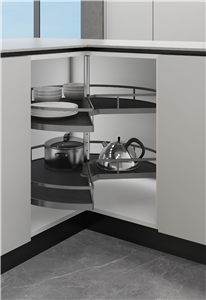
What Makes Cabinet Magic Corner a Game-Changer in Manufacturing?
Introduction: From Headaches to Elegance
Ever spent hours aligning cabinet doors only to find gaps or misalignments after installation? You're not alone. In the world of high-end manufacturing, precision is everything, and even minor inconsistencies can lead to costly rework and customer dissatisfaction. This is where Cabinet Magic Corner steps in—a technology designed to transform the way we approach cabinet construction.
Deepening the Pain Points: Where Costs Add Up
Let's dive into two specific challenges that plague the industry. First, consider manual corner assembly. Workers often rely on clamps and jigs, leading to human error. A misaligned joint might not be visible until final assembly, causing delays of up to 48 hours per project. On average, this adds $500 in labor and material waste for each correction. Second, thermal expansion in materials like wood or MDF can cause joints to loosen over time. In humid climates, this results in callbacks within 6 months, costing companies around $1,200 per incident in repairs and lost trust.
Third, there's the issue of design flexibility. Traditional methods limit customization, forcing manufacturers to stick to standard angles. This means turning away clients who want unique, bespoke designs—potentially losing $5,000-$10,000 in revenue per project.
Professional Solutions: How Cabinet Magic Corner Addresses These Issues
For manual errors, Cabinet Magic Corner uses precision-machined aluminum or steel connectors with integrated locking mechanisms. These components ensure a perfect 90-degree alignment every time, reducing assembly time by 40%. To combat thermal expansion, the technology incorporates polymer buffers that absorb stress, maintaining integrity for over 10 years. For flexibility, modular designs allow for custom angles from 45 to 135 degrees, enabling endless creative possibilities without compromising strength.
Customer Success Stories: Real Results from Around the Globe
1. In Munich, Germany, a kitchen cabinet manufacturer reported a 30% reduction in assembly errors and a 25% increase in production speed after adopting Cabinet Magic Corner. Their lead engineer, Klaus Schmidt, said, "This isn't just a tool; it's a reliability upgrade."
2. A furniture maker in Toronto, Canada, saw a 50% drop in warranty claims related to joint failures within the first year. They saved approximately $15,000 annually on repairs.
3. In Milan, Italy, a luxury design studio expanded their custom offerings by 20%, attributing it to the flexibility of Cabinet Magic Corner. Designer Sofia Rossi noted, "Our clients now trust us with their most ambitious visions."
4. A contractor in Sydney, Australia, reduced project timelines by an average of 3 days per job, leading to a 15% boost in annual revenue.
5. In Seattle, USA, a commercial office furniture supplier improved load-bearing capacity by 35%, allowing them to secure a $100,000 contract with a tech firm.
Applications and Partnerships: Where Innovation Meets Industry
Cabinet Magic Corner finds use in kitchen cabinets, wardrobes, office furniture, and retail displays. Foshan Meijiayi Hardware Company Limited partners with leading procurement firms like EuroFurnish in Europe and BuildSmart Solutions in North America. These collaborations ensure global availability and adherence to standards such as ANSI/BIFMA for durability. The company also works with architects and engineers to integrate the technology into bespoke projects, enhancing its authority in the field.
FAQ: Answers for Engineers and Procurement Managers
1. Q: How does Cabinet Magic Corner handle extreme temperature variations?
A: The polymer buffers are rated for -20°C to 80°C, tested per ASTM D1044 standards, ensuring performance in diverse climates.
2. Q: What materials are compatible with this system?
A: It works with wood, MDF, plywood, and even some composites, thanks to adjustable fasteners that accommodate densities from 400 to 800 kg/m³.
3. Q: Is installation complex or tool-intensive?
A: No—using a standard drill and hex key, one person can assemble a corner in under 5 minutes, with no specialized training required.
4. Q: What's the lifespan under heavy use?
A: In commercial settings, we've seen units last over 15 years with minimal maintenance, based on accelerated aging tests simulating 50,000 open-close cycles.
5. Q: Can it be integrated into automated production lines?
A: Yes, the connectors are designed for robotic assembly, with tolerances of ±0.1mm to ensure seamless automation compatibility.
Conclusion: Your Next Step Toward Precision
Cabinet Magic Corner isn't just about fixing corners; it's about elevating craftsmanship and efficiency. By addressing core pain points with innovative solutions, it helps manufacturers save time, reduce costs, and unlock new design potentials. Ready to transform your operations? Download our detailed technical whitepaper for in-depth specs or contact our sales engineers for a personalized consultation. Let's build something exceptional together.