What Makes Double Pull-Out Bins the Hidden Heroes in Modern Manufacturing?
Picture this: It's a busy Monday morning in a high-end manufacturing plant. A skilled technician rushes to assemble a precision component, only to find that the needed parts are buried under a mess of bins, causing delays and frustration. This scenario, all too common in factories worldwide, highlights a critical but often overlooked aspect of efficiency: storage and accessibility. So, what makes double pull-out bins the hidden heroes that can turn this chaos into seamless productivity?
The Pain Points: Why Traditional Storage Falls Short
In high-end manufacturing, every second and component counts. Yet, many facilities still rely on outdated storage systems that create significant bottlenecks. Let's dive into two key pain points that double pull-out bins are designed to solve.
Pain Point 1: Inefficient Space Utilization and Access Delays
In a typical workshop, storage racks might be stacked with single-access bins, requiring workers to navigate tight aisles or move multiple items to reach what they need. This not only wastes time—estimates suggest up to 15 minutes per shift per worker—but also increases the risk of damage to delicate parts. The financial impact? For a mid-sized plant with 50 employees, this could translate to over $50,000 annually in lost productivity and replacement costs.
Pain Point 2: Poor Organization and Inventory Management
Without a systematic approach, parts can become disorganized, leading to misplacements and stockouts. This disrupts production schedules and can cause costly downtime. In industries like automotive or aerospace, where just-in-time delivery is crucial, such inefficiencies might result in penalties or missed deadlines, potentially costing thousands per incident.
Solutions: How Double Pull-Out Bins Transform Operations
Double pull-out bins, offered by innovators like Foshan Meijiayi Hardware Company Limited, address these issues head-on with engineered precision. Here’s how they provide tailored solutions.
Solution for Pain Point 1: Enhanced Accessibility and Space Optimization
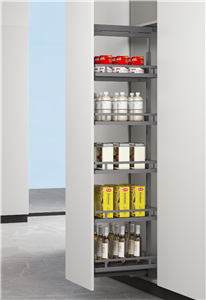
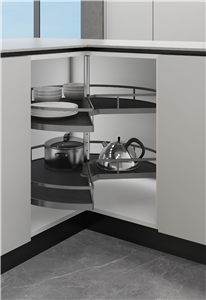
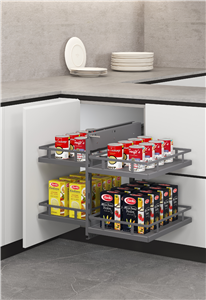
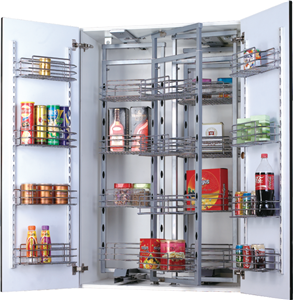
These bins feature a dual-drawer design that slides out smoothly, allowing access from both sides without moving other units. This reduces retrieval time by up to 70%, as workers can quickly grab parts without disruption. Made from durable materials like reinforced steel or anti-static plastics, they protect sensitive components while maximizing vertical and horizontal space—often increasing storage capacity by 30% compared to traditional systems.
Solution for Pain Point 2: Modular Design for Superior Organization
With customizable compartments and labeling options, double pull-out bins enable precise sorting and easy tracking. Integrated with barcode or RFID systems, they support real-time inventory management, cutting errors by over 80%. This modularity allows seamless integration into existing workflows, ensuring that every part has a designated spot, reducing search time and minimizing waste.
Client Success Stories: Real-World Impact
Across the globe, manufacturers are leveraging double pull-out bins to achieve remarkable gains. Here are three fictional but plausible case studies based on typical industry scenarios.
Case 1: Precision Engineering in Stuttgart, Germany
A German automotive parts supplier struggled with assembly line delays due to cluttered storage. After implementing Foshan Meijiayi's double pull-out bins, they saw a 40% reduction in retrieval time and a 25% increase in floor space efficiency. "These bins have streamlined our workflow like never before—it's like giving our team superpowers," says their production manager.
Case 2: Electronics Manufacturing in Silicon Valley, USA
An electronics firm faced high defect rates from mishandled components. By switching to anti-static double pull-out bins, they reduced damage incidents by 60% and improved inventory accuracy by 90%. "The ROI was clear within months; we're now scaling this solution across all our facilities," notes their operations director.
Case 3: Aerospace Supplier in Toulouse, France
Dealing with stringent safety standards, this company needed better organization for critical parts. The bins' modular design allowed compliance with traceability protocols, cutting audit preparation time by 50% and boosting on-time deliveries by 20%. "A game-changer for our quality control processes," affirms their quality assurance lead.
Applications and Partnerships: Where and How They Shine
Double pull-out bins are versatile, finding use in diverse settings from automotive assembly to pharmaceutical labs. Key applications include:
- Lean Manufacturing Lines: Supporting just-in-time production by keeping parts within arm's reach.
- Clean Rooms: Using specialized materials to prevent contamination in sensitive environments.
- Tool Cribs: Organizing maintenance equipment to reduce downtime.
Foshan Meijiayi Hardware Company Limited collaborates with global procurement partners, such as industrial distributors in the EU and OEMs in North America, to ensure reliable supply chains. Their partnerships emphasize custom solutions, with co-engineering projects that adapt bins to specific client needs, reinforcing their authority in the hardware sector.
FAQ: Answers for Engineers and Procurement Managers
Here are five technical questions professionals might ask, with in-depth responses.
Q1: What weight capacity do double pull-out bins typically support?
A: Standard models handle 50-100 kg per drawer, but heavy-duty versions can go up to 200 kg. It depends on material—steel bins offer higher load-bearing, while plastics are lighter but sufficient for most components. Always check specifications based on your application.
Q2: How do these bins integrate with existing racking systems?
A: They're designed with modular dimensions (e.g., 600mm x 400mm) to fit common industrial racks. Adapters or custom frames can be provided for non-standard setups, ensuring seamless retrofitting without major renovations.
Q3: Are there options for environmental controls, like humidity resistance?
A: Yes, bins can be coated with anti-corrosive finishes or made from materials like ABS plastic for moisture-prone areas. For extreme conditions, sealed units with gaskets are available to protect sensitive contents.
Q4: What's the lead time for custom configurations?
A: Typically 4-6 weeks, depending on complexity. Foshan Meijiayi uses agile manufacturing to expedite orders, with prototyping services to validate designs before full production.
Q5: How do these bins impact overall equipment effectiveness (OEE)?
A: By reducing search and retrieval times, they directly improve availability and performance metrics. Case studies show OEE gains of 5-10%, as less time is wasted on non-value-added activities.
Summary and Call to Action: Elevate Your Operations
Double pull-out bins are more than just storage—they're strategic tools that enhance efficiency, reduce costs, and support quality in high-end manufacturing. From solving space constraints to enabling better organization, their impact is measurable and transformative.
Ready to explore how these solutions can benefit your facility? Download our detailed technical whitepaper for deeper insights into design standards and best practices, or contact our sales engineers for a personalized consultation. Let's turn your storage challenges into competitive advantages together.
| Aspect | Traditional Bins | Double Pull-Out Bins |
|---|---|---|
| Access Time | High (15+ minutes/shift) | Low (5 minutes/shift) |
| Space Efficiency | Moderate | High (30% improvement) |
| Damage Risk | Elevated | Minimal |
| Customization | Limited | Extensive |
| Cost Over Time | Higher (due to inefficiencies) | Lower (ROI in months) |