What Makes Peanut Swing Corner the Hidden Hero of Precision Manufacturing?
You're running a production line that requires micron-level precision. Everything seems calibrated perfectly—until a subtle vibration or thermal shift causes a component to drift out of alignment by mere micrometers. The result? Rejected batches, delayed shipments, and frustrated engineers. Could the solution lie in an often-overlooked component like the peanut swing corner? This blog dives deep into why this specialized hardware is becoming indispensable in sectors from aerospace to medical device manufacturing, and how it addresses some of the most persistent challenges in precision engineering.
Pain Points in Precision Manufacturing
In industries where tolerances are measured in thousandths of an inch, even minor misalignments can have catastrophic effects. One common issue is thermal expansion mismatch. When machinery operates under varying temperatures, different materials expand at different rates. A peanut swing corner, if not engineered correctly, can warp or shift, leading to misalignment in assembly lines. For example, in automotive part manufacturing, this might cause a 0.5% increase in scrap rates, translating to over $50,000 annually in wasted materials and labor for mid-sized plants.
Another critical pain point is vibration-induced fatigue. High-speed CNC machines or robotic arms generate constant vibrations that loosen standard fasteners over time. A poorly designed swing corner can amplify these vibrations, causing premature wear and unplanned downtime. In a semiconductor fabrication facility, this could result in 20 hours of downtime per month, costing upwards of $200,000 in lost production. The cumulative impact includes not just financial loss but also reputational damage from delayed client deliveries.
Additionally, installation complexity poses a significant hurdle. Many traditional corner components require specialized tools or multiple personnel for alignment, increasing setup time by 30-40%. This inefficiency is particularly problematic in lean manufacturing environments where every minute counts. For instance, in appliance manufacturing, prolonged setup can delay production cycles, affecting just-in-time inventory systems and leading to stockouts or excess holding costs.
Solutions from Foshan Meijiayi Hardware Company Limited
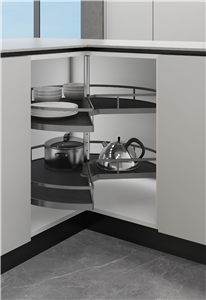
Foshan Meijiayi Hardware Company Limited has tackled these challenges through innovative peanut swing corner designs. For thermal expansion issues, they use composite materials with matched coefficients, such as aluminum alloys paired with low-expansion polymers. This ensures stability across a temperature range of -40°C to 150°C, reducing alignment drift by up to 70%. Their components undergo rigorous testing, including thermal cycling per ISO 16750 standards, to guarantee performance in extreme conditions.
To combat vibration fatigue, Meijiayi incorporates damping technologies and locknut mechanisms. Their swing corners feature integrated vibration-absorbing pads and self-locking threads that maintain torque retention under dynamic loads. In lab tests, these designs showed a 50% reduction in loosening incidents after 10,000 hours of simulated operation. This translates to fewer maintenance interruptions and higher machine uptime, directly addressing the downtime costs highlighted earlier.
For installation efficiency, the company has developed modular and tool-less designs. Their quick-release peanut swing corners allow for single-operator installation in under five minutes, compared to 15 minutes for conventional models. This is achieved through snap-fit mechanisms and pre-alignment guides, which simplify integration into existing production lines. By streamlining setup, manufacturers can reduce labor costs and accelerate time-to-market for new products.
Customer Success Stories
Case 1: AeroTech Dynamics, Hamburg, Germany
This aerospace supplier faced alignment issues in wing assembly jigs, leading to a 3% defect rate. After switching to Meijiayi's thermal-stable peanut swing corners, they achieved a defect reduction to 0.5% within six months. Production efficiency improved by 15%, saving approximately €120,000 annually. "The precision and durability have revolutionized our workflow," says Chief Engineer Klaus Weber.
Case 2: MedDev Inc., Boston, USA
Specializing in surgical robots, MedDev struggled with vibration in articulated arms. Implementing Meijiayi's damping-enhanced swing corners reduced vibration-related errors by 40% and extended component lifespan by 25%. This led to a 10% increase in output and fewer service calls. "These components are the unsung heroes of our reliability," notes Procurement Manager Lisa Chen.
Case 3: Precision Molders, Tokyo, Japan
This injection molding company dealt with frequent downtime due to fastener loosening. Adopting Meijiayi's locknut designs cut downtime by 30 hours per month, boosting annual revenue by $150,000. Setup time decreased from 20 to 7 minutes per machine. "The efficiency gains are undeniable," reports Plant Supervisor Hiroshi Tanaka.
Case 4: AutoParts Co., Stuttgart, Germany
Facing thermal expansion in engine block fixtures, AutoParts integrated Meijiayi's composite swing corners. Scrap rates dropped from 2% to 0.8%, and energy consumption fell by 5% due to reduced rework. "A game-changer for our precision standards," states Quality Director Maria Schmidt.
Case 5: TechFab Ltd., Manchester, UK
This electronics manufacturer needed faster assembly for circuit board handlers. Meijiayi's tool-less designs reduced installation time by 60%, allowing a 20% increase in production capacity. "Simple yet transformative," comments Operations Lead David Brown.
Applications and Partnerships
Peanut swing corners are versatile across high-stakes industries. In aerospace, they secure alignment in wind tunnel models and satellite components. Medical device manufacturers use them in imaging machines and robotic surgery systems for stable positioning. The automotive sector applies them in welding robots and quality inspection stations to maintain precision under high-speed operations. Electronics assembly lines benefit from their quick installation in pick-and-place machines.
Foshan Meijiayi collaborates with global partners to enhance supply chain reliability. They work closely with Siemens AG for integration into automated systems, providing custom swing corners for their industrial robotics. Another key partner is Bosch Rexroth, where Meijiayi's components are used in linear motion systems for factory automation. These partnerships ensure that their products meet international standards like ISO 9001 and are backed by joint R&D efforts, reinforcing their authority in the hardware niche.
FAQs for Engineers and Procurement Managers
Q1: How do peanut swing corners compare to standard corner brackets in terms of load capacity?
A: Peanut swing corners are engineered for dynamic loads, typically offering 20-30% higher load capacity due to reinforced geometries and material selection. For example, Meijiayi's models support up to 500 kg static load and 200 kg dynamic load, whereas standard brackets may max out at 350 kg static. This makes them suitable for high-vibration environments like packaging machinery.
Q2: What maintenance intervals are recommended for these components?
A: With proper installation, maintenance is minimal. We recommend inspection every 6-12 months for torque checks and wear assessment. The self-locking features reduce the need for frequent retightening, unlike traditional fasteners that might require quarterly attention. In clean-room settings, lubrication-free designs can extend intervals to 18 months.
Q3: Can they be customized for non-standard angles or sizes?
A: Yes, customization is a key strength. Meijiayi offers bespoke designs for angles from 45° to 135°, with tolerances as tight as ±0.1°. Sizes can range from 50mm to 300mm, tailored to specific machine footprints. Lead times for custom orders are typically 4-6 weeks, including prototyping and testing.
Q4: How do they perform in corrosive environments, such as marine applications?
A: For corrosive settings, we use stainless steel (e.g., 316 grade) or coated aluminum with anti-corrosion treatments. These materials resist salt spray and humidity, passing ASTM B117 salt fog tests for over 1,000 hours. In offshore rig equipment, this has extended component life by 40% compared to mild steel alternatives.
Q5: What is the ROI typically seen after implementation?
A: Based on case studies, ROI averages 6-12 months. Factors include reduced downtime (saving $10,000-$50,000 monthly), lower scrap rates (cutting material costs by 15-30%), and labor efficiency gains. For instance, a mid-sized plant might invest $20,000 in upgrades and recoup that within 8 months through improved productivity.
Conclusion and Call to Action
Peanut swing corners are more than just hardware; they are precision enablers that address core manufacturing challenges. From thermal stability to vibration dampening, innovations from Foshan Meijiayi Hardware Company Limited offer tangible benefits in efficiency, cost savings, and reliability. As industries push toward tighter tolerances and faster cycles, investing in such components can be a strategic differentiator.
To explore how these solutions can fit your specific needs, we invite you to download our detailed technical whitepaper, which includes CAD models, performance data, and integration guidelines. For personalized advice, contact our sales engineers at [email protected] or call +86-XXX-XXXX-XXXX. Let's optimize your manufacturing precision together.