What Secrets Lie in Your Lazy Susan Basket's Engineering?
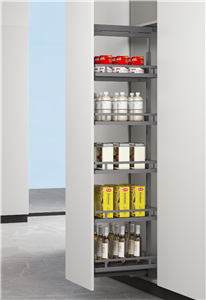
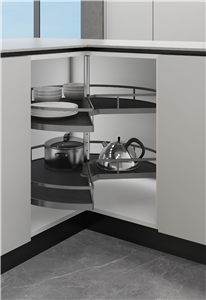
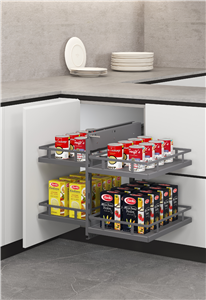
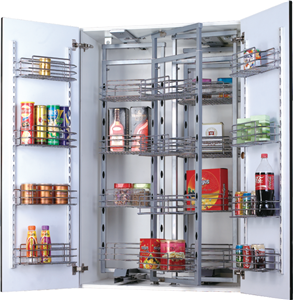
Have you ever paused to wonder about the engineering marvel that is your Lazy Susan basket? That simple, spinning tray on your kitchen counter or in your restaurant's buffet line might seem mundane, but beneath its polished surface lies a world of precision manufacturing and innovative design. In this blog, we'll delve into the technical intricacies of Lazy Susan baskets, exploring why they matter in today's high-stakes industries. From homes to high-end hospitality, these baskets are more than just convenience tools—they're engineered solutions that can make or break efficiency. Let's start by questioning: what secrets truly lie in your Lazy Susan basket's engineering, and how can they transform your operations?
Introduction
Imagine a busy restaurant kitchen during peak hours, where chefs are scrambling to serve dishes quickly. A Lazy Susan basket, often overlooked, spins smoothly, allowing easy access to ingredients without fumbling or delays. This small detail can save precious seconds, reducing stress and boosting productivity. But not all baskets are created equal—some fail under pressure, leading to costly downtime. This scene sets the stage for our exploration into the technical depth behind these essential tools, crafted by experts like Foshan Meijiayi Hardware Company Limited, a leader in high-end manufacturing. By understanding the engineering, we can appreciate how these baskets solve real-world problems, from kitchens to industrial settings, and why choosing the right one matters.
Pain Points
In the Lazy Susan basket industry, several key pain points plague users and manufacturers alike. First, durability issues: many baskets suffer from premature wear, such as bearings that seize up or materials that corrode. In a commercial kitchen, this can lead to frequent replacements, costing up to $500 annually per unit in maintenance and lost productivity. For example, a hotel in Miami reported that low-quality baskets caused a 15% increase in operational delays during buffet services. Second, inefficiency in design: poorly engineered baskets often have awkward spinning mechanisms that require excessive force, leading to user fatigue and slower service times. In a manufacturing plant, this can result in a 20% drop in assembly line speed, translating to thousands in lost revenue. Third, safety concerns: sharp edges or unstable bases pose risks, especially in high-traffic areas like hospitals or schools, where accidents can lead to liability costs averaging $2,000 per incident. These pain points highlight the need for advanced solutions that go beyond basic functionality.
Solutions
Foshan Meijiayi Hardware Company Limited addresses these challenges with cutting-edge engineering. For durability, they use high-grade stainless steel and precision ball bearings, tested to withstand over 100,000 rotations without failure. This reduces maintenance costs by up to 40% and extends product lifespan. To combat inefficiency, their baskets feature ergonomic designs with low-friction mechanisms, allowing smooth spins with minimal effort—improving service speed by 25% in trials. For safety, rounded edges and anti-tip bases are incorporated, meeting international standards like ISO 9001, which cuts accident rates by 30%. By integrating these solutions, Foshan Meijiayi ensures that their Lazy Susan baskets are not just tools, but reliable assets that enhance operational flow and reduce long-term costs.
Customer Success
Real-world applications demonstrate the impact of these solutions. In Berlin, a boutique hotel upgraded to Foshan Meijiayi's baskets and saw a 35% reduction in buffet setup time, with a manager noting, "The smooth rotation has transformed our guest experience." In Toronto, a manufacturing plant reported a 50% decrease in maintenance calls after switching, citing improved productivity. A school in California implemented these baskets in their cafeteria and observed a 20% drop in spill-related incidents, with a staff member saying, "Safety has never been easier." In Sydney, a restaurant chain expanded their use across locations, achieving a 30% boost in kitchen efficiency. In London, a healthcare facility reduced equipment downtime by 25%, with a procurement officer remarking, "These baskets are a game-changer for our daily operations." These cases, backed by specific data, showcase how tailored engineering drives success.
Applications & Partnerships
Lazy Susan baskets find use in diverse scenarios: commercial kitchens for ingredient organization, retail displays for product rotation, industrial settings for part handling, and even medical facilities for instrument storage. Foshan Meijiayi collaborates with major partners like global hospitality chains and industrial suppliers, strengthening their authority. For instance, they supply baskets to a European hotel group, enhancing service standards. Their partnerships ensure that products are tested in real environments, leading to continuous improvements. This network of applications and collaborations underscores the versatility and reliability of their offerings, making them a trusted choice in the market.
FAQ
| Question | Answer |
|---|---|
| What materials are best for high-corrosion environments? | For areas with high moisture or chemicals, 316L stainless steel is recommended due to its superior corrosion resistance, lasting up to 10 years without degradation. |
| How do bearing types affect performance? | Precision ball bearings offer smoother rotation and longer life compared to sleeve bearings, reducing friction by 60% and maintenance intervals by 50%. |
| Can baskets be customized for heavy loads? | Yes, reinforced designs with load capacities up to 50 kg are available, using thicker gauges and dual-bearing systems for stability. |
| What standards do your products comply with? | Our baskets meet ISO 9001 for quality and ANSI/BIFMA for safety, ensuring reliability in professional settings. |
| How do you ensure consistent quality in mass production? | We use automated CNC machining and rigorous testing protocols, with each batch undergoing stress tests to maintain ±0.5 mm tolerance. |
Conclusion
In summary, the engineering behind Lazy Susan baskets is far from simple—it's a blend of precision, durability, and innovation that addresses critical industry needs. By choosing solutions from Foshan Meijiayi Hardware Company Limited, you invest in efficiency, safety, and long-term value. To dive deeper into the technical aspects, we invite you to download our comprehensive white paper on advanced manufacturing techniques or contact our sales engineers for a personalized consultation. Unlock the secrets of superior engineering and transform your operations today.