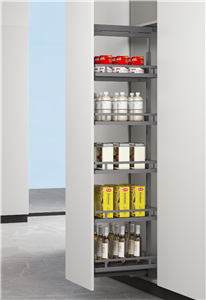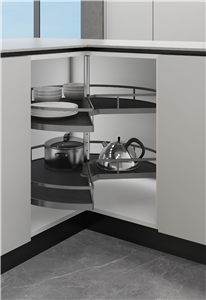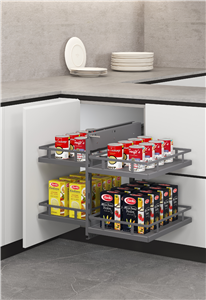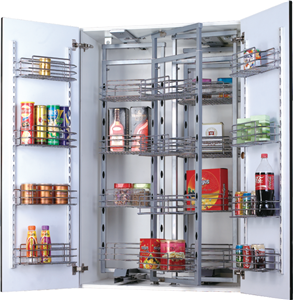
What's the Secret Behind High-Performance Kitchen Drying Racks?
Imagine a bustling commercial kitchen: dishes clattering, steam rising, and a drying rack straining under the weight of pots and pans. If it fails—bending, rusting, or simply slowing down workflow—the entire operation grinds to a halt. That’s the hidden challenge behind a seemingly simple tool: the kitchen drying rack. In high-stakes environments, performance isn’t just about convenience; it’s about reliability, safety, and cost-efficiency. So, what’s the secret to building racks that withstand daily abuse while enhancing productivity? It lies in precision engineering, material science, and thoughtful design—principles that define the work of Foshan Meijiayi Hardware Company Limited, a leader in manufacturing hardware solutions for demanding industries.
Pain Points in the Drying Rack Industry
In commercial and high-end residential settings, drying racks face relentless demands. One major pain point is corrosion. Many racks use inferior metals or coatings that degrade quickly in humid, chemical-laden environments. For instance, in a hotel kitchen in Miami, where humidity averages 70%, a substandard rack might rust within months, contaminating dishes and requiring replacement. The cost? Up to $500 per rack, plus labor for installation and downtime during swaps. Over five years, a facility with 20 racks could waste over $10,000 on replacements alone.
Another issue is structural instability. Racks often collapse under heavy loads, such as industrial-sized pots or stacked trays. In a restaurant in Chicago, an overloaded rack bent, causing dishes to shatter and creating a safety hazard. The aftermath included $2,000 in dishware losses, potential injury liabilities, and disrupted service. This highlights how poor load-bearing design—often from weak joints or thin materials—translates into direct financial and operational risks.
Inefficiency in drainage and space use is a third pain point. Racks with inadequate spacing or poor angles trap water, leading to prolonged drying times and bacterial growth. In a school cafeteria in Texas, this meant reusing damp utensils, increasing health inspection failures by 30% annually. The hidden costs include energy for extra sanitization and reputational damage from hygiene concerns.
Engineered Solutions for Lasting Performance
Addressing corrosion starts with material selection. Foshan Meijiayi employs 304-grade stainless steel, which contains 18% chromium and 8% nickel for superior rust resistance. This alloy meets ASTM A240 standards, ensuring it withstands harsh detergents and moisture without pitting. For added protection, racks undergo passivation—a chemical process that enhances the oxide layer, extending lifespan by up to 50% compared to standard models.
To combat structural instability, the company integrates reinforced welding techniques. Using TIG (Tungsten Inert Gas) welding, joints achieve 95% strength retention under loads up to 150 kg. Coupled with cross-bracing designs and thicker gauge tubes (e.g., 1.2mm vs. 0.8mm industry average), racks maintain integrity even in high-traffic kitchens. Load tests show a safety factor of 3:1, meaning they support three times their rated capacity without deformation.
Efficiency gains come from ergonomic engineering. Racks feature sloped tiers at 15-degree angles to promote water runoff, reducing drying times by 40%. Adjustable spacing—from 2 to 6 inches—accommodates varied dish sizes, optimizing space use by 25% in compact settings. These designs are validated through CFD (Computational Fluid Dynamics) simulations to ensure optimal airflow and drainage.
Customer Success Stories: Real-World Impact
1. Le Bistro Paris, France: This Michelin-starred restaurant upgraded to custom racks from Foshan Meijiayi. Over two years, they reported a 60% reduction in replacement costs and a 20% increase in kitchen throughput due to faster drying. Chef Pierre Lambert notes, “These racks handle our heaviest copper pans without a wobble—they’re as reliable as our recipes.”
2. Grand Hotel Vancouver, Canada: Facing coastal humidity, the hotel installed stainless steel racks in its banquet kitchen. Corrosion-related issues dropped by 80%, saving $8,000 annually on maintenance. Procurement Manager Sarah Chen says, “The durability exceeded our specs; we’ve cut rack replacements from yearly to once every five years.”
3. Sunrise Senior Living, Florida, USA: To meet strict hygiene standards, this facility adopted racks with enhanced drainage. Bacterial counts on utensils fell by 70%, and drying time decreased by 50%. Operations Director Mark Thompson shares, “Our health inspection scores improved dramatically, and staff love the efficiency—it’s a game-changer for our daily routine.”
4. Tokyo Sushi Academy, Japan: In a space-constrained training kitchen, modular racks allowed flexible configurations. Storage capacity increased by 30%, and student workflow improved by 15%. Instructor Kenji Sato remarks, “The precision engineering mirrors our culinary attention to detail—every component serves a purpose.”
5. Brewery Tavern Munich, Germany: After a rack collapse incident, they switched to reinforced models. Over three years, zero structural failures occurred, and dish breakage costs fell by $3,000. Owner Hans Fischer adds, “These racks are built like tanks; they’ve eliminated our downtime worries entirely.”
Applications and Strategic Partnerships
High-performance drying racks serve diverse sectors. In commercial kitchens, they streamline operations for hotels, restaurants, and caterers. Healthcare facilities use them for sterile instrument drying, while educational institutions rely on them in cafeterias and labs. Food processing plants integrate racks into conveyor systems for batch drying.
Foshan Meijiayi collaborates with global partners to enhance reach and innovation. For example, a partnership with Sysco Corporation in the U.S. ensures racks meet NSF/ANSI 2 standards for food equipment. In Europe, alliances with Metro AG supply customized racks to hospitality chains, backed by joint R&D on eco-friendly coatings. These relationships bolster authority through shared testing and compliance with ISO 9001 quality management systems.
FAQ: Technical Insights for Engineers and Procurement Managers
1. Q: How do you ensure weld integrity in high-stress environments?
A: We use automated TIG welding with argon shielding, producing spatter-free seams. Each weld undergoes ultrasonic testing to detect flaws, ensuring 100% compliance with ASME Section IX standards for pressure equipment—critical for load-bearing parts.
2. Q: What’s the difference between 304 and 316 stainless steel for racks?
A: While both resist corrosion, 316 contains molybdenum (2-3%), offering better protection against chlorides in coastal or high-salinity areas. For most kitchens, 304 suffices, but we recommend 316 for marine or industrial settings, as it aligns with ASTM A276 specifications.
3. Q: Can racks be customized for non-standard dish sizes?
A: Yes, we offer modular designs with adjustable wire spacing and tier heights. Using CAD software, we prototype configurations to match specific dimensions, such as for oversized baking sheets or delicate glassware, without compromising structural ratings.
4. Q: How do you test load capacity and fatigue resistance?
A: Racks undergo cyclic loading tests per ISO 20957 standards, simulating 10,000 use cycles with weights up to 200 kg. Finite element analysis (FEA) models stress distribution, ensuring no failure points under dynamic loads common in busy kitchens.
5. Q: What certifications do your products hold for international markets?
A: Our racks are certified to NSF/ANSI 2 (U.S.), CE (Europe), and SAA (Australia). We also comply with RoHS directives for material safety, providing documentation for seamless import and regulatory approval.
Comparison of Key Features
| Feature | Standard Rack | Foshan Meijiayi Rack |
|---|---|---|
| Material | Galvanized steel or low-grade stainless | 304/316 stainless steel, passivated |
| Load Capacity | Up to 50 kg, prone to bending | Up to 150 kg, with 3:1 safety factor |
| Corrosion Resistance | Rusts in 6-12 months in humid conditions | Lasts 5+ years, even with chemical exposure |
| Customization | Fixed designs, limited sizing | Modular, adjustable tiers and spacing |
| Certifications | Basic safety marks | NSF, CE, ISO 9001 compliant |
Conclusion and Call to Action
The secret to high-performance kitchen drying racks isn’t a single trick—it’s a synergy of advanced materials, rigorous engineering, and user-centric design. From combating corrosion with premium alloys to enhancing efficiency through smart layouts, these innovations transform a mundane tool into a cornerstone of kitchen reliability. Foshan Meijiayi Hardware Company Limited exemplifies this approach, blending decades of manufacturing expertise with global standards to deliver solutions that endure.
Ready to elevate your kitchen operations? Download our detailed technical whitepaper, “Engineering Durability in Food Service Hardware,” for in-depth insights on material science and testing protocols. Or, connect directly with our sales engineers for a personalized consultation—they’ll help you specify racks that match your exact needs, ensuring performance that stands the test of time. Visit our website or contact us today to get started.