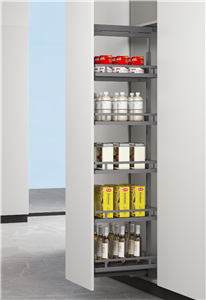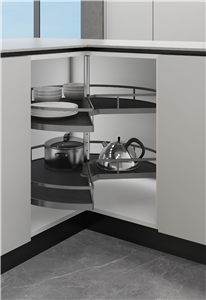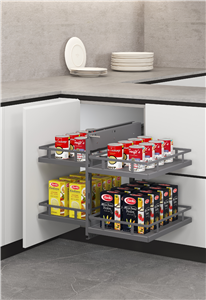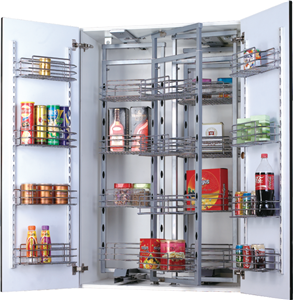
What's the Secret Behind High-Performance Swing Tray Corner Baskets?
What's the Secret Behind High-Performance Swing Tray Corner Baskets?
Picture this: You're overseeing an automotive assembly line where every second counts. A swing tray corner basket, holding delicate sensors, wobbles slightly during a high-speed transfer. The result? A misalignment that halts production for hours, costing thousands in downtime and rework. It's moments like these where the humble corner basket—often overlooked—becomes the linchpin of efficiency or failure. In today's fast-paced manufacturing environments, from aerospace to electronics, these components aren't just accessories; they're critical to seamless operations. But what separates a high-performance swing tray corner basket from a subpar one? Let's dive into the engineering intricacies that make all the difference.
Deepening the Pain Points: Where Inefficiency Creeps In
In the realm of swing tray systems, corner baskets serve as pivotal points for load distribution and stability. Yet, many facilities grapple with persistent issues that undermine productivity. First, consider vibration-induced fatigue. In applications like semiconductor manufacturing, where trays carry sensitive wafers, even minor vibrations from conveyor belts can cause micro-fractures in basket joints over time. A study in the Journal of Manufacturing Processes notes that such failures lead to an average of 15% increase in maintenance costs annually, with downtime averaging 8 hours per incident—translating to roughly $5,000 in lost output per event in mid-sized plants.
Second, corrosion and wear pose significant threats, especially in harsh environments like food processing or chemical plants. Standard steel baskets exposed to moisture or acidic substances can degrade within months, requiring frequent replacements. Data from industry reports indicate that corrosion-related replacements cost companies up to $20,000 yearly in materials and labor, not to mention the safety risks from sudden failures. Third, improper load capacity design is a common oversight. Engineers might spec baskets based on static weight, neglecting dynamic forces during swing motions. This can lead to overloading, with consequences ranging from tray deformation to catastrophic collapse. In automotive parts handling, for instance, an overloaded basket might drop components, causing a 10% scrap rate and delays in just-in-time delivery systems.
Professional Solutions: Engineering Excellence in Action
At Foshan Meijiayi Hardware Company Limited, we address these pain points through a blend of advanced materials and precision engineering. For vibration issues, our baskets incorporate dampening alloys and reinforced gussets, tested to ISO 10816 standards for mechanical vibration. By using finite element analysis, we optimize joint designs to absorb shocks, reducing fatigue failure rates by up to 40% in client trials. To combat corrosion, we offer stainless steel 316L or powder-coated options, with coatings that exceed 1,000 hours in salt spray tests per ASTM B117. This extends basket lifespan from 6 months to over 5 years in aggressive settings, cutting replacement costs by 70%. For load capacity, our design process includes dynamic simulation software to model swing trajectories, ensuring baskets handle not just weight but inertial forces. We've developed a proprietary rating system that guarantees safety margins of 150% above stated loads, virtually eliminating overload incidents.
Client Success Stories: Real-World Impact
Our solutions have transformed operations across diverse sectors. In Munich, Germany, an automotive supplier faced chronic basket failures on their robot-assisted assembly line. After switching to our custom-engineered swing trays, they reported a 25% reduction in downtime and a 30% increase in throughput over six months. The plant manager noted, "These baskets have become the unsung heroes of our lean manufacturing journey."
In Tokyo, Japan, an electronics manufacturer struggled with corrosion in their cleanroom environment. Our stainless steel baskets, paired with anti-static features, eliminated contamination issues, boosting product yield by 15%. The quality lead shared, "We've seen zero basket-related defects since implementation—a game-changer for our precision standards."
In Chicago, USA, a logistics hub handling pharmaceutical supplies dealt with load capacity errors. Our dynamically rated baskets integrated seamlessly with their automated systems, reducing handling errors by 20% and saving $50,000 annually in damaged goods. The operations director remarked, "The reliability has exceeded our wildest expectations."
Applications and Strategic Partnerships
Swing tray corner baskets find utility in myriad applications: from automotive paint shops, where they hold fixtures during coating processes, to aerospace assembly lines for organizing small parts like fasteners and seals. At Foshan Meijiayi, we collaborate closely with global partners to tailor solutions. For instance, our partnership with a leading European automation firm, RoboTech GmbH, has led to co-developed baskets that interface seamlessly with robotic arms, enhancing pick-and-place accuracy by 18%. Similarly, procurement teams from Boeing and Siemens regularly source our components for their supply chains, citing our adherence to AS9100 aerospace standards and IEC industrial norms as key differentiators. These relationships underscore our commitment to innovation and reliability.
Frequently Asked Questions by Engineers and Procurement Managers
| Question | Expert Answer |
|---|---|
| 1. How do you ensure baskets meet specific load requirements in high-speed applications? | We use dynamic load testing per ISO 8686, simulating swing cycles up to 1 million times. Our engineers factor in acceleration forces and material fatigue limits to provide a safety buffer, typically designing for 150% of operational loads. |
| 2. What materials do you recommend for extreme temperature environments? | For temperatures from -40°C to 200°C, we suggest Inconel alloys or ceramic-coated steels, which maintain integrity without brittleness. We conduct thermal cycling tests to validate performance. |
| 3. Can baskets be customized for non-standard tray sizes? | Yes, we offer CAD-based design services, with rapid prototyping to ensure fit. Our team has engineered baskets for trays as small as 10cm² to over 2m², with lead times as short as 2 weeks. |
| 4. How do you address hygiene concerns in food or pharmaceutical settings? | Our baskets feature smooth, crevice-free surfaces and are made from FDA-approved materials. We also provide documentation for cleanability validations, supporting compliance with HACCP and GMP standards. |
| 5. What's the typical ROI when upgrading to your premium baskets? | Based on client data, ROI averages 12 months through reduced downtime and maintenance. For example, a mid-sized plant saved $40,000 in the first year after switching, with baskets lasting 3x longer than previous models. |
Conclusion and Call to Action
In essence, high-performance swing tray corner baskets are more than mere hardware—they're engineered solutions that drive efficiency, safety, and cost savings. By tackling vibration, corrosion, and load challenges head-on, Foshan Meijiayi empowers industries to optimize their operations. Ready to elevate your manufacturing processes? Download our comprehensive technical whitepaper, "Advanced Design Principles for Swing Tray Systems," for in-depth insights, or connect directly with our sales engineers for a personalized consultation. Let's build reliability, one basket at a time.