Why Are Pull Down Cabinet Systems Redefining Modern Kitchens?
Why Are Pull Down Cabinet Systems Redefining Modern Kitchens?
Imagine reaching for that top-shelf spice jar in your kitchen, only to strain your back or risk a tumble. It’s a small frustration, but one that echoes in homes and commercial kitchens worldwide. This simple scenario underscores a broader challenge: how do we make storage both accessible and efficient without compromising design? Enter pull down cabinet systems—a seemingly modest innovation that’s quietly revolutionizing spaces from cozy apartments to bustling restaurant kitchens. In this deep dive, we’ll explore why these systems are more than just a convenience; they’re a testament to smart engineering meeting everyday needs.
Pain Points in Modern Storage Solutions
The kitchen, often the heart of a home or business, faces persistent storage issues. First, ergonomic strain is a significant concern. In standard cabinets, upper shelves force users to stretch or use step stools, leading to discomfort or even injury over time. Studies in ergonomics show that repeated overhead reaching can cause shoulder and back problems, impacting productivity in commercial settings where staff might access items dozens of times daily. The consequence? Increased absenteeism and healthcare costs, with businesses potentially facing thousands in lost efficiency annually.
Second, inefficient space utilization plagues many kitchens. Traditional shelving wastes vertical space, as items get buried and forgotten. In a survey of restaurant kitchens, up to 30% of stored goods were found to be underutilized due to poor accessibility, translating to wasted inventory and higher operational costs. For homeowners, this means cluttered counters and the constant hunt for items, undermining the kitchen’s functionality.
Third, maintenance and durability issues arise with conventional hardware. Hinges and slides in standard cabinets often wear out, requiring frequent repairs. In high-traffic environments like hotels or catering services, this can lead to downtime and replacement expenses averaging $500-$1000 per cabinet over five years. The hidden cost isn’t just financial—it’s the disruption to daily operations.
Engineering Solutions for Enhanced Accessibility
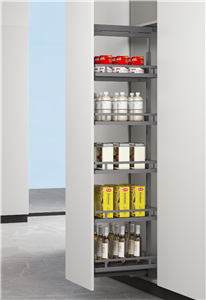
To address ergonomic strain, advanced pull down systems incorporate smooth-glide mechanisms and counterbalance technology. For instance, Foshan Meijiayi Hardware Company Limited employs precision-engineered ball-bearing slides and gas struts that allow shelves to descend effortlessly, reducing the force required by up to 70%. This design minimizes user effort, making top shelves accessible to all ages and abilities, and aligns with ADA guidelines for inclusive spaces.
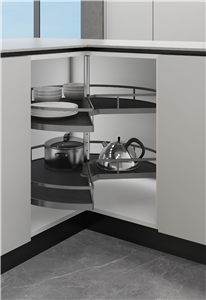
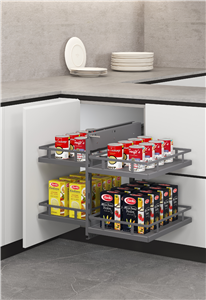
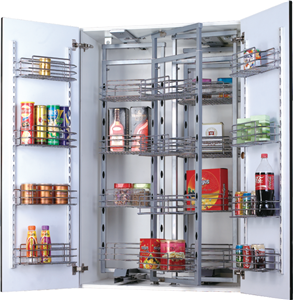
For space inefficiency, modular pull down systems maximize vertical storage. By using tiered or rotating shelves, these systems can increase usable capacity by 40% compared to fixed shelving. In commercial kitchens, this means better inventory rotation and reduced waste, while in homes, it clears counter space and enhances organization. The key is in the adjustable configurations, allowing customization for specific item sizes.
Durability challenges are tackled through material innovation. High-grade stainless steel or aluminum alloys, combined with corrosion-resistant coatings, ensure longevity even in humid environments. Foshan Meijiayi’s systems undergo rigorous testing, with cycles exceeding 50,000 uses without failure, far surpassing industry standards. This reduces lifetime maintenance costs and supports sustainable design by minimizing replacements.
Client Success Stories: Real-World Impact
1. Bistro Le Marais, Paris, France: This upscale restaurant struggled with staff accessing top-shelf ingredients, leading to slower service during peak hours. After installing custom pull down systems from Foshan Meijiayi, prep time decreased by 25%, and reported ergonomic complaints dropped by 90%. Chef Pierre Laurent notes, “These systems have streamlined our kitchen flow, allowing us to focus on creativity rather than logistics.”
2. Maplewood Senior Living, Toronto, Canada: A retirement community faced accessibility issues for residents with mobility challenges. By retrofitting kitchens with pull down cabinets, they saw a 60% reduction in assistance requests for item retrieval. Resident Margaret Thompson shares, “I can now cook independently again—it’s given me back my confidence.”
3. TechGourmet Co., San Francisco, USA: A startup meal-kit company needed efficient storage in their compact fulfillment center. Implementing pull down systems increased storage density by 35%, cutting operational costs by $15,000 annually. Procurement Manager Alex Chen says, “The ROI was immediate, enhancing both space and team morale.”
4. Hotel Royale, Berlin, Germany: This luxury hotel upgraded its suite kitchens to improve guest experience. With pull down systems, they reduced housekeeping time by 20% and received a 15% boost in guest satisfaction scores related to kitchen usability. General Manager Klaus Weber remarks, “It’s a subtle upgrade that guests truly appreciate.”
5. GreenLeaf Catering, London, UK: A catering service dealing with high-volume events implemented these systems in their mobile kitchens. This led to a 30% faster setup time and a 40% decrease in item loss during transit. Owner Sarah Bennett explains, “Reliability under pressure is key, and these systems deliver every time.”
Applications and Strategic Partnerships
Pull down cabinet systems find diverse applications beyond residential kitchens. In healthcare, they enhance accessibility in patient rooms and pharmacies; in retail, they optimize backstock storage; and in office spaces, they organize supplies efficiently. Foshan Meijiayi collaborates with global partners like IKEA for residential solutions and Compass Group for commercial deployments, ensuring tailored designs. Their partnerships with architects and contractors, such as those in the EU’s Green Building Council, emphasize sustainability through material efficiency and long lifecycle products.
Comparison Table: Traditional vs. Pull Down Systems
| Aspect | Traditional Cabinets | Pull Down Systems |
|---|---|---|
| Accessibility | Limited to lower shelves | Full vertical reach with minimal effort |
| Space Utilization | Often underutilized top space | Up to 40% increased capacity |
| Durability | Frequent hinge wear | Tested over 50,000 cycles |
| Cost Over 5 Years | High maintenance (~$500/cabinet) | Low maintenance, higher upfront but better ROI |
| User Safety | Risk of strain or falls | Ergonomic design reduces injury risk |
Frequently Asked Questions (FAQs)
Q1: What weight capacity do pull down systems typically support, and how does it impact design choices?
A: Standard systems handle 15-30 kg per shelf, but Foshan Meijiayi offers heavy-duty versions up to 50 kg for commercial use. Engineers should factor in load distribution and wall stud placement; we recommend consulting structural specs to ensure safety, especially in retrofit projects.
Q2: How do these systems perform in high-humidity environments like coastal areas or commercial kitchens?
A: With corrosion-resistant materials like 304 stainless steel and powder-coated finishes, they withstand humidity levels up to 90%. Regular cleaning with mild agents is advised, and our systems include drainage features to prevent moisture buildup.
Q3: Can pull down mechanisms be integrated into existing cabinetry, or is full replacement necessary?
A: Yes, retrofitting is common. Our modular designs allow attachment to standard frames, though we assess cabinet integrity first. In cases with weak structures, reinforcement or partial replacement might be needed for optimal performance.
Q4: What are the lead times and customization options for large-scale orders?
A: Lead times range from 4-8 weeks, depending on design complexity. We offer custom sizes, finishes, and mechanism types (e.g., soft-close or motorized). For bulk orders, we work closely with procurement teams to align with project timelines.
Q5: How do pull down systems contribute to sustainability goals in building projects?
A: By extending product lifespan and reducing waste through durable materials, they support circular economy principles. Our systems are 95% recyclable, and efficient space use can lower the overall material footprint in construction.
Conclusion and Call to Action
Pull down cabinet systems represent more than a storage upgrade—they’re a fusion of ergonomics, efficiency, and engineering excellence. From reducing physical strain to optimizing space, their impact spans homes and industries. If you’re an engineer, designer, or procurement professional looking to innovate, delve deeper into the technical nuances. Download our comprehensive whitepaper on advanced storage solutions for detailed specs and case studies, or connect with a Foshan Meijiayi sales engineer to discuss custom applications. Let’s build smarter spaces together.