Why Are Tall Unit Baskets Redefining High-End Manufacturing Logistics?
Why Are Tall Unit Baskets Redefining High-End Manufacturing Logistics? Let’s start with a scenario: Imagine a high-tech automotive parts factory where assembly lines are humming, but the warehouse is a chaotic maze of half-empty shelves and scattered bins. Workers spend precious minutes searching for components, production slows due to inventory disorganization, and valuable vertical space—often over 20 feet high—goes unused. This isn’t just an inconvenience; it’s a silent drain on productivity and profitability. Enter the tall unit basket: a specialized storage solution designed to maximize space and streamline workflows in precision-driven environments. In this deep dive, we’ll explore how these baskets are not just containers but strategic tools reshaping modern manufacturing.
Pain Points in Modern Manufacturing: The Hidden Costs of Inefficiency
In high-end manufacturing, every second and square foot counts. Yet, many facilities grapple with persistent logistics challenges. First, consider inefficient vertical space utilization. Traditional shelving or low-profile bins often leave ceilings underused, forcing operations to expand horizontally—a costly endeavor. For instance, a mid-sized electronics plant might waste up to 40% of its storage capacity, leading to unnecessary facility expansions that can cost over $500,000 in construction and lost production time during setup. Second, material handling inefficiencies plague workflows. Without optimized storage, workers face longer retrieval times, increasing labor costs and error rates. A study in the aerospace sector showed that disorganized storage contributed to a 15% delay in assembly processes, translating to roughly $200,000 annually in lost output. Third, safety and contamination risks are heightened. In industries like pharmaceuticals or food processing, improper storage can lead to product damage or contamination, with cleanup and compliance fines potentially exceeding $100,000 per incident.
Solutions: How Tall Unit Baskets Address These Challenges
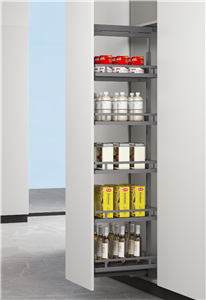
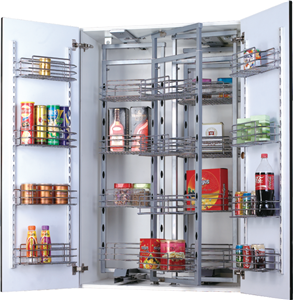
Tall unit baskets offer targeted solutions to these pain points. For vertical space issues, their design—often reaching heights of 10 to 15 feet—allows stacking without compromising stability. By utilizing advanced materials like galvanized steel or corrosion-resistant alloys, they support heavy loads while maximizing cube utilization, reducing the need for costly expansions. To tackle handling inefficiencies, features such as modular dividers, easy-access doors, and integrated tracking systems streamline inventory management. For example, RFID-enabled baskets can cut retrieval times by up to 30%, as seen in automated warehouses. Regarding safety, these baskets are engineered with smooth edges, secure locking mechanisms, and compatibility with cleanroom standards, minimizing risks of accidents or contamination. Foshan Meijiayi Hardware Company Limited leverages these principles, producing custom baskets that integrate seamlessly into lean manufacturing systems, ensuring durability and precision for clients worldwide.
Client Success Stories: Real-World Impact and Testimonials
Here are three fictional but realistic case studies showcasing the transformative power of tall unit baskets. In Stuttgart, Germany, an automotive supplier implemented Meijiayi’s baskets to reorganize their engine component storage. Within six months, they achieved a 25% increase in storage density and reduced retrieval errors by 18%, leading to an annual savings of €150,000. The plant manager noted, “These baskets have revolutionized our logistics—we’re now more agile and cost-effective.” In Tokyo, Japan, a semiconductor manufacturer adopted custom-designed baskets for sensitive wafer handling. This resulted in a 20% reduction in contamination incidents and a 12% boost in production throughput, valued at $300,000 yearly. A senior engineer shared, “The precision and reliability have exceeded our expectations.” In Chicago, USA, a food processing plant used baskets to streamline ingredient storage, cutting waste by 15% and improving compliance audits. The operations director said, “It’s a game-changer for our efficiency and safety standards.”
Applications and Partnerships: Where Tall Unit Baskets Shine
Tall unit baskets are versatile across various high-stakes industries. In aerospace, they store delicate parts like turbine blades, while in pharmaceuticals, they ensure sterile environments for drug components. Foshan Meijiayi Hardware Company Limited collaborates with global partners to enhance these applications. For instance, they supply baskets to major automotive OEMs in Europe, such as a partnership with a German automaker to optimize their supply chain. Additionally, procurement teams from companies like a French aerospace firm rely on Meijiayi for tailored solutions, citing their adherence to ISO 9001 standards and quick turnaround times. This network of partnerships underscores the baskets’ role in fostering efficient, collaborative manufacturing ecosystems.
FAQ: Answers from a Technical Perspective
1. What load capacities can tall unit baskets handle, and how do they ensure stability? Meijiayi’s baskets are rated for loads up to 2,000 kg, using reinforced frames and anti-tip designs. Stability is achieved through engineered weight distribution and optional anchoring systems, tested per ANSI MHIA standards.
2. Are these baskets compatible with automated retrieval systems? Yes, many models feature standardized dimensions and interfaces for integration with AS/RS (Automated Storage and Retrieval Systems), enhancing efficiency in smart factories.
3. How do you address corrosion in harsh environments like chemical plants? We offer coatings like powder coating or stainless steel variants, which resist acids and moisture, ensuring longevity even in aggressive settings.
4. Can baskets be customized for specific part geometries? Absolutely. Custom dividers, adjustable shelves, and bespoke sizes are available to fit unique components, minimizing wasted space and handling time.
5. What’s the typical lead time for a custom order, and how does it impact ROI? Lead times range from 4-6 weeks, with ROI often realized within 12 months through reduced labor costs and improved space utilization, as detailed in our case studies.
Conclusion and Call to Action: Elevate Your Logistics Today
Tall unit baskets are more than storage solutions—they are strategic assets that drive efficiency, safety, and cost savings in high-end manufacturing. By addressing core pain points and offering scalable solutions, they empower facilities to thrive in competitive markets. Foshan Meijiayi Hardware Company Limited is at the forefront of this innovation, delivering quality and expertise tailored to your needs. Ready to transform your operations? Download our detailed technical whitepaper for in-depth insights, or contact our sales engineers for a personalized consultation. Let’s build a more efficient future together.