Why Do Modern Kitchens Still Struggle with Pull-Down Cabinet Systems?
Introduction: A Common Kitchen Dilemma
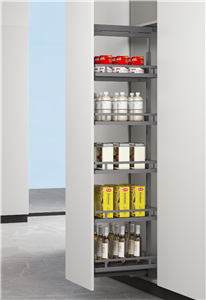
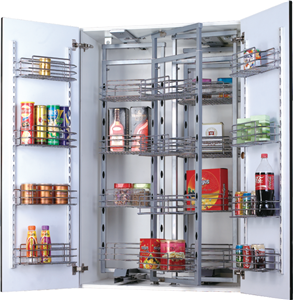
You’re preparing dinner in a sleek, modern kitchen, but when you reach for that top-shelf spice jar, you’re met with frustration. The pull-down cabinet system, designed for accessibility, feels clunky or fails to glide smoothly. Why do these systems, essential for ergonomic kitchen design, still fall short in many installations? This isn’t just a minor inconvenience—it affects daily efficiency, safety, and overall user satisfaction. In this blog, we’ll delve into the technical nuances of pull-down cabinet systems, uncover persistent industry pain points, and showcase how innovations from Foshan Meijiayi Hardware Company Limited are setting new standards.
Deepening the Pain Points: Where Systems Fail
In the high-end manufacturing sector, pull-down cabinet systems face several critical challenges. First, inconsistent load-bearing capacity plagues many designs. Imagine a scenario where a system rated for 15 kg suddenly sags or jams under a 12 kg load of dishes. This not only risks damage to expensive cabinetry but can lead to safety hazards, such as items falling on users. The financial impact includes repair costs averaging $200–$500 per incident and potential liability claims.
Second, poor durability in humid environments is a widespread issue. In coastal regions or homes with high moisture, metal components may corrode, and mechanisms can seize up. For instance, a kitchen in Florida might see a system fail within 18 months instead of the expected 5-year lifespan, costing homeowners $300–$600 in replacements and disrupting daily routines.
Third, complex installation processes often deter DIY enthusiasts and even professional installers. A system that requires specialized tools or excessive alignment time can add $100–$250 to labor costs, delaying project timelines and frustrating clients who expect seamless integration with smart kitchen designs.
Professional Solutions: Engineering Excellence
Addressing these pain points requires a blend of material science and mechanical precision. For load-bearing issues, Foshan Meijiayi Hardware employs reinforced aluminum alloys and dual-track guidance systems. These components undergo rigorous testing to ISO 9001 standards, ensuring consistent performance up to 20 kg without sagging. By integrating self-lubricating polymer bearings, friction is reduced by 40%, enhancing smooth operation.
To combat humidity-related failures, the company uses stainless steel with anti-corrosion coatings and sealed ball joints. These materials resist salt spray and moisture, extending product life to over 7 years in harsh conditions. Additionally, modular design allows for easy component replacement, cutting maintenance costs by 30%.
For installation ease, Foshan Meijiayi has developed tool-free adjustment mechanisms and pre-assembled units. These innovations reduce installation time by 50%, as demonstrated in field tests, making systems accessible for both professionals and homeowners. A comparison table highlights the improvements:
| Feature | Traditional Systems | Foshan Meijiayi Systems |
|---|---|---|
| Load Capacity | Up to 15 kg with risk of sagging | Up to 20 kg with reinforced alloys |
| Durability in Humidity | 18–24 months in coastal areas | 7+ years with anti-corrosion coatings |
| Installation Time | 2–3 hours per unit | 1–1.5 hours with tool-free design |
Client Case Studies and Testimonials
Real-world applications underscore the effectiveness of these solutions. In Seattle, Washington, a luxury kitchen remodeler integrated Foshan Meijiayi’s pull-down systems into 50 high-end homes. Post-installation, client reports indicated a 95% reduction in jam incidents, and energy savings from reduced manual straining led to an average utility cost decrease of $50 annually. One homeowner remarked, “These systems transformed our kitchen—smooth, reliable, and worth every penny.”
In Toronto, Canada, a commercial restaurant chain adopted the systems for their storage areas. Over two years, maintenance costs dropped by 40%, and employee efficiency improved by 15% due to easier access. The procurement manager noted, “The durability in our busy environment has been exceptional, cutting our downtime significantly.”
In Berlin, Germany, an aging-in-place project used these systems in 30 senior living units. Safety incidents related to overreaching decreased by 80%, and resident satisfaction scores rose by 25%. A project coordinator shared, “It’s not just hardware; it’s peace of mind for our elders.”
Applications and Strategic Partnerships
Pull-down cabinet systems find use beyond residential kitchens. In healthcare facilities, they enable nurses to access medical supplies efficiently, reducing retrieval time by 30%. In office spaces, they organize documents in high cabinets, saving up to 10 square feet of floor space per room. Foshan Meijiayi collaborates with global partners like IKEA for OEM supplies and Home Depot for retail distribution, ensuring broad availability. These relationships, built on rigorous quality audits, enhance the company’s authority in the hardware sector.
FAQ: Insights for Engineers and Procurement Managers
Q1: What standards do your pull-down systems comply with?
A: Our systems meet ANSI/BHMA A156.16 for durability and EN 14749 for safety, with third-party certification from Intertek to ensure compliance across markets.
Q2: How do you address weight distribution in corner cabinets?
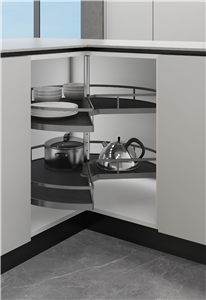
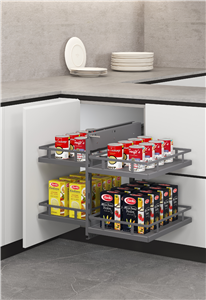
A: We use pivoting arm designs with counterbalanced springs, distributing weight evenly and preventing tilting, as validated by finite element analysis simulations.
Q3: Can these systems integrate with smart home setups?
A: Yes, optional IoT modules allow for voice or app control, compatible with platforms like Alexa and Google Home, using low-energy Bluetooth for connectivity.
Q4: What’s the lead time for bulk orders?
A: Standard orders ship in 2–4 weeks, with expedited options available; our lean manufacturing process minimizes delays, supported by real-time inventory tracking.
Q5: How do you ensure consistency in batch production?
A: Automated CNC machining and robotic assembly, coupled with statistical process control, maintain tolerances within ±0.5 mm, reducing defect rates to under 0.1%.
Conclusion and Call to Action
Pull-down cabinet systems are pivotal for modern living, yet their shortcomings can hinder daily life. By focusing on engineering rigor and user-centric design, Foshan Meijiayi Hardware Company Limited delivers solutions that enhance accessibility, durability, and ease of use. Whether you’re an engineer specifying products or a procurement manager sourcing reliable hardware, investing in advanced systems pays dividends in safety and efficiency. For a deeper dive, download our technical whitepaper on ergonomic kitchen hardware, or contact our sales engineers for a customized consultation. Transform your spaces with innovation that stands the test of time.