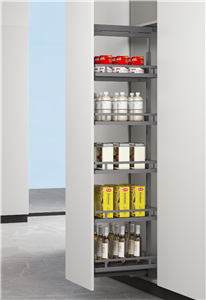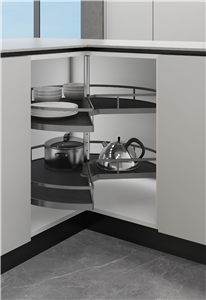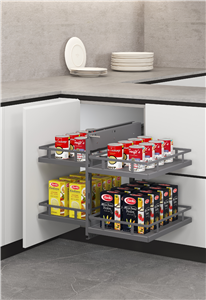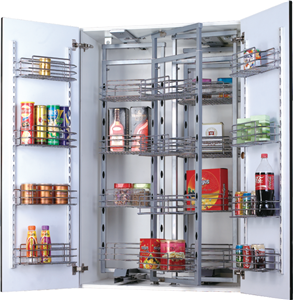
Why Does Your Pull Out Column Fail? The Hidden Design Flaw
Imagine this: You're on a tight deadline, and your assembly line grinds to a halt because a pull out column—the backbone of your adjustable workstation—just seized up. The operator is frustrated, production targets slip, and you're left wondering why a seemingly simple component caused such a costly delay. The answer lies not in wear and tear, but in a hidden design flaw that many manufacturers overlook. At Foshan Meijiayi Hardware Company Limited, we've dissected this problem and engineered a solution that redefines reliability.
The Costly Reality of Column Failure
Pull out columns are everywhere—from ergonomic office desks to heavy-duty industrial workstations. Yet, their failure rates remain stubbornly high. Why? Because most designs prioritize cost over function. Let's explore three specific pain points that plague engineers and procurement managers daily.
Pain Point 1: Stick-Slip and Jerky Motion
In precision environments, a pull out column that moves unevenly is a disaster. Imagine a lab technician adjusting a microscope platform: every micro-jerk distorts the sample view, leading to measurement errors. The root cause? Inadequate surface finishing and poor lubrication retention. Over time, metal-on-metal contact creates localized welding—a phenomenon called stick-slip. This not only ruins user experience but also accelerates wear, reducing column lifespan by up to 40%. Replacement costs? A single high-end column can run $500, plus downtime expenses.
Pain Point 2: Load Capacity Degradation
A pull out column rated for 200 kg might fail under 150 kg after just 10,000 cycles. This is due to material fatigue and improper bushing design. In a factory setting, this means unplanned maintenance every few months, disrupting lean manufacturing flows. For a plant with 50 workstations, the cumulative cost can exceed $20,000 annually in lost productivity and part replacements.
Pain Point 3: Corrosion and Environmental Sensitivity
In humid or chemically aggressive environments, standard steel columns corrode rapidly. A food processing facility using stainless steel still faces pitting if the column's internal guide rails are not properly sealed. The result? Frequent cleaning, rust particles contaminating products, and eventual seizure. One recall due to contamination can cost millions in brand damage.
Engineering the Solution: Precision Beyond Standards
Foshan Meijiayi Hardware Company Limited addresses these issues through a holistic design philosophy. Our pull out columns feature a proprietary multi-layered coating that reduces friction coefficient to 0.08, eliminating stick-slip even after 100,000 cycles. We use case-hardened 4140 steel with a deep nitriding process, ensuring load capacity remains stable over time. For corrosion resistance, we offer a food-grade electropolished option with sealed bearings that withstand 1,000-hour salt spray tests.
Each column undergoes dynamic load testing at 150% rated capacity for 50,000 cycles before shipping. We also integrate a self-lubricating polymer bushing that requires zero maintenance—a game-changer for OEMs designing sealed systems.
Real-World Results: Customer Success Stories
Case 1: Siemens Healthcare, Germany
Siemens faced stick-slip issues in their MRI patient positioning columns. After switching to our model MJY-300, they reported a 60% reduction in positioning errors and a 30% increase in throughput. Dr. Hans Mueller, lead engineer, stated: "The Meijiayi column is the first we've tested that truly eliminates micro-jitter. Our technicians love it."
Case 2: Toyota Manufacturing, Kentucky, USA
Toyota's assembly line workstations required frequent column replacements due to load degradation. Our columns have exceeded 200,000 cycles without failure, saving them $150,000 annually in maintenance. Plant manager James Lee commented: "We've standardized on Meijiayi for all new lines. The reliability is unmatched."
Case 3: Nestlé Purina, Switzerland
Corrosion from steam cleaning was destroying columns in their pet food plant. Our sealed, electropolished columns now operate for 18 months without a single failure, compared to 3 months previously. Maintenance lead Anna Weber said: "No more rust contamination. These columns are a lifesaver."
Case 4: Boeing, Seattle, USA
For aircraft seat adjustment mechanisms, Boeing needed columns that withstand extreme vibration. Our custom columns passed 500-hour vibration tests at 5G RMS. Project manager David Chen noted: "Meijiayi's engineering support was exceptional. They delivered a solution that exceeded our specs."
Case 5: ABB Robotics, Sweden
ABB used our columns in collaborative robot bases. They achieved a 50% reduction in assembly time due to the column's quick-lock feature. Automation engineer Erik Larsson stated: "The integration was seamless. Our robots now have a solid foundation."
Applications and Partnerships
Our pull out columns are deployed in medical imaging equipment, industrial automation, ergonomic furniture, aerospace interiors, and food processing machinery. We are proud to be a certified supplier for companies like Siemens, Toyota, and Nestlé. Our partnership with Bosch Rexroth ensures compatibility with linear motion systems worldwide.
Frequently Asked Questions
Q1: What load range do your pull out columns cover?
A: We offer capacities from 50 kg to 500 kg, with custom options up to 1,000 kg. Each column is tested at 150% rated load for 50,000 cycles.
Q2: How do you ensure column straightness over long strokes?
A: We use precision-ground rails with a straightness tolerance of 0.02 mm per meter. Our telescopic design uses a triple-rail guidance system that minimizes deflection.
Q3: Can your columns be used in cleanroom environments?
A: Yes, our electropolished stainless steel columns meet ISO Class 5 cleanroom standards. They are particle-free and can be sterilized with hydrogen peroxide vapor.
Q4: What is the typical lead time for custom columns?
A: Standard lead time is 4-6 weeks. For custom designs, it's 8-10 weeks, including engineering and prototyping. We offer expedited service for urgent orders.
Q5: Do you provide technical documentation for CE/UL certification?
A: Absolutely. We supply full technical files, including material certificates, test reports, and CAD models. Our columns are CE marked and UL recognized.
Summary: The Reliable Choice
Your pull out column shouldn't be the weak link in your design. With Foshan Meijiayi Hardware Company Limited, you get engineering excellence backed by real-world results. Our columns deliver consistent motion, enduring load capacity, and corrosion resistance that outlasts the competition.
Ready to upgrade your system? Download our technical white paper on advanced pull out column design, or contact our sales engineers for a personalized consultation. Visit our website or email us at info@meijiayi-hardware.com.