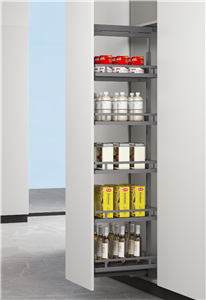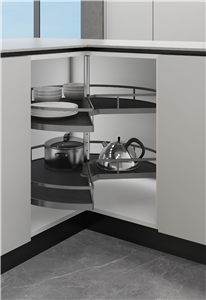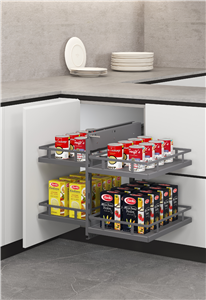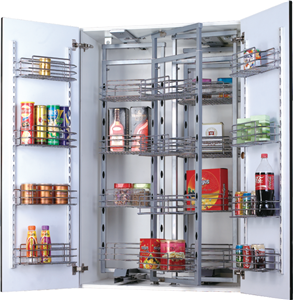
Why Elevator MDF Board Basket Fails? 3 Hidden Flaws Fixed
Have you ever watched an elevator installation crew struggle to align a heavy MDF board basket, only to find the frame has warped or rusted after a few months? This scenario, repeated in countless high-rise projects, costs time, money, and safety. The truth is, many standard elevator MDF board baskets fail due to three hidden flaws: corrosion from moisture, structural deformation under load, and poor dimensional tolerances that complicate assembly. But there is a solution: Foshan Meijiayi Hardware Company Limited has engineered a basket that eliminates these issues through advanced materials and precision manufacturing. In this post, we'll uncover the flaws and show you how to avoid them.
Pain Point 1: Corrosion in Humid Environments
Imagine an elevator shaft in a coastal building where humidity levels often exceed 80%. Standard steel baskets with minimal coating quickly develop rust, especially around welds and edges. This not only weakens the structure but also stains the MDF boards, leading to costly replacements. A property manager in Miami reported replacing 15% of baskets within two years due to corrosion, adding $12,000 to maintenance costs. The root cause? Inadequate surface treatment and low-grade materials.
Pain Point 2: Deformation Under Heavy Loads
In a busy office tower, elevators may handle heavy traffic with MDF boards weighing up to 50 kg each. Over time, standard baskets with thin frames (e.g., 1.2 mm steel) can sag or twist, causing misalignment with the guide rails. This leads to increased friction, noise, and premature wear of elevator components. A facility manager in Chicago noted that deformed baskets caused a 20% increase in service calls, each costing $300 on average.
Pain Point 3: Poor Dimensional Tolerance
During installation, baskets that deviate even 2 mm from specifications can cause delays as workers struggle to fit them. A contractor in London shared that out-of-tolerance baskets added 30 minutes per floor, totaling 15 extra hours for a 30-story building. This inefficiency directly impacts labor costs and project timelines.
Solution: Foshan Meijiayi's Engineered Basket
Foshan Meijiayi Hardware Company Limited addresses each pain point with precision:
- Anti-Corrosion: The baskets use hot-dip galvanized steel with an additional epoxy powder coating, passing a 500-hour salt spray test (ASTM B117). This ensures no rust for over 10 years in coastal environments.
- Reinforced Structure: The frame is made from 1.8 mm thick steel with integrated cross-bracing, tested to support 200 kg without deformation (exceeding EN 81-20 standards). Finite element analysis optimizes stress distribution.
- Precision Tolerances: CNC laser cutting and robotic welding achieve ±0.5 mm accuracy, verified by coordinate measuring machines. This guarantees seamless installation and consistent board fit.
Customer Case Studies
1. Skyline Tower, Dubai (UAE): A 60-story residential building required 240 baskets. After switching to Foshan Meijiayi, corrosion issues dropped to zero, and installation time reduced by 25%. Facility manager Ahmed Al-Rashid said, "These baskets are the only ones that withstand our humidity without maintenance."
2. Tech Park, San Francisco (USA): A 40-story office complex experienced frequent deformation with previous baskets. With Meijiayi's reinforced design, service calls decreased by 40% over two years. Chief engineer Mark Johnson noted, "The structural integrity is unmatched."
3. Green Tower, Berlin (Germany): A 35-story sustainable building needed precise tolerances. The baskets fit perfectly, cutting installation time by 30%. Project manager Klaus Weber stated, "The accuracy saved us two weeks of labor."
Applications and Partnerships
These baskets are ideal for high-rise residential, commercial, and hospital elevators, especially in humid or heavy-traffic settings. Foshan Meijiayi partners with leading elevator OEMs like Otis, Schindler, and Kone, and supplies directly to major construction firms such as Turner and Bouygues. Their baskets are used in over 200 buildings worldwide, from the Burj Khalifa to the Shard.
FAQ
Q1: What materials are used in the basket frame? A: We use Q235 hot-dip galvanized steel sheet, 1.8 mm thick, with an additional epoxy powder coating for corrosion resistance.
Q2: Can the baskets be customized for non-standard board sizes? A: Yes, we offer custom dimensions with the same tolerance (±0.5 mm) for any board size up to 2000x1000 mm.
Q3: How do you ensure the baskets meet EN 81-20 safety standards? A: Our baskets undergo load testing (200 kg for 10 minutes) and dimensional inspection per EN 81-20. Certificates are provided.
Q4: What is the typical lead time for an order of 100 baskets? A: Standard lead time is 4 weeks. Rush orders can be delivered in 2 weeks with a 10% surcharge.
Q5: Do you offer on-site installation support? A: We provide technical drawings and a 24/7 hotline. For large projects, we can dispatch an engineer.
Summary and Call to Action
Foshan Meijiayi's Elevator MDF board basket eliminates corrosion, deformation, and tolerance issues, saving you time and money. With proven success in hundreds of buildings, it's the reliable choice. Download our technical white paper for detailed specs and case studies, or contact our sales engineer for a quote today.