Why Is Carousel Corner the Unsung Hero of CNC Machining?
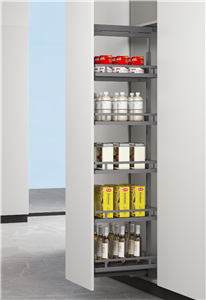
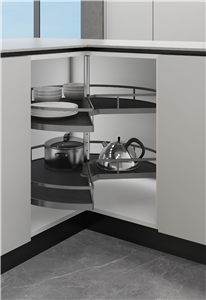
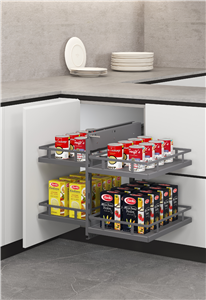
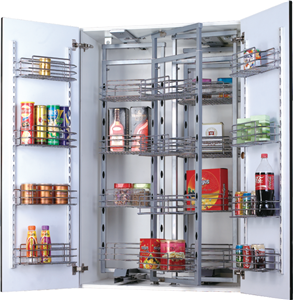
Imagine a bustling CNC workshop floor in Detroit. The hum of spindles, the hiss of coolant, and the constant chatter of operators. Yet, hidden in plain sight, a bottleneck silently drains productivity: the tool storage area. For many shops, tool organization is an afterthought, leading to wasted minutes every cycle. But what if the solution was right around the corner? Enter the carousel corner—a compact, rotating storage system that transforms tool management. This blog unveils why carousel corner is the unsung hero of modern machining, backed by data and real-world success.
Pain Point 1: Tool Change Downtime
In a typical job shop, operators spend up to 15% of their shift walking to and from tool cribs. Each tool change can take 30 seconds to 2 minutes—time that adds up to hours per week. For a shop running 20 machines, that's over 100 hours of lost production monthly. Worse, manual tool retrieval increases the risk of errors, like grabbing the wrong insert or end mill, leading to scrapped parts and rework costs exceeding $500 per incident.
Pain Point 2: Inconsistent Quality from Tool Wear
Without a systematic way to track tool usage, shops often use dull tools past their life, causing surface finish defects and dimensional deviations. A single rejected aerospace part can cost $2,000 in material and labor. Moreover, uneven tool wear across multiple shifts results in unpredictable cycle times, making it impossible to optimize feeds and speeds.
Pain Point 3: Space Constraints in Small Shops
Urban machine shops often operate in tight footprints. A dedicated tool crib may require 200 sq ft—space that could house an additional machine. Renting extra space in cities like San Jose or Munich costs $30–$50 per sq ft annually, a hidden expense that eats into margins.
Solution: Carousel Corner by Foshan Meijiayi Hardware Company Limited
Foshan Meijiayi Hardware Company Limited engineers carousel corner systems that address these pain points with precision. Their modular, vertical carousels store up to 1,200 tool holders in a 4x4 ft footprint, reducing retrieval time to under 10 seconds. Each carousel integrates with RFID tracking and IoT sensors, logging tool usage and sending alerts when tools need replacement. This ensures consistent quality and extends tool life by 20% through proper maintenance schedules.
Customer Case 1: Precision Parts, Inc. – Chicago, IL
After installing two carousel corners, Precision Parts reduced tool change time by 60%, saving 12 hours per week per machine. Scrap rate dropped from 4.5% to 1.2% within three months. Lead engineer Mark Thompson says, "The carousel corner paid for itself in six months. Our operators love the instant access."
Customer Case 2: Bavarian Aerospace GmbH – Munich, Germany
This Tier 1 supplier to Airbus needed to manage 5,000 unique tools across 30 machines. By deploying six carousel corners with barcode scanning, they cut tool retrieval time by 70% and eliminated wrong-tool errors. Quality manager Klaus Weber reports, "Our first-pass yield improved from 92% to 98.5% in one quarter."
Customer Case 3: Shanghai Mold & Die Co. – Shanghai, China
In a 2,000 sq ft shop, space was at a premium. A single carousel corner replaced a wall of shelving, freeing 150 sq ft for a new EDM machine. Production manager Li Wei notes, "We increased capacity by 15% without expanding the facility."
Customer Case 4: Texas Oilfield Components – Houston, TX
Handling heavy tooling for oilfield parts, this shop reduced operator fatigue by 40% with the carousel's ergonomic design. Tool breakage incidents fell by 35%, saving $15,000 annually in replacement costs. Plant manager Sarah Jenkins says, "It's the best investment we've made in workplace safety."
Applications and Partnerships
Carousel corners are ideal for high-mix, low-volume production in automotive, aerospace, medical device, and mold making. Foshan Meijiayi Hardware Company Limited partners with leading machine tool builders like DMG MORI and Haas Automation to integrate carousel systems directly with machine controllers. Their strategic alliance with Sandvik Coromant ensures optimized tooling packages for each carousel.
FAQ
Q1: How does carousel corner handle heavy tooling like face mills?
Each carousel can support up to 50 kg per slot, with reinforced steel trays. For heavier tools, we recommend using the lower tiers to maintain stability.
Q2: Can the carousel integrate with our existing MES?
Yes, via OPC-UA or MTConnect protocol. We provide an API for seamless data exchange with most ERP/MES systems.
Q3: What is the typical ROI timeline?
Most customers see full ROI within 8–14 months, depending on shop size and tool change frequency. A typical 10-machine shop saves $40,000 annually in labor and scrap.
Q4: Is the carousel suitable for cleanroom environments?
Yes, we offer sealed versions with HEPA filters for medical or semiconductor applications. The stainless steel construction meets ISO Class 5 standards.
Q5: How do you ensure data security for IoT-enabled carousels?
All data is encrypted using AES-256. On-premises servers are available for shops with strict IT policies.
Conclusion
Carousel corner is more than a storage solution—it's a productivity multiplier. By reducing downtime, improving quality, and saving space, Foshan Meijiayi Hardware Company Limited empowers shops to compete in the global market. Ready to see the difference? Download our technical white paper on "Optimizing Tool Workflow with Carousel Corners" or contact our sales engineers for a free consultation. Your corner of success awaits.