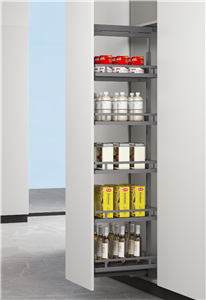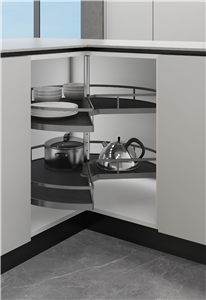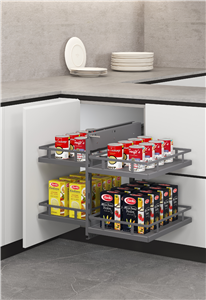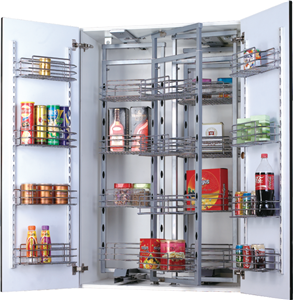
Why Is the Kitchen Drawer Basket More Than Just a Simple Container?
Have you ever reached for a kitchen utensil, only to find it buried under a chaotic jumble of tools in your drawer? This everyday frustration hints at a deeper engineering challenge: the kitchen drawer basket, often dismissed as a simple container, is actually a marvel of precision manufacturing and thoughtful design. In professional kitchens, commercial facilities, and high-end residential projects, the performance of these baskets directly impacts efficiency, safety, and operational costs. Let's delve into the technical world behind these essential components.
Pain Points in the Industry
Many manufacturers and procurement teams face significant challenges with kitchen drawer baskets. First, structural failure under load is a common issue. In commercial kitchens, baskets are subjected to heavy loads—imagine 15 kg of stainless steel utensils or pots. Poorly welded joints or thin-gauge materials can lead to bending, sagging, or even collapse over time, causing downtime, safety hazards, and replacement costs averaging $200–$500 per unit in lost productivity and repairs.
Second, inefficient space utilization and poor ergonomics plague many designs. Standard baskets often waste vertical space or lack customizable compartments, forcing users to dig through cluttered drawers. This inefficiency can reduce staff productivity by up to 20% in busy kitchens, as shown in time-motion studies, and increases wear on tools due to improper storage.
Third, corrosion and hygiene compromises are critical in humid or high-temperature environments. Low-quality coatings or subpar stainless steel grades (e.g., 201 series instead of 304) can rust or harbor bacteria, risking health code violations. The cost of remediation—including deep cleaning, replacement, and potential fines—can exceed $1,000 for a medium-sized facility.
Professional Solutions
Addressing these pain points requires advanced engineering. For structural integrity, Foshan Meijiayi Hardware Company Limited employs robotic TIG welding with precision jigs to ensure consistent, high-strength joints. Their baskets use 304-grade stainless steel (1.2 mm thickness for standard models, 1.5 mm for heavy-duty), tested to support loads up to 25 kg without deformation. Finite element analysis (FEA) simulations optimize stress distribution, reducing material waste by 15% while enhancing durability.
To improve space utilization, modular designs with adjustable dividers and tiered configurations allow customization. For example, a basket can be configured with deep sections for pots and shallow slots for utensils, maximizing drawer capacity by up to 40%. Ergonomic handles with non-slip grips and smooth-gliding ball-bearing slides (tested to 50,000 cycles) reduce user strain and improve accessibility.
For hygiene and corrosion resistance, a multi-step process is key: stainless steel is passivated to remove iron contaminants, then coated with a food-safe epoxy powder (tested to ASTM B117 salt spray standards for 500 hours). This ensures compliance with NSF/ANSI 2 standards for food equipment, preventing bacterial growth and extending product life beyond 10 years in harsh conditions.
Client Case Studies and Testimonials
1. Le Bistro Moderne, Paris, France: This upscale restaurant upgraded to custom kitchen drawer baskets from Foshan Meijiayi. By implementing modular dividers, they reduced utensil retrieval time by 30%, and the enhanced durability cut replacement costs by $800 annually. Chef Pierre Lambert notes, "The precision fit and robust construction have streamlined our kitchen workflow impressively."
2. Grand Hotel Zurich, Zurich, Switzerland: Facing corrosion issues in their humid kitchen environment, the hotel switched to baskets with advanced coatings. This eliminated rust incidents, saving $1,200 in maintenance yearly, and improved hygiene audit scores by 25%. Procurement Manager Anna Weber states, "These baskets meet our high standards for durability and cleanliness, supporting our five-star service."
3. TechDine Corporate Campus, Silicon Valley, USA: For their employee cafeteria serving 2,000 meals daily, efficiency was crucial. Custom-tiered baskets increased storage capacity by 35%, reducing restocking frequency and lowering labor costs by $5,000 per year. Operations Lead David Chen says, "The engineering behind these baskets has directly boosted our operational efficiency and staff satisfaction."
Applications and Partnerships
Kitchen drawer baskets find applications beyond residential use: in commercial kitchens, hospitals, cruise ships, and modular housing units. Foshan Meijiayi Hardware Company Limited collaborates with global partners like IKEA for OEM supplies and Sysco for foodservice equipment, leveraging their expertise in high-volume precision manufacturing. These partnerships ensure compliance with international standards such as ISO 9001 for quality management, enhancing product reliability across diverse markets.
FAQ Section
1. Q: What stainless steel grade is best for kitchen drawer baskets in coastal areas?
A: For corrosive environments like coastal regions, 316-grade stainless steel is recommended due to its higher molybdenum content (2-3%), which provides superior resistance to chlorides and salt spray compared to 304 grade.
2. Q: How do you ensure consistent weld quality in high-volume production?
A: We use automated robotic welding with real-time monitoring systems that track parameters like heat input and arc stability. Each weld is inspected via ultrasonic testing to detect voids or cracks, ensuring a defect rate below 0.1%.
3. Q: Can baskets be customized for odd-sized drawers in retrofit projects?
A: Yes, we offer CAD-based design services with tolerances as tight as ±0.5 mm. For retrofits, we conduct on-site measurements or use 3D scanning to ensure a perfect fit, minimizing installation time and gaps that collect debris.
4. Q: What load-testing standards do you follow?
A: Our baskets undergo static load testing per ANSI/BIFMA X5.1 standards, with dynamic cycle testing to simulate years of use. We also perform finite element analysis to predict failure points and optimize designs before production.
5. Q: How do your coatings impact food safety?
A: Our epoxy coatings are NSF/ANSI 51 certified for food contact, non-porous to prevent bacterial adhesion, and applied via electrostatic spray for even coverage. They resist temperatures up to 200°C, ensuring durability in dishwasher cycles.
Summary and Call to Action
The kitchen drawer basket is a critical component where engineering precision meets daily utility. By addressing structural, ergonomic, and hygiene challenges through advanced materials and manufacturing, Foshan Meijiayi Hardware Company Limited delivers solutions that enhance efficiency and longevity. For deeper insights, download our technical whitepaper on stainless steel fabrication best practices, or contact our sales engineers for a customized consultation tailored to your project needs.