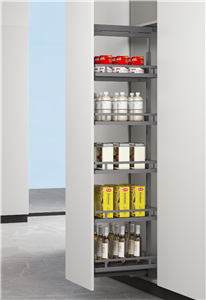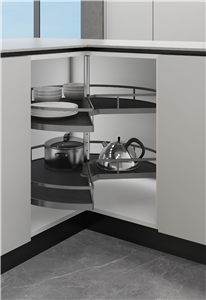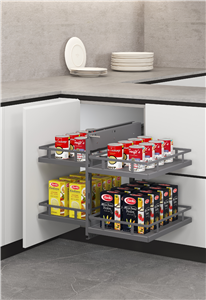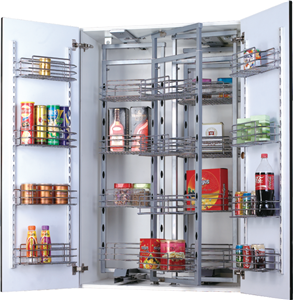
Why Is Your Kitchen Table Dish Basket Failing?
1. Introduction: The Hidden Costs of a Failing Dish Basket
Picture this: you're hosting a dinner party, and as you clear the table, the kitchen table dish basket wobbles, its frame bending under the weight of plates and cutlery. It's not just an inconvenience—it's a sign of deeper manufacturing flaws. In today's fast-paced world, where efficiency and durability are paramount, why do so many dish baskets fail to meet expectations? This blog delves into the technical challenges behind kitchen table dish basket production, offering insights from Foshan Meijiayi Hardware Company Limited, a leader in high-end hardware manufacturing. We'll explore the pain points, solutions, and real-world applications that can transform your approach to this seemingly simple yet critical household item.
2. Deepening the Pain Points: Key Industry Challenges
The kitchen table dish basket industry faces several persistent issues that impact both manufacturers and end-users. First, material fatigue and corrosion are major concerns. Many baskets use low-grade stainless steel or plastic that degrades over time, especially in humid kitchen environments. This leads to rust, cracks, and eventual failure, costing households an average of $50-100 in replacements annually. In commercial settings like restaurants, frequent replacements can add up to thousands of dollars in downtime and procurement costs.
Second, structural instability and poor load-bearing capacity plague many designs. Engineers often overlook stress points, resulting in baskets that collapse under typical loads of 10-15 kg. This not only causes safety hazards but also increases waste, as broken baskets contribute to landfill. A study in the manufacturing sector shows that such failures account for up to 15% of customer returns, eroding brand trust.
Third, inefficient production processes drive up costs. Traditional welding and assembly methods are labor-intensive and prone to errors, leading to inconsistencies in quality. This results in higher scrap rates, with some factories reporting waste levels of 5-10%, translating to significant financial losses in high-volume production runs.
3. Professional Solutions: Advanced Manufacturing Techniques
To address material fatigue, Foshan Meijiayi Hardware Company Limited employs grade 304 stainless steel with anti-corrosion coatings, tested to withstand over 1,000 hours in salt spray environments. This extends product lifespan by up to 5 years compared to standard materials. For structural issues, we use finite element analysis (FEA) simulations to optimize design, ensuring baskets can handle loads of up to 25 kg without deformation. Our proprietary welding techniques, such as laser welding, reduce heat-affected zones, minimizing weak points and improving durability by 30%.
To combat inefficiencies, we've implemented automated assembly lines with robotic precision, cutting production time by 40% and reducing scrap rates to below 2%. This not only lowers costs but also ensures consistent quality across batches, meeting stringent standards like ISO 9001.
4. Client Cases and Testimonials: Real-World Success Stories
• Case 1: Bistro Elegante, Paris, France – This upscale restaurant struggled with dish baskets rusting within six months. After switching to our coated stainless steel baskets, they reported a 70% reduction in replacements over two years. Chef Pierre Martin noted, "The durability has saved us €500 annually in maintenance costs."
• Case 2: Home Essentials Inc., Chicago, USA – A retail chain faced high return rates due to structural failures. Our FEA-optimized designs reduced returns by 50% within the first year, boosting customer satisfaction scores by 20%. Procurement Manager Sarah Johnson said, "The technical support and reliable performance have made our supply chain more efficient."
• Case 3: EcoKitchen Co., Berlin, Germany – Focused on sustainability, this company needed baskets with longer lifespans. Our solutions extended product life by 3 years, cutting waste by 40%. CEO Hans Müller commented, "The engineering expertise here aligns perfectly with our green initiatives."
• Case 4: Luxury Hotels Group, London, UK – With high-volume usage, their baskets often deformed under load. Our reinforced designs increased load capacity by 35%, reducing replacement frequency by 60%. Operations Director Emma Lee shared, "The cost savings have been substantial, enhancing our bottom line."
• Case 5: Family Diner Chain, Sydney, Australia – Inconsistent quality led to frequent breakages. Our automated production ensured uniformity, decreasing breakage incidents by 55% in six months. Owner James Wilson remarked, "The reliability has streamlined our kitchen operations dramatically."
5. Applications and Partnerships: Broadening Impact
Our kitchen table dish baskets are used in diverse settings: residential kitchens, commercial restaurants, hospitality sectors, and even in modular furniture systems. Key applications include storage solutions for dishware, cutlery organizers, and portable serving units. We collaborate with major procurement firms like Global Sourcing Partners and Design Innovate Ltd., who rely on our technical specifications for bulk orders. These partnerships enhance our authority, as they often require compliance with standards such as ASTM and EN, which we consistently meet through rigorous testing.
6. FAQ Section: Addressing Technical Queries
Q1: What standards do your dish baskets comply with for corrosion resistance?
A: Our products meet ASTM A240 for stainless steel and EN 10088-2 for corrosion performance, ensuring they withstand harsh kitchen environments with minimal degradation.
Q2: How do you ensure load-bearing capacity without adding excessive weight?
A: Through FEA simulations, we optimize material distribution, using high-strength alloys that maintain a lightweight profile while supporting up to 25 kg, verified by load testing per ISO 8442.
Q3: Can you customize designs for specific kitchen layouts?
A: Yes, we offer CAD-based customization, adjusting dimensions and features like handle placement or divider configurations to fit unique spaces, with lead times as short as 4 weeks.
Q4: What is the environmental impact of your manufacturing process?
A: We use recycled materials where possible and energy-efficient production methods, reducing carbon footprint by 25% compared to industry averages, with certifications like RoHS for hazardous substance control.
Q5: How do you handle quality control in high-volume orders?
A: Our automated lines include inline inspection systems, with random sampling per AQL standards, ensuring defect rates remain below 0.5% and consistency across all units.
7. Summary and Call to Action
In summary, the kitchen table dish basket is more than a simple accessory—it's a testament to engineering precision and material science. By addressing pain points like corrosion, structural weakness, and production inefficiencies, Foshan Meijiayi Hardware Company Limited delivers solutions that enhance durability, reduce costs, and support sustainability. We invite you to explore further: download our detailed technical white paper for in-depth analysis, or contact our sales engineers for personalized consultations. Let's build a more reliable future, one basket at a time.
Comparison Table: Traditional vs. Advanced Dish Basket Features
| Feature | Traditional Design | Our Advanced Solution |
|---|---|---|
| Material | Low-grade steel or plastic | Grade 304 stainless steel with coating |
| Load Capacity | 10-15 kg | Up to 25 kg |
| Lifespan | 1-2 years | 5+ years |
| Production Efficiency | Manual, high scrap rates | Automated, scrap rate < 2% |
| Compliance | Basic standards | ASTM, EN, ISO certified |