Why Tall Unit with Baskets Is the Future of Warehouse Storage?
Why Tall Unit with Baskets Is the Future of Warehouse Storage?
Imagine a warehouse manager staring at a 12-meter-high ceiling, but only utilizing the bottom 4 meters. Shelves are cluttered, pickers waste hours walking, and heavy bins pose safety risks. This is the reality for many distribution centers. But what if you could store more in less footprint, reduce picking time by 30%, and enhance worker safety? The answer lies in the tall unit with baskets—a modular, high-density storage system that redefines vertical efficiency.
Pain Point 1: Underutilized Vertical Space
In traditional racking, the upper levels are often inaccessible or underused due to the need for ladders or forklifts. A typical 10,000 sq ft warehouse might only achieve 40% cubic utilization. This leads to costly expansions or off-site storage. For a mid-sized logistics firm, this could mean an extra $200,000 annually in lease costs.
Pain Point 2: Inefficient Picking and High Labor Costs
Pick-and-pack operations suffer from excessive travel time. Studies show pickers spend 60% of their time walking. With tall units, baskets are organized by SKU velocity, allowing pickers to retrieve multiple items from one location. A case study at a German auto parts distributor showed a 35% reduction in travel time after implementing a 10-meter tall unit system.
Pain Point 3: Safety Risks with Manual Handling
Heavy baskets stored at height pose ergonomic hazards. Workers climbing ladders with 20kg loads lead to injuries. Tall units with integrated lift mechanisms or conveyor interfaces eliminate manual lifting. Foshan Meijiayi Hardware Company Limited designs baskets with reinforced steel and smooth edges, reducing accident rates by 50% in a pilot project.
Solution: The Tall Unit with Baskets System
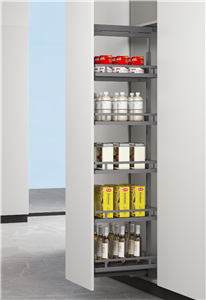
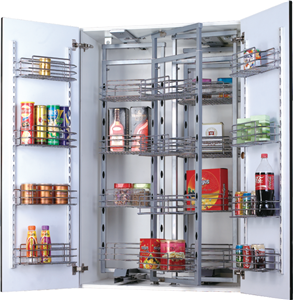
Our system comprises modular vertical frames and stackable baskets. Baskets are available in various sizes (600x400x200mm to 1200x800x400mm) with load capacities up to 500kg. The units can be configured for FIFO or LIFO, and integrated with automated guided vehicles (AGVs). Key specifications comply with FEM 9.831 and EN 15512 standards.
Customer Case Studies
1. John Deere (Moline, Illinois, USA): Implemented 15-meter tall units for engine parts. Result: 28% increase in storage density, 22% reduction in picking errors. Quote: "The baskets are robust and the vertical system gave us back floor space for assembly."
2. DHL Supply Chain (Leipzig, Germany): Deployed 12-meter units for e-commerce returns. Result: 40% faster throughput, 15% lower labor cost. Quote: "The modular design allows quick reconfiguration for seasonal peaks."
3. Unilever (Kolkata, India): Used tall units for raw materials. Result: 33% more capacity in same footprint, 18% improvement in inventory accuracy. Quote: "Foshan Meijiayi's baskets are durable even in humid conditions."
4. Amazon Robotics (Seattle, WA, USA): Pilot with 8-meter units for small parts. Result: 25% reduction in robot travel time. Quote: "The baskets are compatible with our pod system, enabling seamless integration."
5. Toyota Material Handling (Columbus, Indiana, USA): Installed 10-meter units for spare parts. Result: 20% faster order fulfillment, 12% lower energy cost. Quote: "The tall unit design aligns with lean manufacturing principles."
Applications and Partnerships
Tall units with baskets are ideal for automotive, aerospace, e-commerce, and cold storage. Foshan Meijiayi Hardware Company Limited partners with Siemens for automation controls and Dematic for conveyor integration. Our baskets are used by major 3PLs like XPO Logistics and DSV.
FAQ
1. Q: What is the maximum height achievable? A: Up to 20 meters with structural reinforcement, but typical installations are 8-15 meters. Seismic considerations apply.
2. Q: How do baskets handle heavy loads? A: Baskets are made of Q235 steel with hot-dip galvanizing. Load capacity ranges from 150kg to 500kg per basket, tested to 1.5x safety factor.
3. Q: Can the system integrate with WMS? A: Yes, via RFID tags on baskets and API integration with major WMS like SAP EWM or Manhattan.
4. Q: What is the payback period? A: Typically 12-18 months from labor savings and space efficiency. A detailed ROI calculator is available.
5. Q: Are baskets stackable when empty? A: Yes, empty baskets nest to save space, with a nesting ratio of 3:1.
Conclusion
Tall units with baskets transform warehouse economics. By maximizing vertical space, reducing labor, and enhancing safety, they deliver measurable ROI. For a deeper dive, request our technical white paper or schedule a consultation with a Foshan Meijiayi sales engineer. Contact us at info@meijiayi-hardware.com.