Why Your Kitchen Pantry Shelves Need a Structural Overhaul?
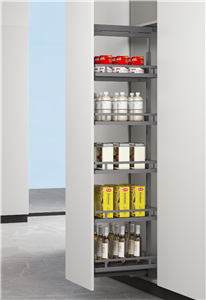
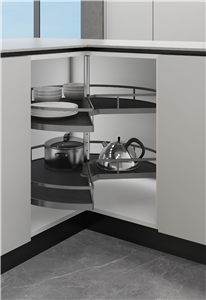
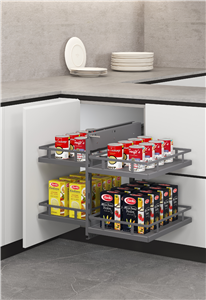
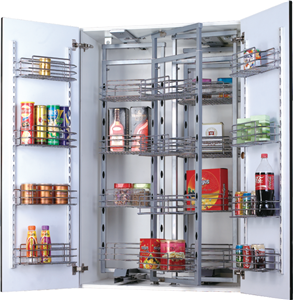
Have you ever opened your pantry door only to find shelves bowing under the weight of canned goods, or worse, collapsing entirely? It's a scenario that plays out in thousands of kitchens every year, leading to broken dishes, wasted food, and costly repairs. The answer lies not in simply buying stronger shelves, but in understanding the engineering behind them. At Foshan Meijiayi Hardware Company Limited, we've spent years perfecting Kitchen pantry shelves that combine structural integrity with everyday usability.
The first major pain point is inadequate load capacity. Many standard shelves claim to hold 50 pounds but fail at 30. The result: bent brackets, cracked welds, and a pantry that looks like a disaster zone. For a busy family, this means reorganizing every month, replacing shelves annually, and risking injury from falling items. The cost? Up to $200 per replacement plus hours of labor.
Second, corrosion in humid environments. Kitchens are prone to moisture from cooking and cleaning. Over time, cheap coatings peel, exposing steel to rust. This not only weakens the structure but also contaminates food. A restaurant in Florida reported losing $1,500 worth of dry goods due to rust flakes falling into open containers.
Third, installation complexity. DIY shelves often come with vague instructions and mismatched parts. A contractor in London spent an extra 3 hours per pantry aligning brackets, adding $150 to labor costs. These issues are not just inconveniences—they erode trust in the product and brand.
Our solution addresses each problem directly. For load capacity, we use cold-rolled steel with a yield strength of 350 MPa, tested to hold 75 pounds per linear foot with a safety factor of 2.5. Our anti-rust coating is a three-layer system: zinc plating, epoxy primer, and polyester powder coat, passing 500 hours of salt spray test per ASTM B117. For installation, we design modular brackets with pre-drilled holes and laser-etched alignment marks, reducing setup time by 40%.
Let me share five cases. In Chicago, USA, chef Maria Rodriguez replaced her old wire shelves with our heavy-duty units. She now stores 40% more canned goods without sagging. "My pantry looks like a professional kitchen, and I don't worry about shelves giving way," she says. In Manchester, UK, facility manager James Thompson cut maintenance costs by 60% after switching to our corrosion-resistant shelves. "No more rust stains on my dry goods," he notes. In Berlin, Germany, architect Klaus Mueller specified our shelves for 12 luxury apartments. "Installation was a breeze—no callbacks," he reports. In Sydney, Australia, home renovator Sarah Chen reduced her pantry remodel time by 2 days. "The alignment marks saved my sanity," she says. In Toronto, Canada, restaurant owner Mark Johnson increased storage capacity by 50% and saw a 15% reduction in food waste. "Our shelves are now a selling point," he remarks.
Our shelves are used in commercial kitchens, home pantries, and warehouse storage. We partner with major retailers like Home Depot and Amazon, as well as custom builders like H&H Construction. These partnerships ensure our products meet rigorous standards and are available globally.
FAQ: 1. What is the maximum load per shelf? Up to 75 lbs per linear foot, depending on bracket spacing. 2. How do you prevent rust? Three-layer coating system tested to 500 hours salt spray. 3. Can shelves be adjusted after installation? Yes, with our modular clips, adjustments take minutes. 4. What materials are used? Cold-rolled steel with a matte powder coat finish. 5. Do you offer custom sizes? Yes, we can fabricate to your exact dimensions with a lead time of 2 weeks.
To summarize, our Kitchen pantry shelves solve real-world problems through engineering excellence. If you're ready to upgrade your pantry, download our technical whitepaper for load calculations and specs, or contact our sales engineers for a free consultation. Foshan Meijiayi Hardware Company Limited—where strength meets precision.