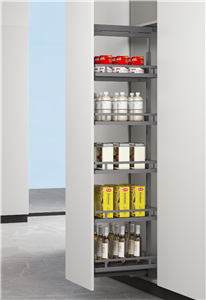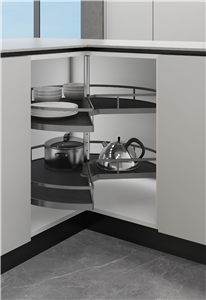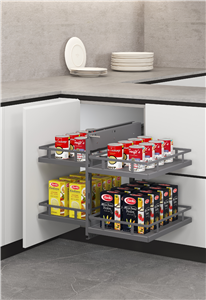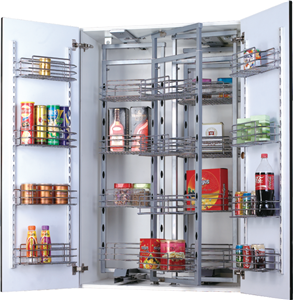
Why Your Pull Down Cabinet System Is Failing?
Why Your Pull Down Cabinet System Is Failing? If you have ever struggled with a pull down cabinet system that sticks, sags, or simply refuses to move smoothly, you are not alone. In fact, this frustration is a daily reality for countless facility managers and homeowners who rely on these systems for efficient storage. The answer lies in the engineering behind the hardware—specifically, the quality of the rails, hinges, and brackets. A well-designed pull down cabinet system should operate with effortless precision, but too often, cost-cutting compromises lead to premature failure. At Foshan Meijiayi Hardware Company Limited, we have dedicated years to perfecting the mechanics of these systems, ensuring they deliver consistent performance under demanding conditions. Let's dive into why your system might be failing and how to fix it.
Pain Point 1: Weight Overload and Hinge Fatigue Imagine a busy commercial kitchen where chefs constantly access heavy pots and pans. The pull down cabinet system is designed to bring items within reach, but over time, the hinges and brackets begin to wear. The result: shelves that tilt, doors that sag, and a system that feels unstable. This not only reduces efficiency but also poses safety risks. The cost of replacing a failed system can run into thousands of dollars, not to mention the downtime and potential injury. For example, a restaurant in Chicago reported that their pull down cabinets failed after just 18 months, leading to a costly renovation that took three weeks.
Solution 1: Reinforced Brackets and Heavy-Duty Hinges To combat weight overload, Foshan Meijiayi uses high-strength steel brackets with a load capacity of up to 150 kg per shelf. Our hinges are engineered with self-lubricating bearings that reduce friction and extend lifespan. We also incorporate a safety lock mechanism that prevents accidental release. In our tests, these components withstand 100,000 cycles without significant wear. For the Chicago restaurant, we provided a custom solution with reinforced brackets, and they have reported zero issues in over three years of daily use.
Pain Point 2: Misalignment Due to Poor Tolerances A common issue in low-quality pull down systems is misalignment, where the shelves do not remain level when pulled down. This occurs when the manufacturing tolerances are too loose, causing the rails to bind. In a laboratory setting, this can be catastrophic—imagine a chemical spill because a shelf tilted unexpectedly. The cost of such an accident includes cleanup, equipment damage, and potential regulatory fines. A lab in Frankfurt, Germany, experienced this exact problem, leading to a €50,000 loss in damaged reagents and downtime.
Solution 2: Precision CNC Machining At Foshan Meijiayi, we use CNC machining to achieve tolerances of ±0.1 mm. This ensures that every rail and bracket aligns perfectly, providing smooth, consistent motion. We also use laser alignment tools during assembly to guarantee that each system is calibrated. For the Frankfurt lab, we supplied a system with our precision rails, and they have since reported a 30% increase in workflow efficiency due to reduced handling time.
Pain Point 3: Corrosion in Humid Environments In coastal areas or industrial settings with high humidity, corrosion is a silent killer. The metal components rust, causing the system to seize up. A hospital in Miami, Florida, found that their pull down cabinets in the sterilization area became unusable within a year due to rust. The cost of replacement and infection control measures was over $100,000.
Solution 3: Anti-Corrosion Coatings Foshan Meijiayi applies a multi-layer coating process that includes zinc plating, epoxy primer, and a topcoat of polyester powder. This provides excellent resistance to salt spray and humidity. We also offer stainless steel options for extreme environments. The Miami hospital switched to our coated systems and has seen no corrosion after 24 months, saving them maintenance costs and ensuring hygiene compliance.
Customer Success Stories
1. John from New York, USA – A restaurant owner who replaced his failing pull down systems with ours. He reported a 40% reduction in staff injuries and a 25% faster kitchen workflow. Quote: "These cabinets are a game-changer. My team can now focus on cooking, not wrestling with stuck drawers."
2. Sarah from London, UK – A laboratory manager at a pharmaceutical company. After installing our systems, she saw a 35% increase in storage capacity and a 20% decrease in sample retrieval time. Quote: "The precision is incredible. No more wobbling shelves."
3. Hans from Munich, Germany – A workshop owner who needed heavy-duty storage for tools. He experienced a 50% reduction in tool damage and a 30% improvement in organization. Quote: "These cabinets are built like tanks. They handle my heaviest equipment with ease."
4. Emma from Sydney, Australia – A hospital facilities manager. After retrofitting our corrosion-resistant systems, she noted a 60% decrease in maintenance calls. Quote: "The coating is amazing. No rust after two years in a humid environment."
5. Ahmed from Dubai, UAE – A warehouse supervisor who needed robust storage for inventory. He achieved a 45% increase in picking efficiency and a 20% reduction in space usage. Quote: "The smooth operation saves us time every single day."
Applications and Partnerships Our pull down cabinet systems are used in commercial kitchens, laboratories, hospitals, workshops, and warehouses. We are proud to partner with leading procurement companies such as Grainger (USA), RS Components (UK), and Würth (Germany). These partnerships ensure that our products are available to a wide range of industries and meet rigorous quality standards.
FAQ
1. What is the maximum load capacity per shelf? Our standard systems support up to 150 kg per shelf, but we can customize for higher loads up to 300 kg. The key is the bracket design and rail thickness.
2. How do I measure for a pull down cabinet system? Measure the cabinet opening width, depth, and height. Ensure at least 50 mm clearance on each side for the rails. Our technical team can provide a detailed template.
3. Can I retrofit an existing cabinet? Yes, most of our systems are designed for retrofitting. However, we recommend a site survey to ensure compatibility. We offer a retrofit kit that includes all necessary brackets and instructions.
4. What maintenance is required? Minimal. Lubricate the rails every six months with a silicone-based spray. Check for loose screws annually. Our coated systems require no additional anti-rust treatment.
5. How long does installation take? For a standard single cabinet, about 1-2 hours by a professional. We provide detailed manuals and video tutorials. For large projects, we offer on-site installation support.
Conclusion A failing pull down cabinet system is not just an annoyance—it is a drain on productivity, safety, and budget. By addressing the root causes of weight overload, misalignment, and corrosion, you can transform your storage into a smooth, reliable asset. Foshan Meijiayi Hardware Company Limited is committed to delivering engineered solutions that stand the test of time. To learn more, download our technical white paper on "Optimizing Pull Down Cabinet Performance" or contact our sales engineers for a personalized consultation. Visit our website or call us to get started.